
 86 13392660243
 hope17@cnhopestar.com
 whatsapp
AI + Android Terminals: Redefining the Digital Touchpoint for Modern Enterprises
 2025-12-12
 Hopestar
As digital transformation accelerates across industries, enterprises are rethinking how frontline systems interact with users, equipment, and data. Traditional monitors and basic control panels can no longer support the rising demand for automation, mobility, and intelligent decision-making. This shift is driving widespread adoption of AI-powered Android terminals, combining AI, IoT, and edge computing into a unified interface for smarter operations.
How AI + IoT Upgrade the Role of Android Terminals
Modern Android terminals have evolved beyond simple display devices. With integrated AI capabilities and IoT connectivity, they now serve as intelligent endpoints that enhance efficiency and improve operational visibility.
1. Remote Control and Predictive Device Management
• IoT integration enables remote monitoring of device status, performance data collection, and centralized system updates.
• On-device AI models support predictive maintenance by identifying abnormal patterns or potential failures in advance.
• This reduces on-site service needs and improves the reliability of distributed systems such as kiosks, digital signage, industrial dashboards, and facility controls.
2. Intelligent Recognition for Real-Time Interaction
• With built-in cameras and edge AI processing, terminals can perform facial recognition, object detection, and scene analysis locally.
• On-device inference reduces latency and strengthens data privacy, especially in secure environments.
• This supports use cases such as visitor management, automated inspection, smart manufacturing, and unmanned retail.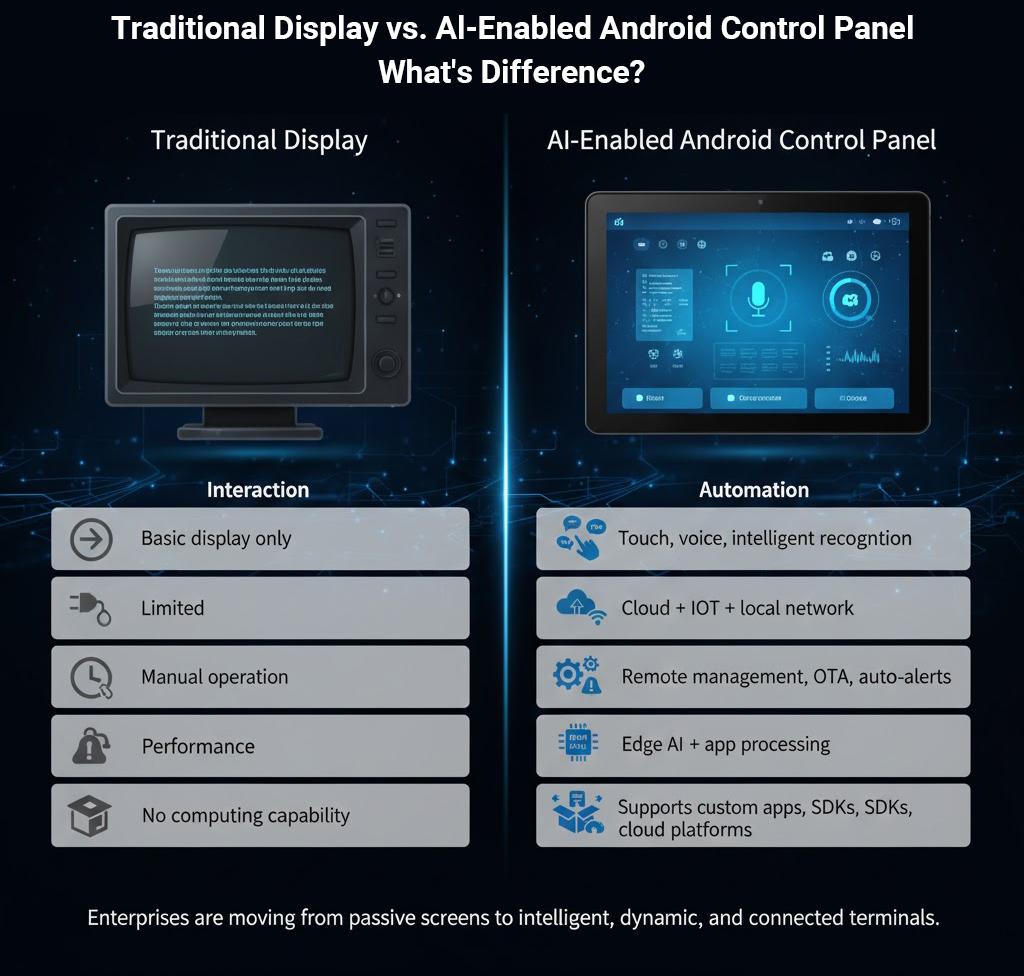
3. Voice Interaction and Touchless Interfaces
• Far-field microphones and AI voice engines enable hands-free control in environments where touch interaction is inconvenient or restricted.
• This enhances usability in hospitals, hotels, retail counters, and industrial settings.
AI-Ready Android Terminals for Enterprise Applications
Android terminals designed for business environments now incorporate the features required to support AI-driven workflows at the edge.
AI SDK and Flexible System Integration
• Developers can integrate facial recognition, OCR, people counting, and other AI models directly into on-device applications.
• Open Android frameworks ensure compatibility with third-party management systems and cloud platforms.
Edge AI Performance
• High-performance processors with NPU acceleration—such as RK3588, RK3566, and RK3399—enable on-device AI inference for real-time applications.
• Local processing reduces network load and ensures faster response times for multi-terminal deployments.
Enterprise-Grade Hardware Designed for Stability
• Connectivity options such as PoE, RJ45, WiFi 6, and Bluetooth ensure stable data transmission.
• Industrial components support extended lifecycle requirements to maintain consistent performance over long-term deployments.
• Screen sizes, housings, and I/O ports can be customized to fit kiosk systems, control panels, production lines, or wall-mounted interfaces.
Traditional Display vs. AI-Driven Android Panel
FeatureTraditional DisplayAI Android Control Panel
InteractionBasic display onlyTouch, voice, AI recognition
ConnectivityLimitedCloud + IoT + local network
AutomationManual operationOTA updates, alerts, remote control
ProcessingNoneEdge AI + app execution
ScalabilityLowCustom apps, SDK compatibility
The upgrade path is clear: enterprises are shifting from passive display devices to intelligent, connected, and responsive operational interfaces.
Where AI Android Terminals Are Making an Impact
• Smart factories – dashboards, inspection panels, production line monitoring
• Smart buildings – HVAC control, lighting management, access control interfaces
• Healthcare – nurse call terminals, patient interaction screens, self-service registration
• Retail & hospitality – POS terminals, self-checkout kiosks, analytics-driven signage
• Energy & utilities – remote monitoring panels, safety alerts, intelligent data hubs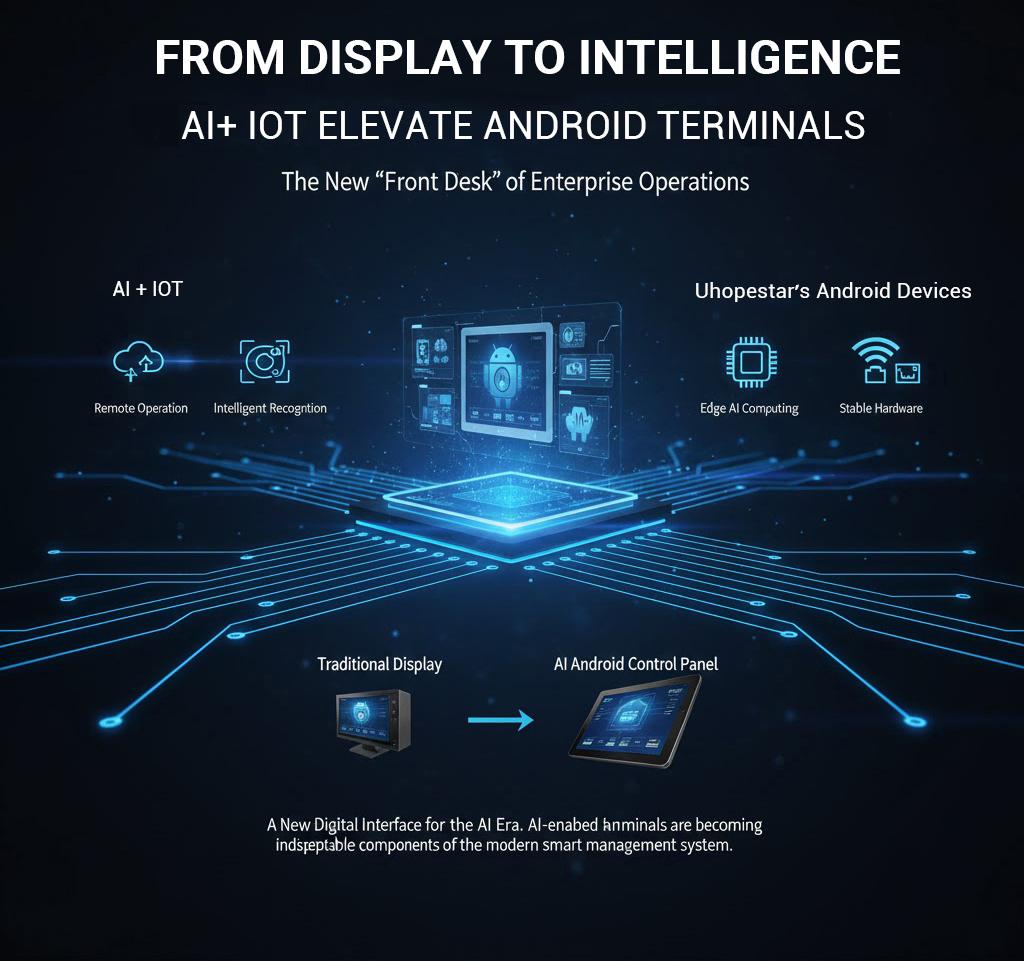
In all these scenarios, the Android terminal acts as the edge interface that connects people, machines, and cloud platforms.
Conclusion: A Smarter Interface for the AI Era
The combination of AI, Android, and IoT is reshaping how enterprises interact with their systems. AI-enabled Android terminals provide real-time insight, automated device management, and intelligent interaction—far beyond what traditional displays can offer.
As more industries adopt edge computing and distributed AI, Android terminals are becoming essential to building more connected, efficient, and intelligent digital environments.
 2025 Year-End Procurement Guide: Key Trends and Device Recommendations for Global Buyers