
 86 13392660243
 hope17@cnhopestar.com
 whatsapp
2025 Year-End Procurement Guide: Key Trends and Device Recommendations for Global Buyers
 2025-12-11
 Hopestar
As global businesses close out the year and prepare for new operational goals, the year-end procurement season has become a crucial window for upgrading digital devices. Whether in education, retail, or industrial environments, buyers often find this period ideal for using remaining budgets, accelerating deliveries, and planning deployments for the coming year.
Below is a refreshed overview of the key trends shaping 2025 year-end procurement, along with practical insights for selecting Android all-in-one terminals, POS tablets, and industrial touch displays.
1. Why Year-End Procurement Matters in 2025
Recent purchasing data from international distributors shows that more than one-third of annual hardware upgrades occur between late Q4 and early Q1. Several factors continue to push this trend:
Many organizations complete device upgrades using remaining yearly budgets before closing their fiscal cycle.
New initiatives in education digitalization, retail POS upgrades, and factory automation often begin in January.
Hardware replacement cycles of 3–4 years commonly align with year-end planning.
In 2025, demand for Android-based AIO devices, POS terminals, and industrial displays remains strong, driven by flexible deployment, lower TCO, and a customizable Android software ecosystem that adapts to different B2B applications.
2. What Global Buyers Prioritize
A. System Stability & OS Support
Android 12/13 platforms with reliable long-term support are now preferred. Stability, security updates, and compatibility with enterprise software have become core selection criteria. Buyers are focused on:
Long OS support cycles
Stable SDK/API documentation
Smooth compatibility with ERP, POS, kiosk systems, LMS platforms
B. Size & Form Factor Options
Device size selection continues to be scenario-driven:
10.1-inch models remain popular for kiosks, portable industrial tablets, and public terminals.
15.6-inch devices are trending in retail thanks to dual-screen possibilities and improved visibility.
21.5-inch and larger formats are growing in education and digital signage deployments.
C. Connectivity & Interfaces
Flexibility is still essential for B2B projects. Buyers look for:
Multiple USB ports
RS232 / GPIO for industrial integration
Type-C for fast data and power
Optional NFC, barcodes, or 4G/5G modules
D. Durability & Reliability
In industrial and education environments, durability directly affects ownership cost and project stability. Popular requirements include:
IP-rated protection (e.g., IP65 front panel)
Metal housings or reinforced structures
Wide operating temperature support
Efficient heat dissipation design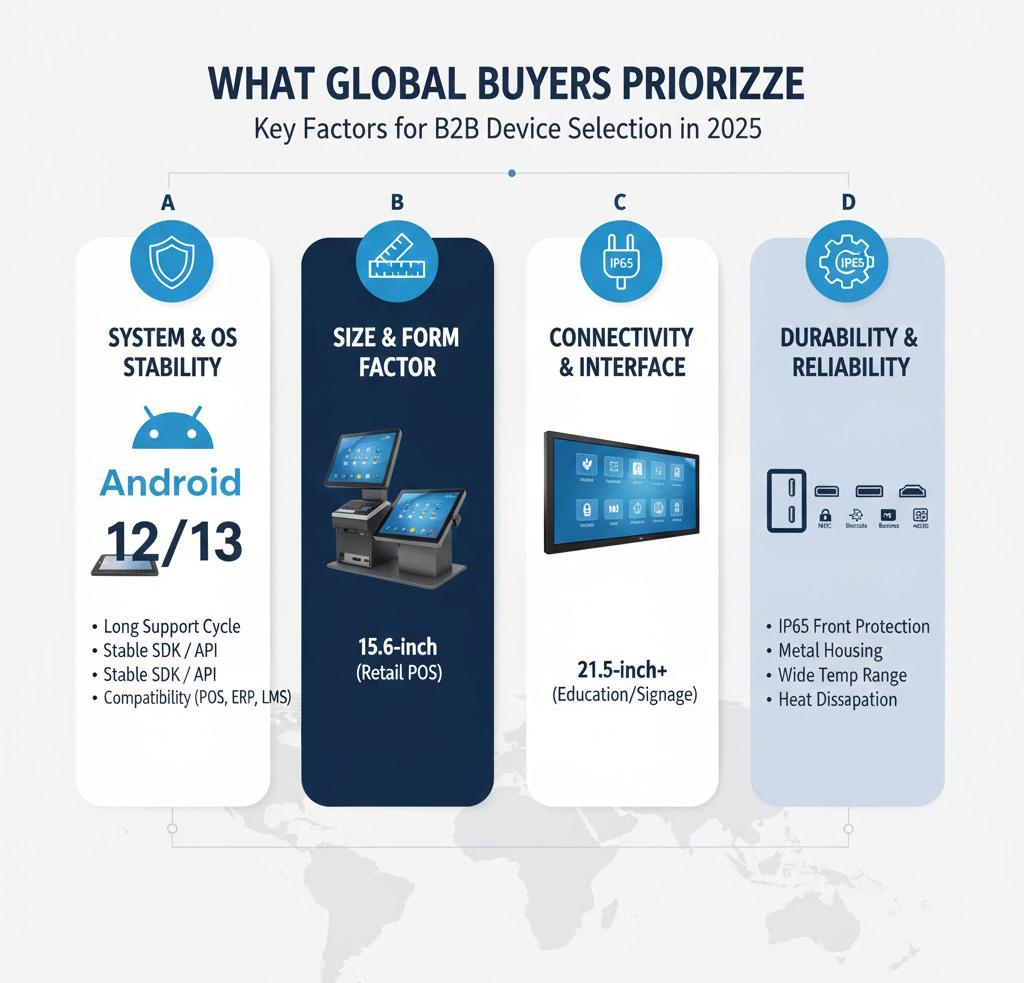
3. Recommended Devices for 2025 Year-End Procurement
1. RK3568 Android Tablet Series
A reliable choice for education, kiosks, and public service use cases.
Android 12/13
Rich SDK and customization options
Stable long-term performance
Sizes from 10.1" to 21.5"
2. 15.6-inch Android POS Terminal
Designed for modern retail, F&B, and self-service environments.
Supports dual screens
Multiple USB/RJ45 ports
Optional NFC, scanners, MSR
Slim, stable design suitable for 24/7 operation
3. 10.1-inch Industrial Touch Panel
Built for factories, automation lines, and logistics systems.
IP65 front protection
Wide temperature support
RS232 / GPIO for equipment integration
Metal enclosure with strong heat management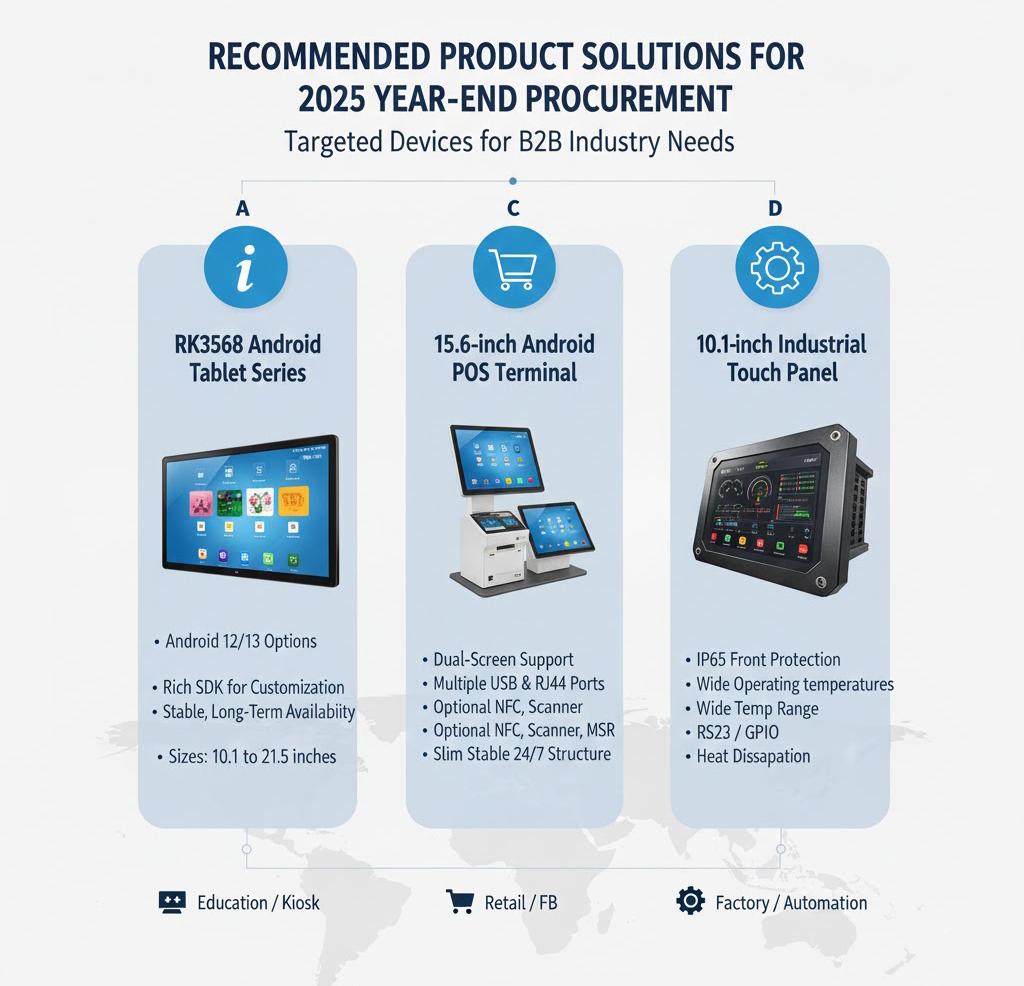
4. How to Plan Your 2025 Year-End Procurement
To secure stable supply and avoid delays during peak season, global buyers can focus on:
Confirming OS versions and long-term support
Assessing interface needs based on project scenarios
Choosing durable structures and IP standards for long-term reliability
Ensuring vendor readiness for customization, branding, or pre-installed applications
For system integrators and distributors, year-end procurement is also an opportunity to secure pricing advantages and stock availability ahead of rising Q1 demand.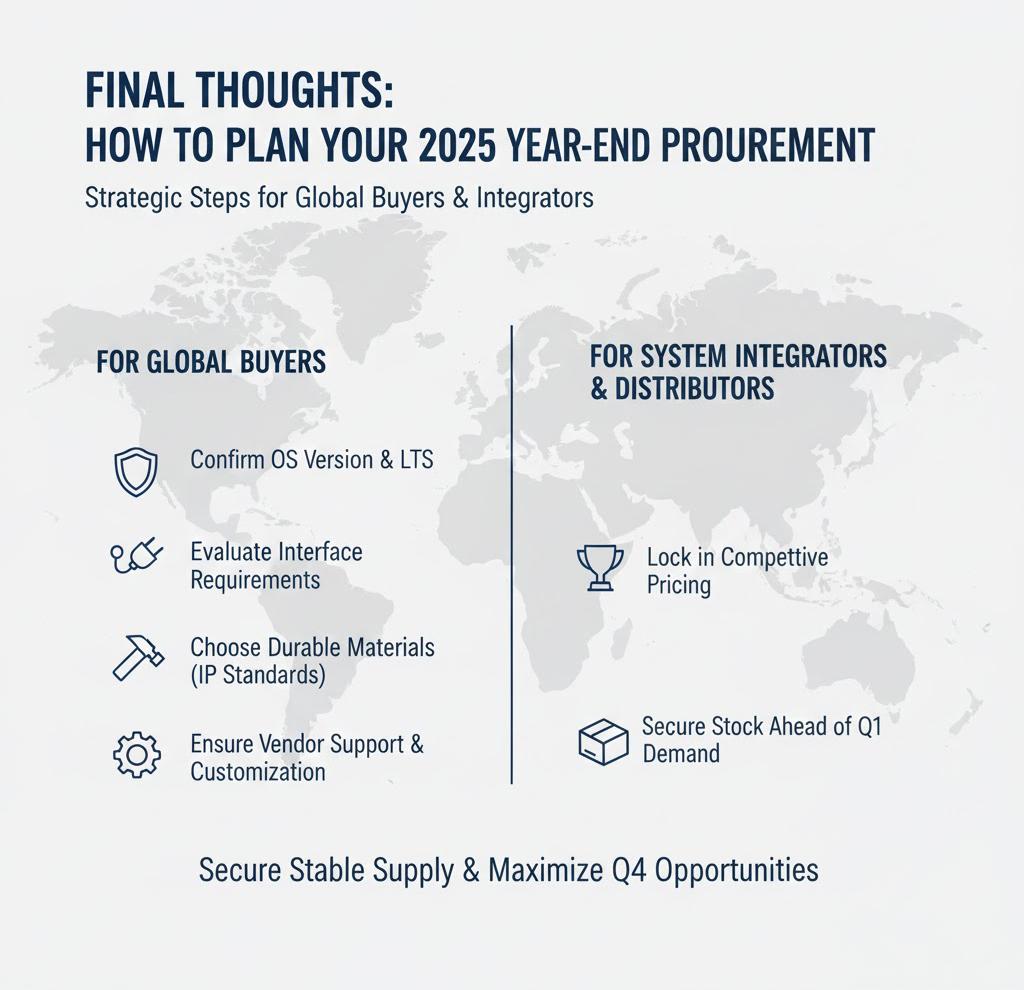
 2025 in Review: The Year Android Tablets Accelerated Globa Innovation