 86 13392660243
 hope17@cnhopestar.com
 whatsapp
Android Industrial Tablets: Global Market Trends Shaping Manufacturing and Smart Retail
 2025-12-12
 Hopestar
Global Market Trends of Android Industrial Tablets: From Manufacturing to Smart Retail
The global market for industrial tablets—ruggedized devices built for demanding and high-use enterprise environments—has entered a period of rapid evolution. As industries accelerate digital transformation, Android-based industrial tablets are emerging as a preferred choice. Their openness, flexibility, and strong ecosystem advantages are driving adoption in manufacturing, retail, healthcare, logistics, and other B2B sectors. With enterprises seeking scalable and customizable platforms, Android is steadily gaining share over traditional Windows-based terminals, a trend expected to intensify over the next three years.
1. Strong Global Shipment Growth and Market Expansion
The broader tablet market has shown a significant rebound. According to IDC, global tablet shipments reached 39.6 million units in Q3 2024, marking a 20.4% year-over-year increase and indicating renewed confidence in mobile computing across both consumer and enterprise markets.
While these figures focus on the general tablet category, the industrial tablet sector mirrors this upward trajectory. Industry reports project the global industrial tablet PC market to surpass USD 1.1 billion by 2025, with a steady 6.5–7% CAGR extending through 2030. Growing demand for rugged devices, digital workflow tools, and industrial IoT applications continues to fuel this expansion.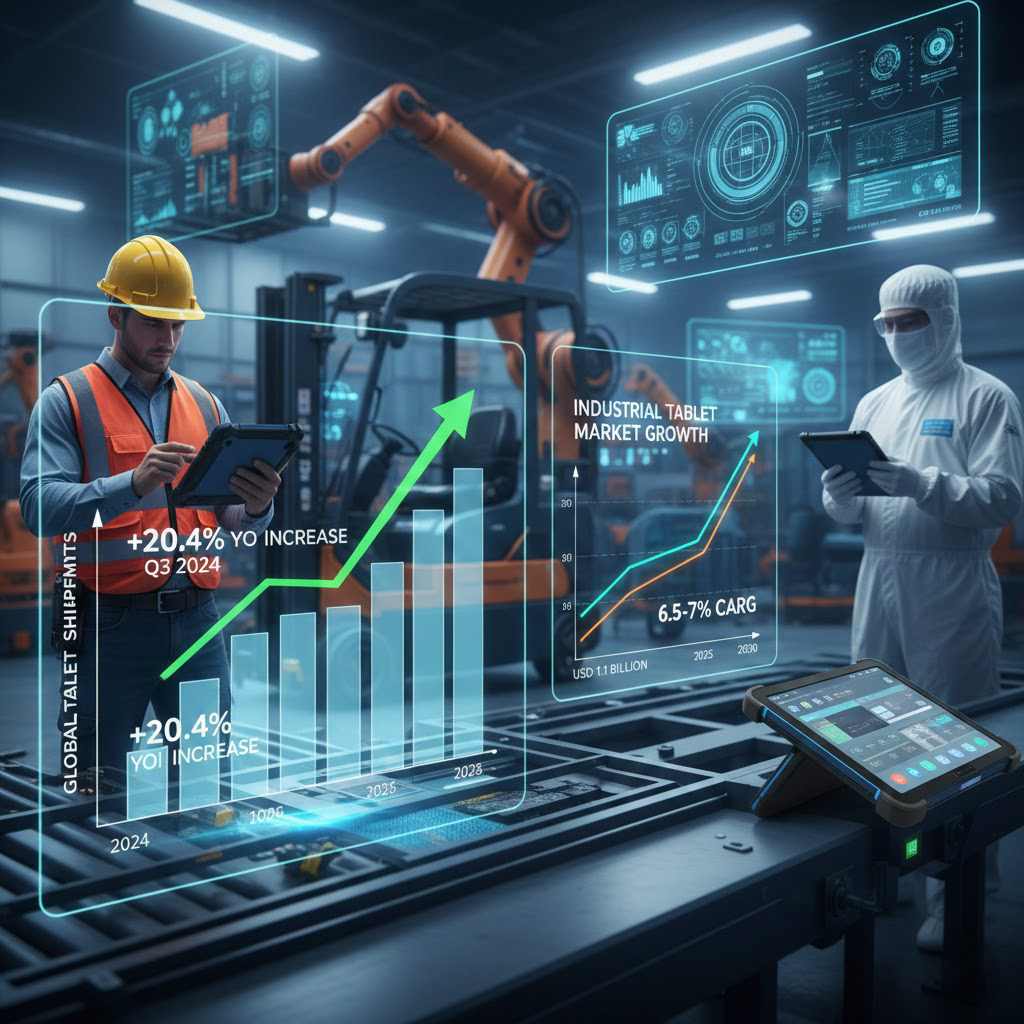
2. Android’s Rising Momentum Over Windows in Industrial Environments
Windows devices traditionally led industrial deployments due to legacy system compatibility. However, Android’s rapid maturation and ecosystem growth have reshaped the landscape. Its open-source architecture, developer-friendly tools, and lower long-term operating costs have made Android increasingly attractive for industrial and commercial applications.
Market researchers note that Android industrial tablets are now growing faster than their Windows counterparts as enterprises prioritize:
Easier customization
Broader application compatibility
Reduced licensing limitations
Seamless integration with modern IoT and cloud systems
Over the next three years, this momentum is expected to accelerate as more integrators and OEMs adopt Android as their primary B2B platform for automation and mobility solutions.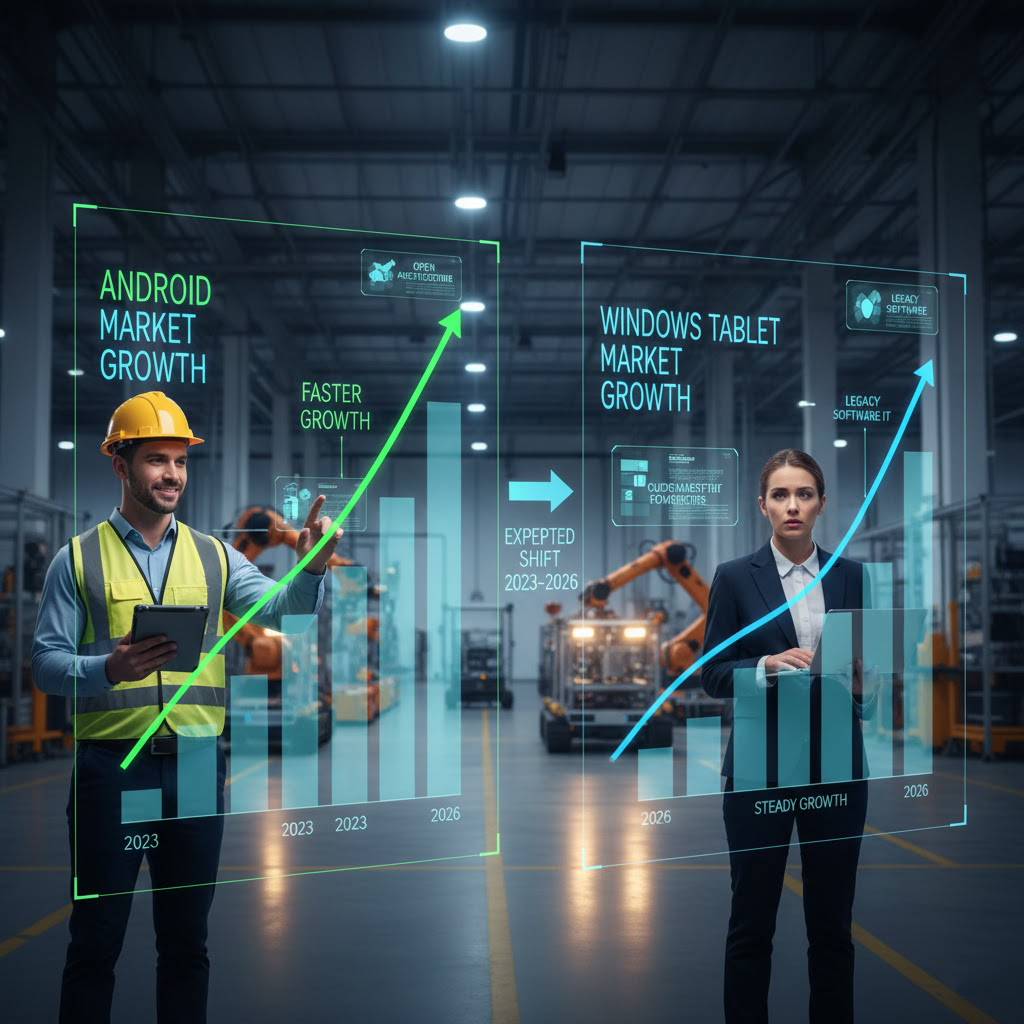
3. Expanding Industry Applications
Manufacturing Automation
In smart factories and industrial production lines, Android industrial tablets are becoming essential tools for real-time monitoring, digital instructions, quality checks, equipment diagnostics, and MES-IoT integrations. Their openness enables manufacturers to tailor workflows, interface with automation systems, and deploy custom apps with minimal barriers.
Smart Retail
Retailers are turning to Android tablets to streamline operations and elevate customer interaction. These devices support mobile POS, inventory tracking, digital signage, self-service kiosks, and queue management systems. With an interface familiar to most employees, Android reduces training time and simplifies deployment across multi-store retail environments.
Healthcare Modernization
Healthcare providers are also upgrading to industrial-grade Android tablets to support patient registration, mobile nursing stations, data access, telemedicine interactions, and secure communication. Android’s enterprise-grade security features and compatibility with EMM platforms make it a strong candidate for hospitals and clinics seeking lightweight, flexible, and secure IT solutions.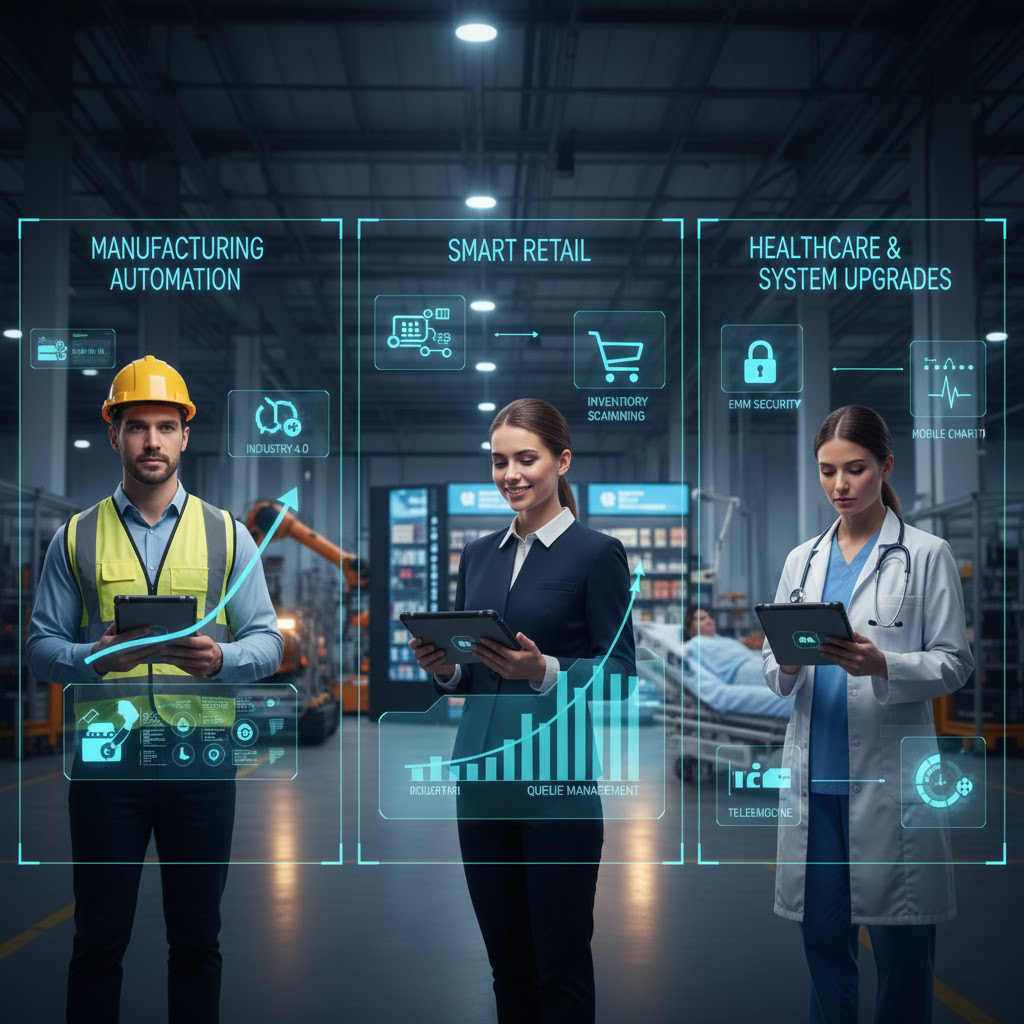
4. Why Android Is Set to Lead the B2B Market
Several key advantages underpin Android’s continuing rise in the industrial segment:
Open and Flexible Architecture
Android offers unmatched flexibility for OEMs and integrators, enabling them to optimize systems, customize interfaces, and develop bespoke industrial applications without restrictive licensing.
Massive Developer Ecosystem
With millions of developers worldwide, Android ensures rapid innovation, strong app availability, and easier long-term maintenance for enterprise solutions.
Cost Efficiency and Broad Compatibility
Android tablets typically deliver a lower total cost of ownership while supporting a wide range of peripherals, connectivity options, and industrial interfaces—ideal for complex operational environments.
These advantages reinforce Android’s position as the platform of choice for long-term digitalization and automation strategies.
Conclusion
The global industrial tablet market is moving into a new stage of growth, driven by rising tablet shipments and expanding digital transformation efforts across multiple industries. Android industrial tablets—with their flexibility, rich ecosystem, and competitive cost structure—are increasingly replacing legacy Windows-based systems in manufacturing, retail, healthcare, and other enterprise sectors.
As organizations continue to modernize workflows and integrate IoT-centric tools, Android is positioned to expand its share of the B2B device market steadily over the next three years, becoming the leading foundation for next-generation industrial and commercial terminals.
 AI + Android Terminals: Redefining the Digital Touchpoint for Modern Enterprises