 86 13392660243
 hope17@cnhopestar.com
 whatsapp
Redefining Luxury Hotel Rooms Through Intelligent Control Tablets
 2026-01-16
 cnhopestar
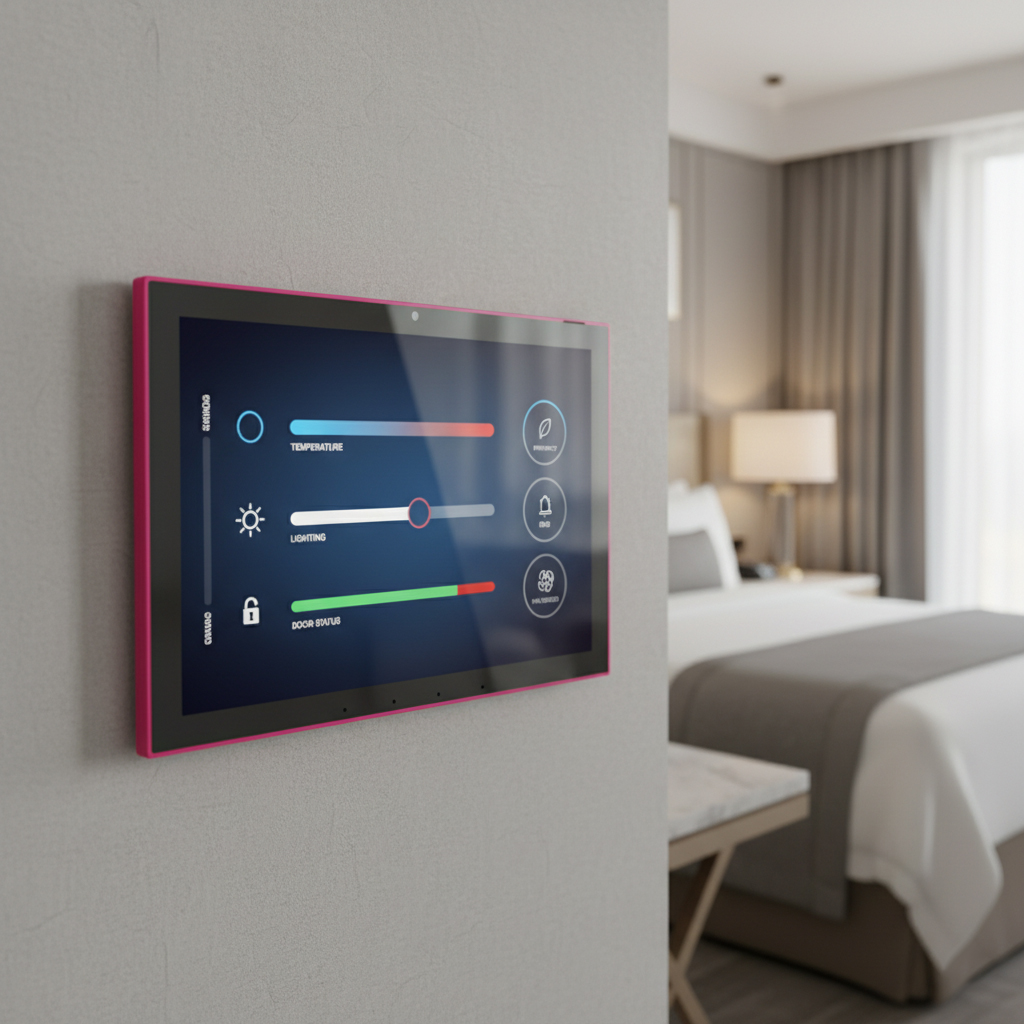
In high-end hospitality, a premium guest experience is no longer defined solely by interior design or attentive service. Increasingly, it depends on how seamlessly guests can interact with their room environment. Many hotels still rely on fragmented control systems where lighting, HVAC, curtains, and entertainment operate independently. This complexity often leads to confusion, limits personalization, and weakens brand perception. By introducing Smart Control Tablets for Hotel Rooms, luxury properties can consolidate all room functions into a single Hotel Guest Room Control Panel, delivering intuitive, responsive control that aligns with modern guest expectations and elevates the overall stay.
Serving Global Luxury Hotels with Diverse Room Requirements
The project focused on an international luxury hotel group operating across multiple regions, catering to business travelers and leisure guests alike. Each property featured unique room layouts, suite configurations, and design styles, requiring a flexible and scalable solution. The objective was to centralize room management using Hospitality Smart Control Tablets, while ensuring smooth integration with existing Property Management Systems (PMS), Building Management Systems (BMS), and connected IoT infrastructure. Multi-language interfaces and personalized room settings were also essential to support a global guest base and maintain a consistent brand experience.
Limitations of Conventional Hotel Room Control Systems
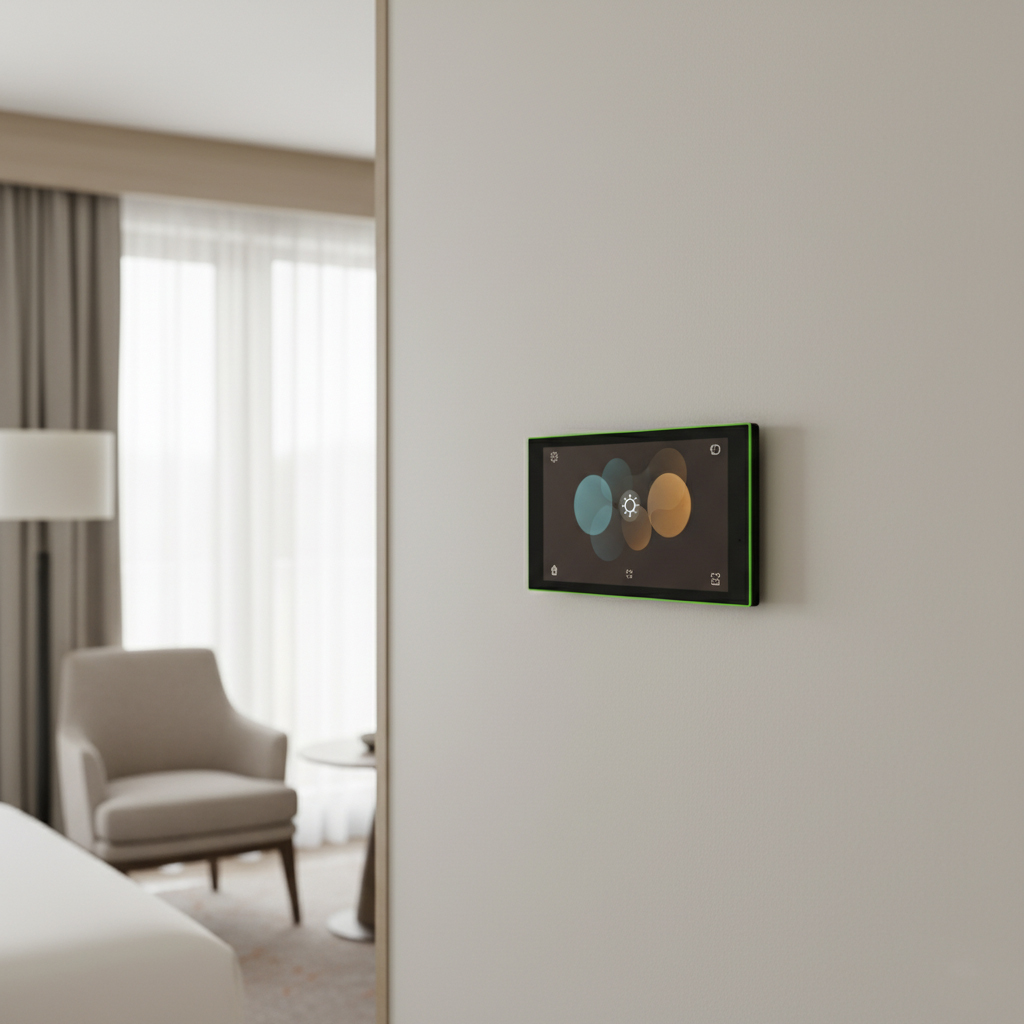
Before implementing a unified tablet solution, the hotels faced operational and experiential challenges. Guests were required to interact with multiple switches, panels, or remotes to control basic room functions, which reduced ease of use and satisfaction. From an operational standpoint, service requests were handled manually, slowing response times and increasing staff workload. The absence of centralized visibility also restricted energy optimization and predictive maintenance capabilities. These constraints highlighted the need for Customized Hotel Room Control Tablets that could support brand-level customization while improving both guest convenience and operational efficiency.
A Customized In-Room Tablet Control Solution
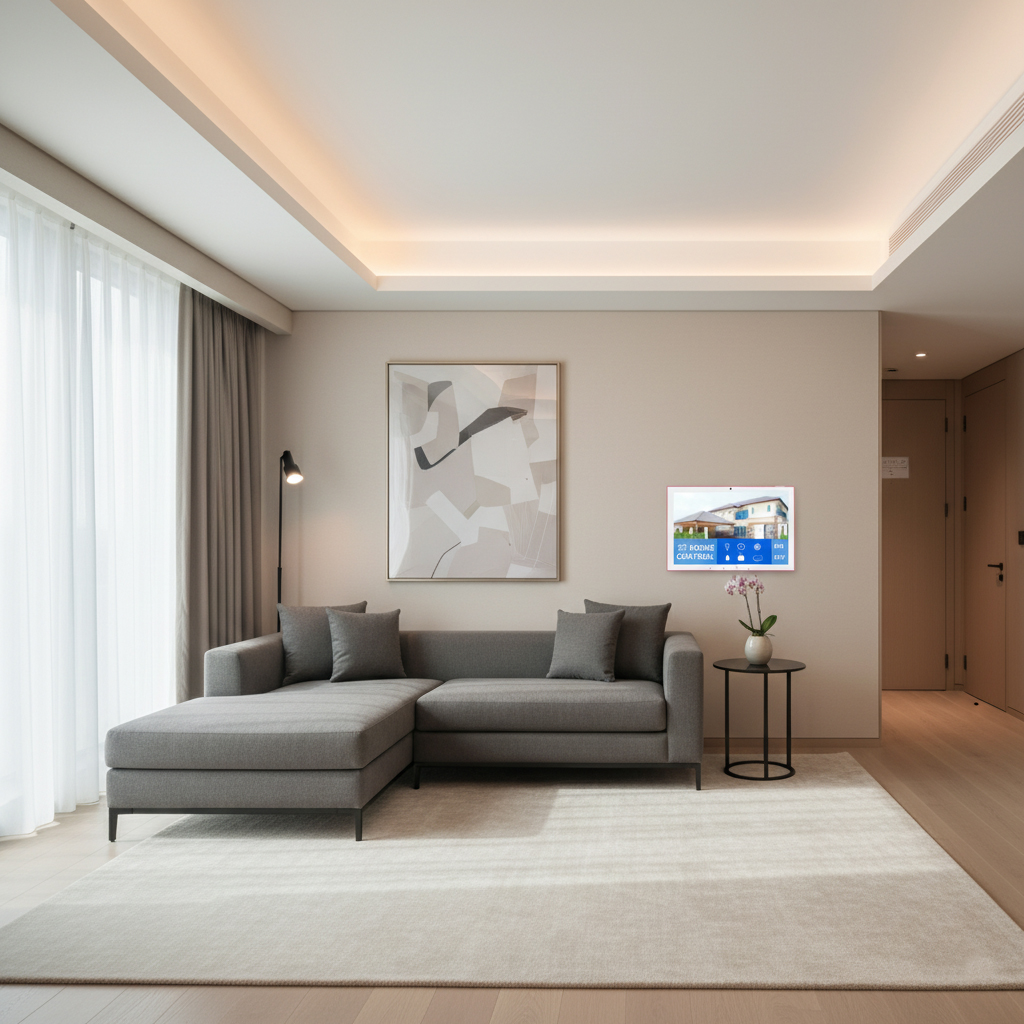
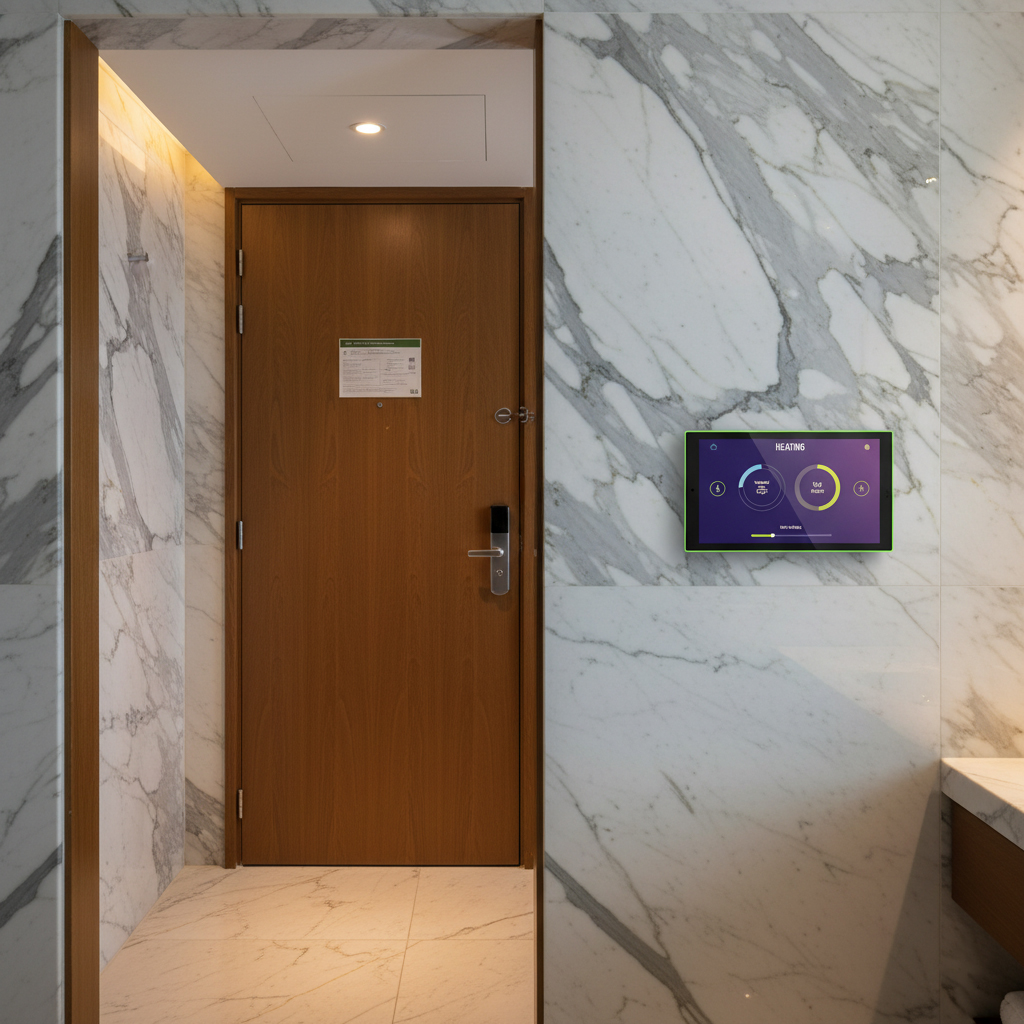
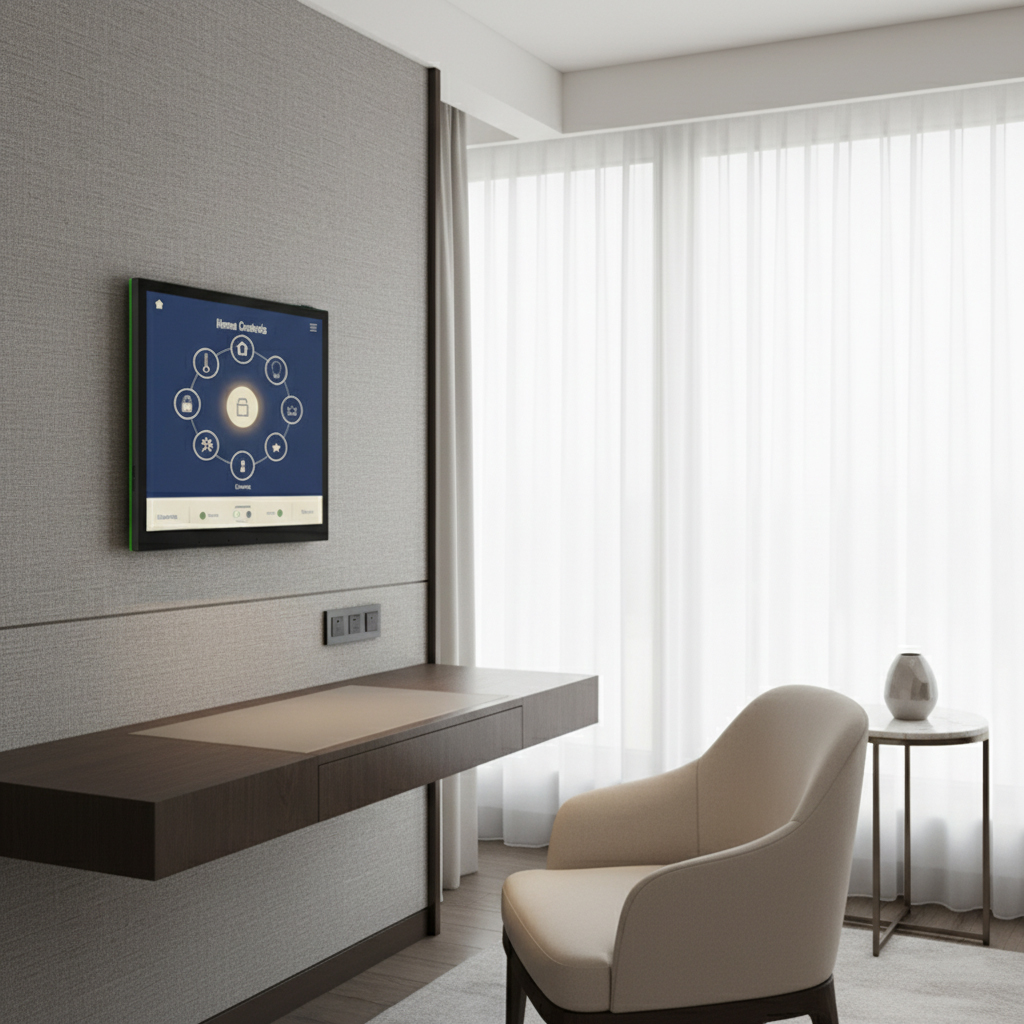
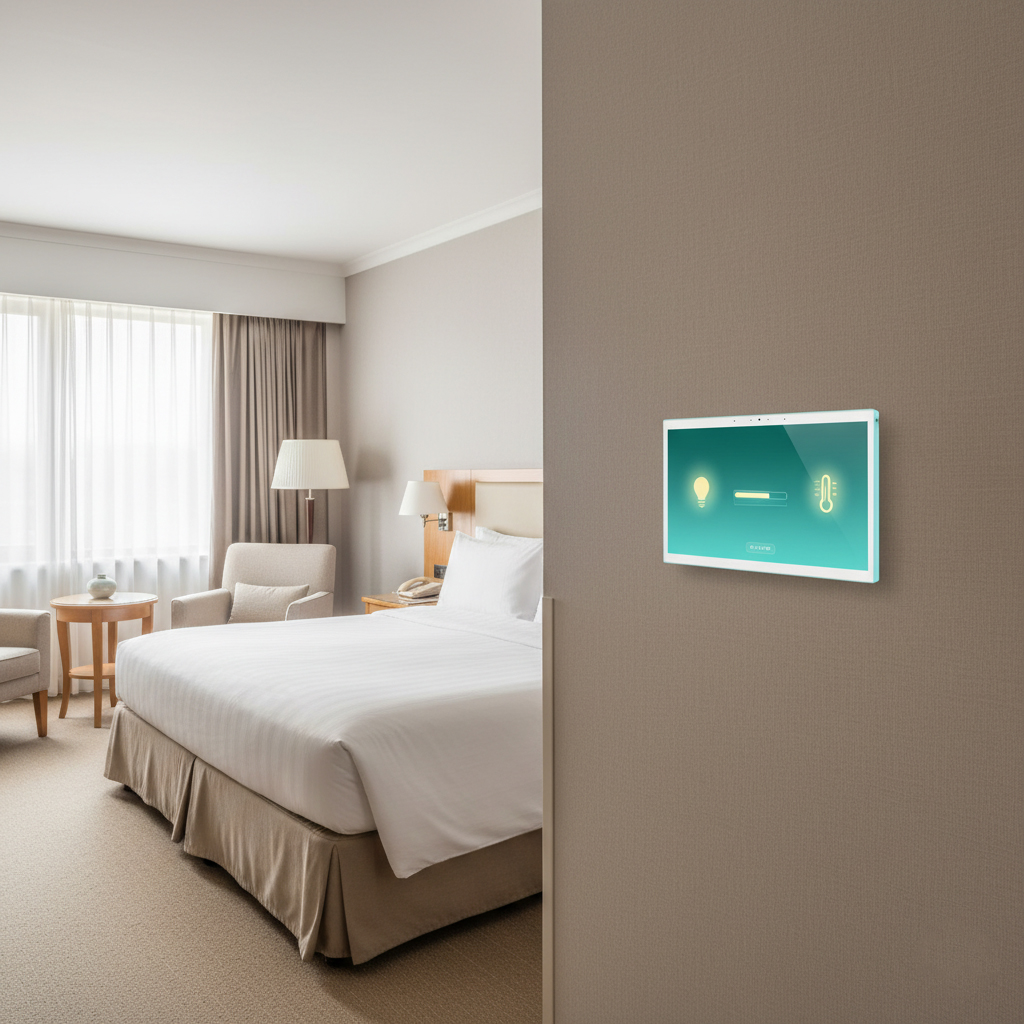
The deployed solution featured Smart Hotel Room Tablets with fully customized user interfaces tailored to each property’s visual identity and workflow. Acting as a unified In-Room Control Tablet, each device allowed guests to manage lighting, temperature, curtains, and entertainment from one touchpoint. Deep integration with PMS and BMS platforms enabled real-time monitoring of room occupancy, energy usage, and service requests. Advanced functions—including scene presets, suite-level multi-room control, and automated Do Not Disturb modes—were configured according to room type, demonstrating the flexibility of a Hospitality IoT Integration Tablet across different operational scenarios.
Enhancing Guest Interaction and Personalization
Upon entering their rooms, guests encountered a clean, intuitive Guest Room Smart Control Display. With minimal interaction, they could adjust lighting ambience, set preferred temperatures, or launch entertainment systems. Personalized welcome screens and multi-language menus enhanced the sense of exclusivity and care. On the operational side, concierge and housekeeping teams received real-time notifications through integrated systems, allowing faster and more accurate responses. In premium suites, synchronized multi-room controls enabled families or corporate guests to manage multiple spaces effortlessly, highlighting the advantages of a fully integrated Hotel Room Automation Display.
Operational Efficiency and Cost Optimization
The adoption of Hotel Room Management Tablets delivered measurable operational benefits. Centralized coordination reduced room service delays by over 40%, while guest satisfaction scores related to in-room experience increased by approximately 35%. Automated lighting and HVAC management contributed to a 15% reduction in energy consumption, reinforcing the value of Smart Hotel Room Management Tablets for long-term cost control. Maintenance teams also gained from remote diagnostics and monitoring, enabling proactive servicing and minimizing unexpected downtime.
Feedback from Hotel Management Teams
Hotel leadership emphasized the dual value of the solution. One operations executive noted that the Hotel Automation Control Tablet not only enhanced guest interaction but also reinforced the property’s brand identity through a consistent digital interface. Another senior manager highlighted the seamless integration with existing systems, which simplified operations across multiple locations and improved service coordination. These insights reflect the broader impact of adopting a Hospitality Smart Control Tablet as both a guest-facing and management tool.
Strategic Value for Hotel Groups and Integrators
This case demonstrates how luxury hotels can leverage Customized Hotel Room Control Tablets to differentiate their properties while streamlining internal workflows. By combining brand-aligned UI design, room-level customization, and full IoT integration, hotels deliver intuitive, personalized guest experiences without increasing operational complexity. For hotel groups, system integrators, and OEM/ODM partners, In-Room Control Tablets for Hotels represent a scalable, future-ready investment—supporting brand consistency, operational efficiency, and elevated guest satisfaction in an increasingly digital hospitality landscape.
 When In-Store Messaging Loses Control Across Retail Locations