
 86 13392660243
 hope17@cnhopestar.com
 whatsapp
 2026-08-18
 cnhopestar
 The shift toward private label reflects a broader change in the electronics supply chain. Distributors that already understand local customers, purchasing habits, and market demand are increasingly looking for ways to influence the product itself rather than only controlling the sales channel.
An own-brand monitor project represents this change. The goal is not simply to replace an existing logo with a new one. For example, a 24-inch borderless gaming monitor can combine borderless industrial design, Fast IPS technology, HDR400, and 10-bit color performance to support a more distinctive own-brand positioning. It is about transforming market knowledge into a product strategy that matches a specific customer group.
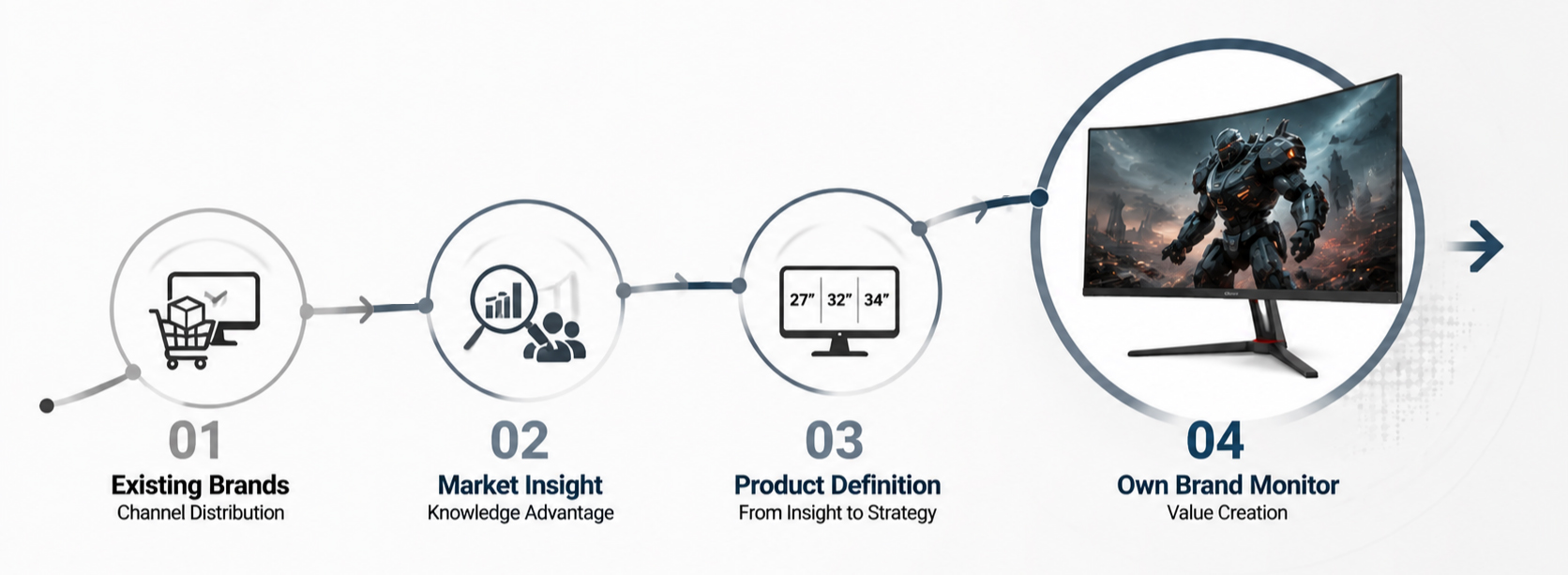
For distributors considering this transition, the main challenge is usually not finding a factory. The more difficult decision is determining which products to develop, how much customization is necessary, and how to reduce the risk of entering a new category.
Why Are Distributors Moving Toward Own-Brand Monitor Development?
Traditional electronics distribution has always relied on strong sales channels and relationships with existing brands. This model allows companies to enter markets quickly, but it also limits control over product positioning, pricing strategy, and differentiation.
As monitor products become more competitive, distributors are increasingly looking beyond short-term sales opportunities. Companies with strong customer relationships and market knowledge are beginning to explore private label strategies to create greater control over their product portfolios.
This change does not mean every distributor should immediately create a complete product line. Instead, successful transition usually starts with identifying a clear market opportunity and selecting products that match customer demand.
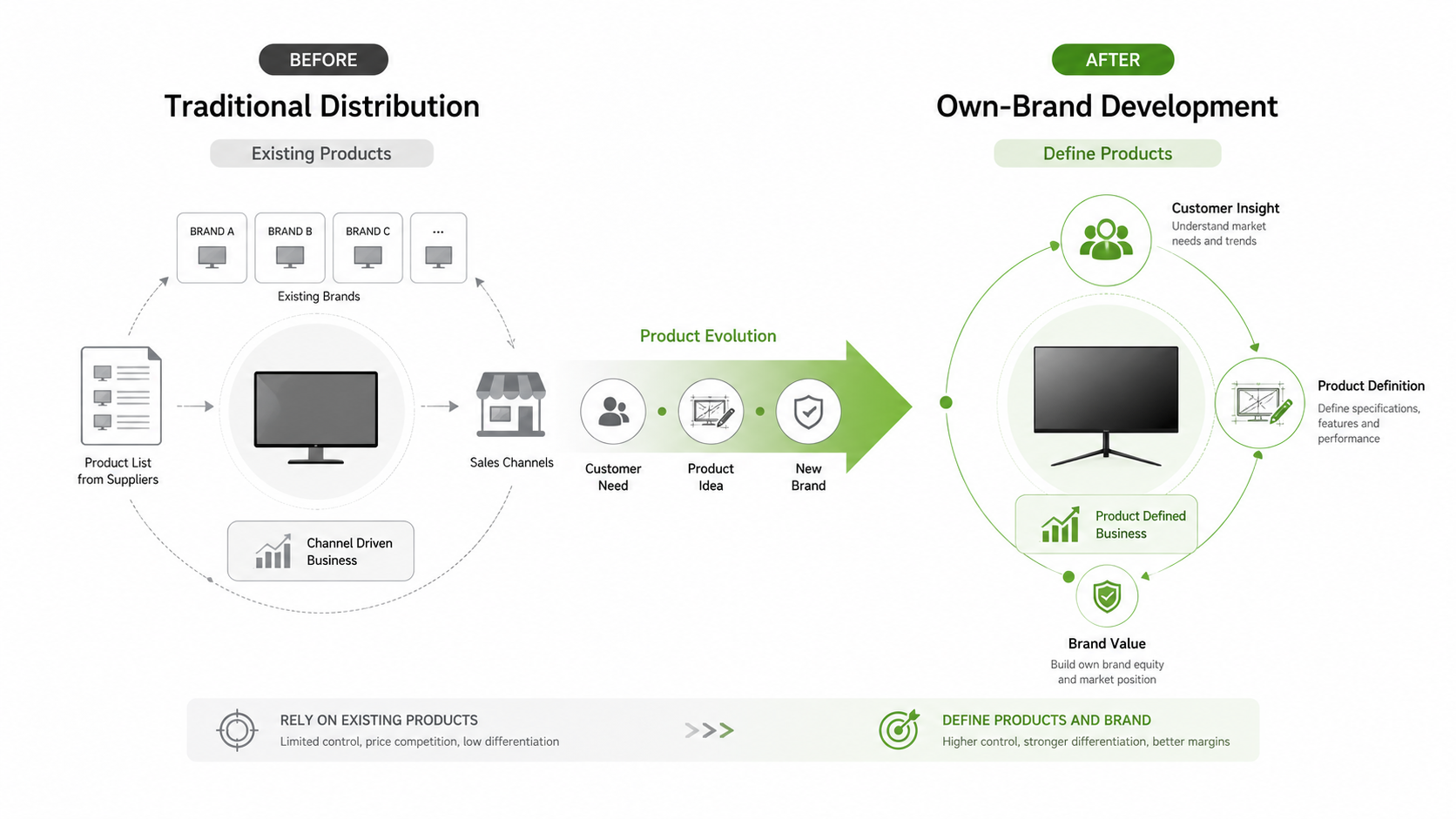
For a distributor, the key business question changes from:
For distributors moving toward private label, the business focus gradually shifts from selecting available products in the market to defining products that better match their own customers, channels, and long-term brand strategy.
Case Background: A Spanish Electronics Distributor Exploring Its First Monitor Brand Project
This case involves a Spain-based electronics components distributor evaluating the possibility of developing its own-brand monitor products through an OEM/ODM partnership.
The company already had experience in electronics distribution and access to regional market channels. Instead of continuing to rely only on third-party brands, it was exploring how office monitors and gaming monitors could become part of its own product portfolio.
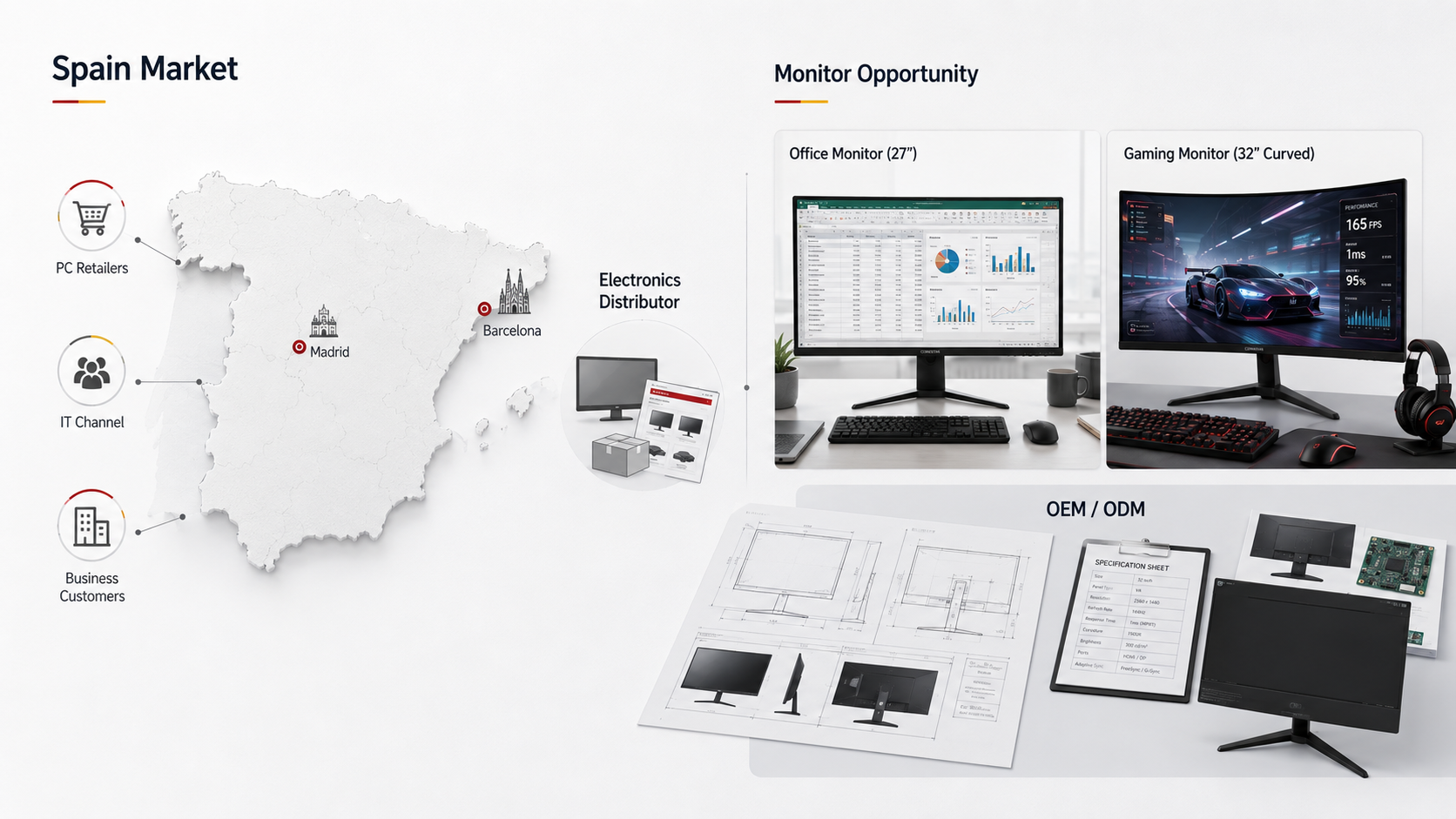
At this stage, the project was focused on product evaluation and preparation for possible production expansion. The business situation can be summarized as:
| Category | Description |
|---|---|
| Market Role | Electronics components distributor |
| Product Direction | Office monitors and gaming monitors |
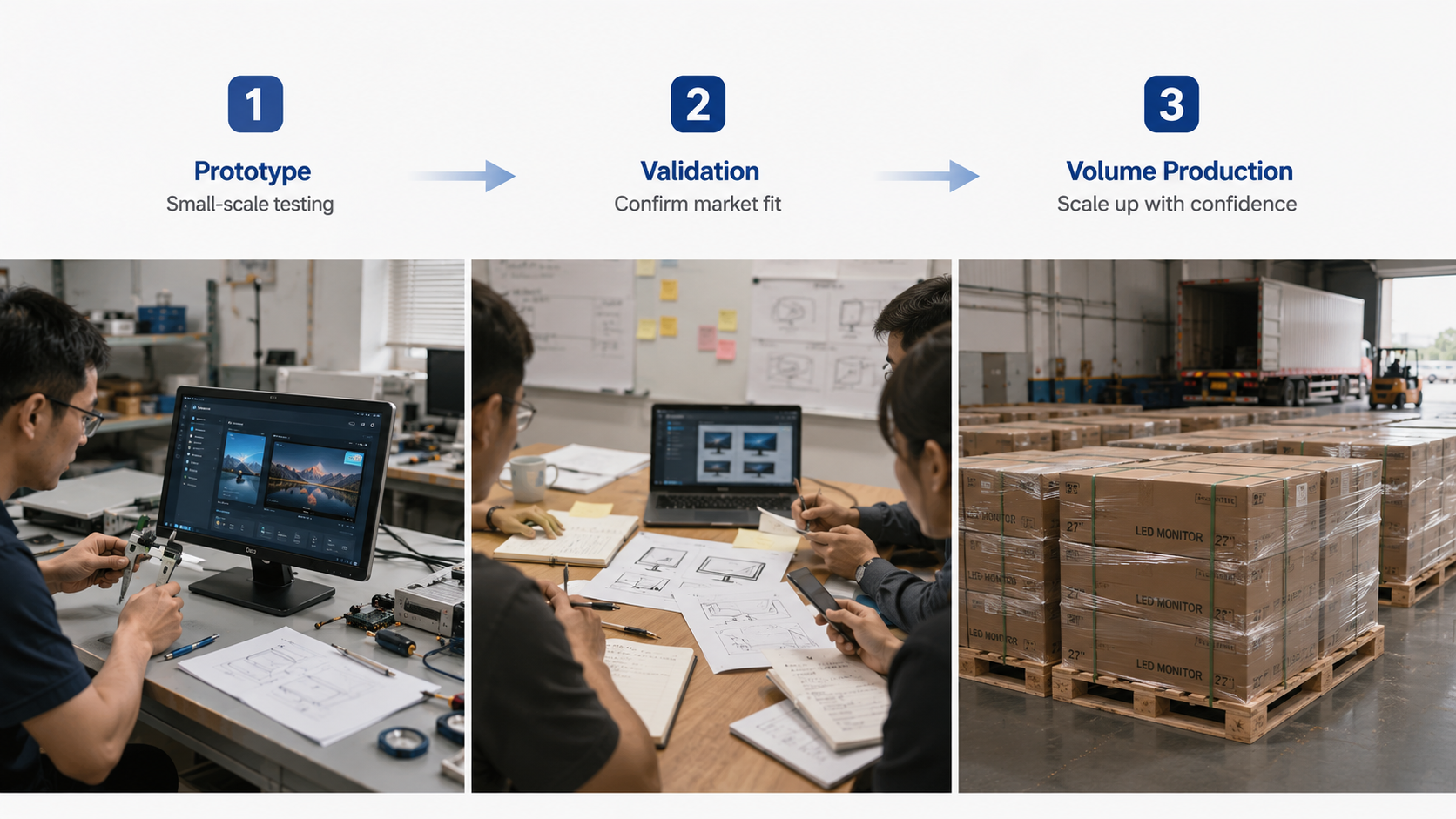
| Cooperation Stage | Prototype evaluation toward potential volume production |
The Real Challenge Behind a Private Label Monitor Project
A distributor entering the monitor market already has one important advantage: customer knowledge.
The company understands its buyers, sales channels, and market expectations. However, this knowledge must be converted into concrete product decisions before manufacturing begins.
A gaming monitor, for example, is not defined by a single specification. A mainstream model such as a 23.8-inch 1ms gaming monitor may focus on broad desktop and entry-level esports demand, while screen size, resolution, refresh rate, panel technology, pricing position, and target users must be evaluated together before the product platform is selected.
This creates a different decision process compared with traditional distribution. A distributor must determine whether the first product line should focus on mainstream demand or premium positioning, whether one core model is enough for market testing, and which features actually create purchasing value.
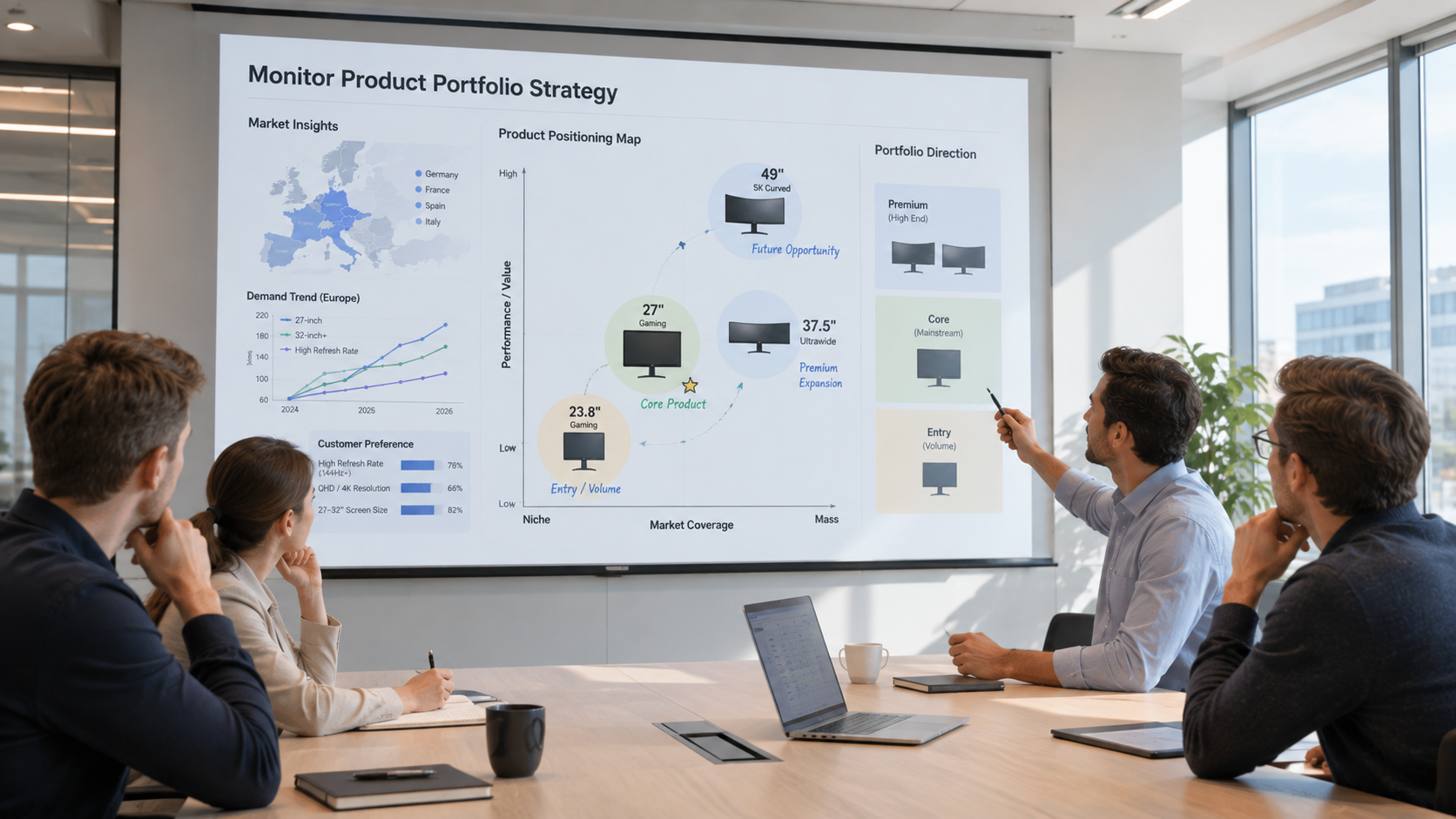
The mistake many first-time brand owners make is trying to build too many products too early. A stronger approach is usually to define a clear product role first and expand only after market feedback confirms demand. After validating mainstream models, distributors may consider adding premium formats such as a 37.5-inch ultrawide gaming monitor or a 49-inch 5K curved gaming monitor for professional gaming, content creation, and high-end workstation channels.
How OEM Cooperation Helps Transform Market Demand into Products
From Product Concept to Prototype Validation
The role of an OEM partner extends beyond manufacturing. For distributors entering a new product category, the supplier becomes part of the product development process.
During the early stage, both sides need to align on target market positioning, product category, specification range, customization requirements, and expected production scale.
For gaming monitor projects, this may involve evaluating different product platforms, such as a mainstream 27-inch 165Hz curved gaming monitor for immersive gaming demand or a higher-performance 24.5-inch 240Hz gaming monitor for competitive esports users.
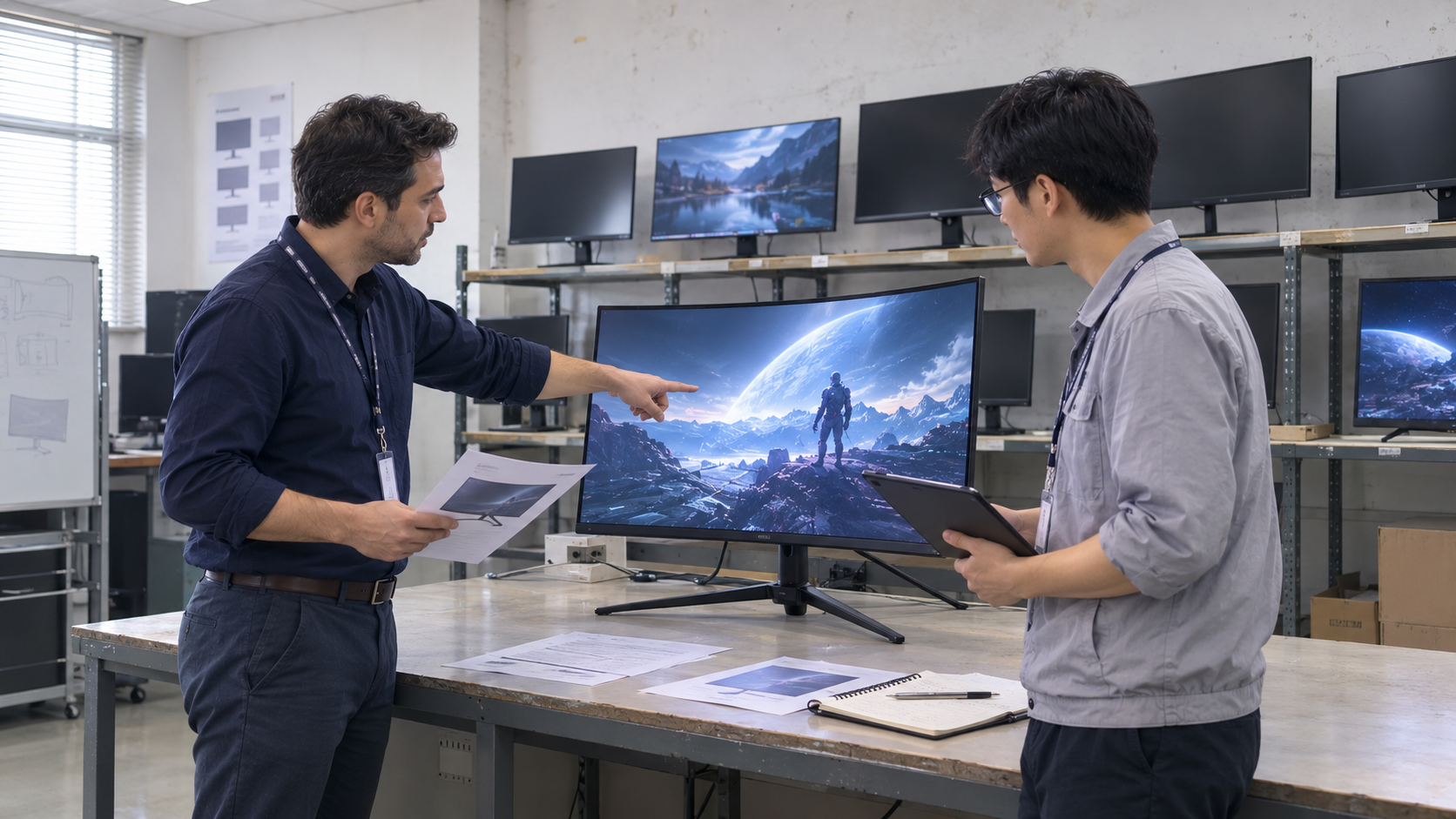
Prototype validation becomes the connection between product planning and real market requirements. A distributor may compare a mainstream 165Hz configuration with a 240Hz esports gaming monitor to evaluate whether local customers are willing to pay for higher refresh rates and competitive-performance features. Instead of committing immediately to large-scale production, distributors can test whether the selected configuration matches customer expectations.
Why MOQ and Production Planning Matter for New Monitor Brands
Moving from prototype evaluation to volume production requires a balance between opportunity and risk.
For established brands, larger production quantities may be easier to manage. For a distributor launching its first own-brand monitor line, production planning requires more careful consideration.
| Area | Business Impact |
|---|---|
| MOQ | Influences initial investment, inventory pressure, and market testing strategy |
| Customization | Determines brand differentiation and development cost |
| Production Planning | Supports stable transition from samples to larger production orders |
What Should Distributors Evaluate Before Launching Their Own Monitor Brand?
When distributors evaluate OEM suppliers, manufacturing capability is only one part of the decision.
The more important question is whether the supplier can help convert market requirements into a realistic product plan.
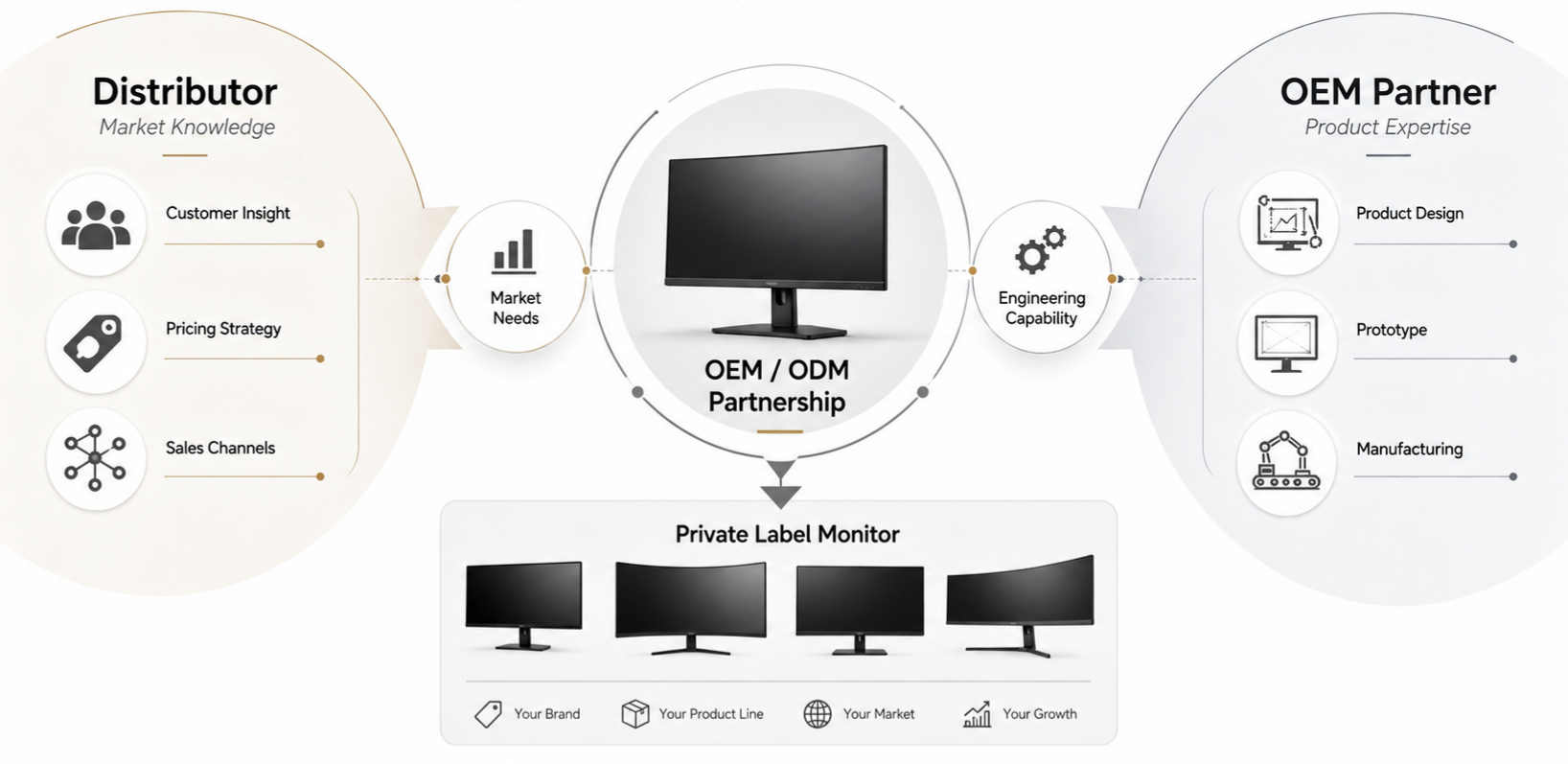
A successful OEM/ODM partnership connects market understanding, product development capability, and manufacturing execution.
The distributor contributes knowledge of customer demand, pricing expectations, and sales channels. The OEM partner helps translate those requirements into specifications, platforms, prototype samples, and production solutions.
This connection determines whether a private label monitor project becomes a sustainable product line or simply another sourced product.
What This Case Reveals About Distributor-to-Brand Transformation
The transition from distributor to brand owner is not mainly a manufacturing change. It is a change in how companies create value.
Traditional distribution focuses on moving existing products through established channels. Private label development requires companies to participate in product decisions, market positioning, and customer experience.
For electronics distributors, this creates a new opportunity: their understanding of local markets can become the foundation for their own products.
However, this transition depends on selecting the right product scope and the right OEM/ODM partner. A structured path from product evaluation to prototype validation and volume production can reduce unnecessary risk while building a stronger foundation for long-term brand development.
Companies exploring own-brand gaming monitors or other display categories can begin by evaluating their target market, product strategy, and OEM development requirements before moving into production planning.
For distributors exploring similar opportunities, CnHopestar supports monitor OEM/ODM projects with product development, customization options, and production capabilities to help transform market requirements into practical display solutions.
 Transforming Bedside Care with Integrated Medical Monitoring Tablets