 86 13392660243
 hope17@cnhopestar.com
 whatsapp
RK3576: A Practical SoC Choice for Scalable Android Tablet Solutions
 2026-01-12
 Hopestar
Not every commercial Android project requires flagship-level computing power.
In many real-world deployments, Android tablets are expected to operate continuously, remain stable under long working hours, and scale efficiently across large installations.
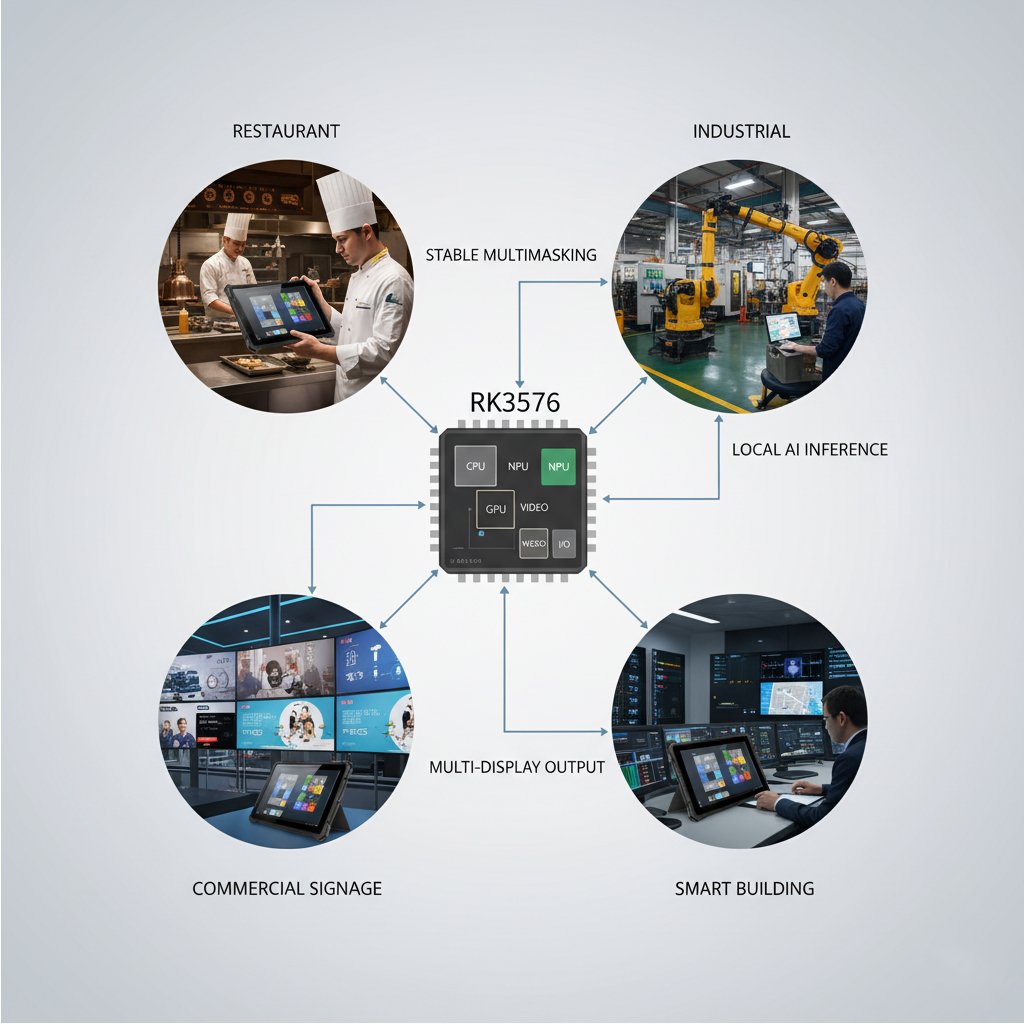
RK3576 is positioned as a balanced platform for Android-based commercial devices—supporting multitasking, local AI processing, and multi-display output without unnecessary system complexity.
Rather than focusing on raw specifications, this article explains how RK3576 supports deployable Android tablet solutions across common commercial and industrial scenarios.
Balanced Computing for Always-On Android Devices
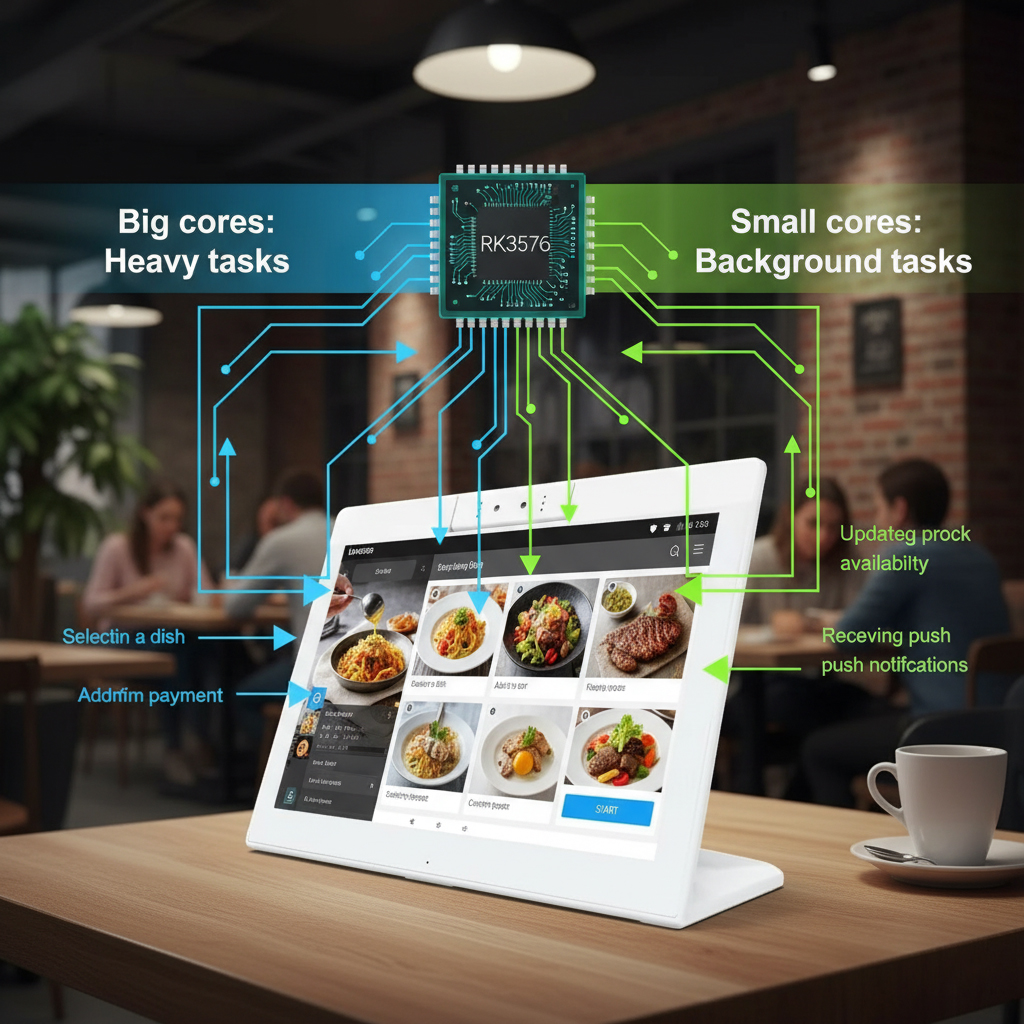
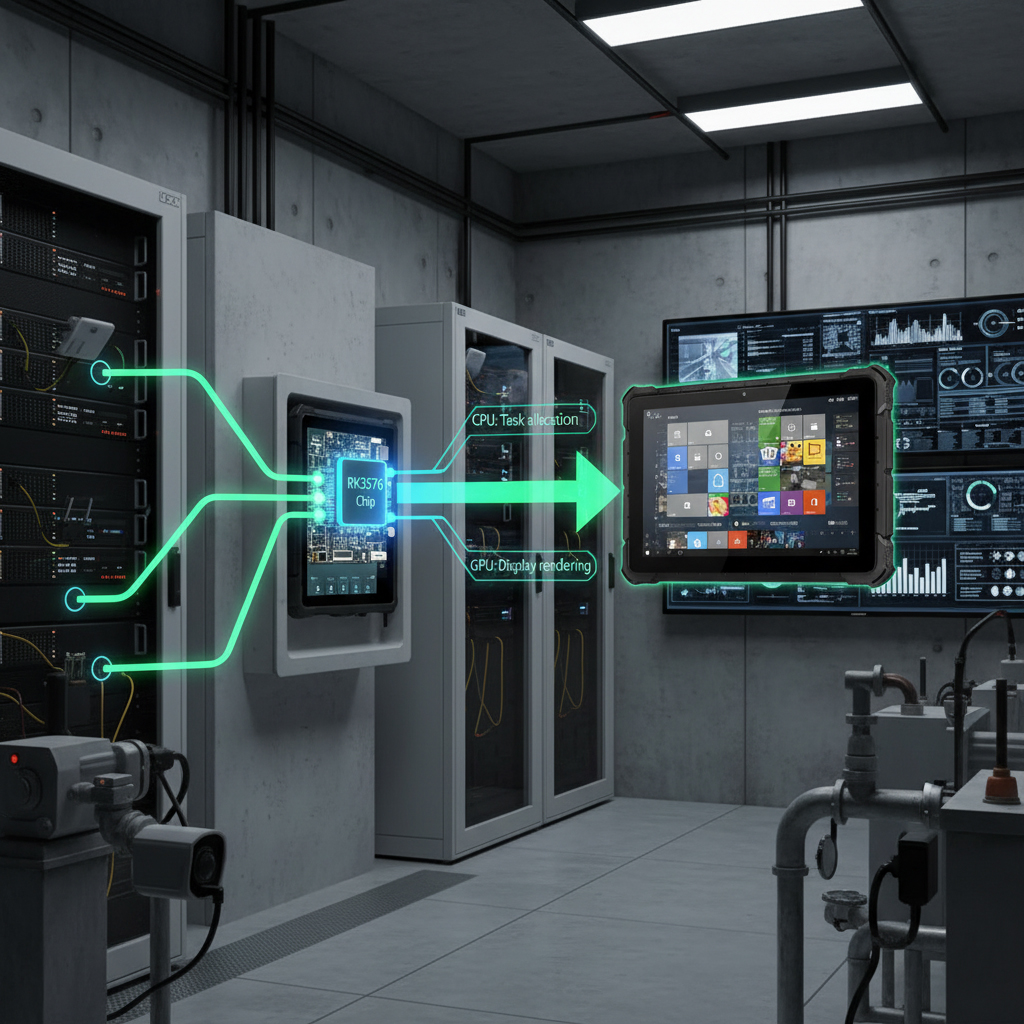
RK3576 adopts a heterogeneous CPU architecture designed for task separation rather than peak performance.
This approach allows Android devices to allocate resources intelligently:
Foreground tasks such as UI interaction and business logic
Background processes including system services and monitoring
For always-on Android tablets, this balance helps maintain smooth operation while keeping power consumption under control—an essential requirement for wall-mounted, countertop, and embedded deployments.
Local AI processing further enables Android systems to perform visual or voice-related tasks directly on-device, reducing reliance on cloud connectivity and improving response consistency in commercial environments.
Commercial Advertising & Digital Signage Applications
In retail and public commercial spaces, Android digital signage tablets are commonly deployed as long-running display terminals.
Typical implementations include:
Wall-mounted Android advertising tablets
Interactive Android display panels
Multi-screen commercial information terminals
In these scenarios, stability and synchronized display output matter more than extreme resolution or gaming-level graphics.
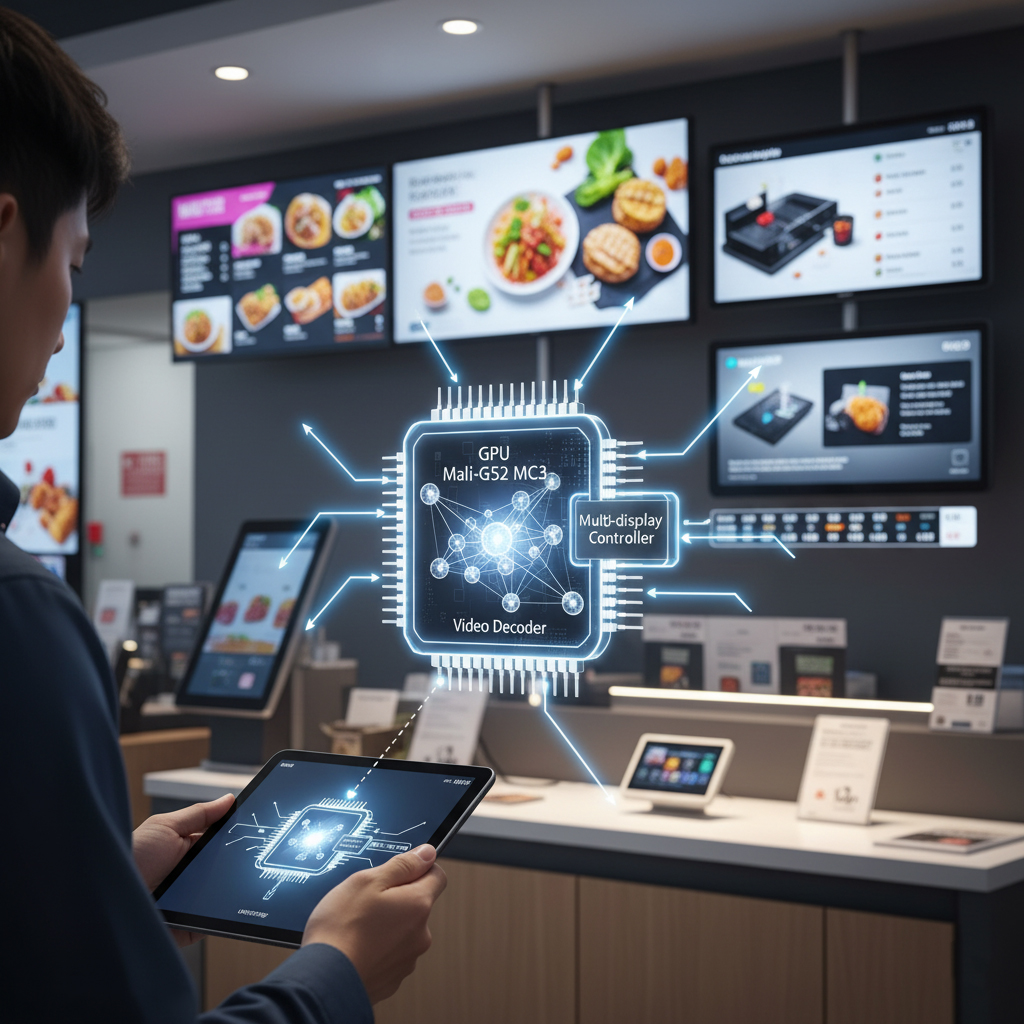
RK3576-based platforms allow Android display devices to handle content playback, system control, and background tasks simultaneously, supporting reliable operation across extended business hours.
Android POS Systems & Restaurant Ordering Tablets
For retail counters and food service environments, Android POS systems must remain responsive during peak usage while supporting peripherals such as printers, scanners, and secondary displays.
Common use cases include:
Dual-screen Android POS tablets
Self-service ordering Android tablets
Countertop payment and ordering terminals
The platform’s balanced processing model enables POS devices to separate transaction logic from background system tasks, helping maintain UI responsiveness even during continuous operation.
This makes RK3576 suitable for scalable POS rollouts where operational stability directly impacts customer experience.
Medical & Healthcare Android Tablets
Healthcare deployments prioritize reliability, predictable performance, and long-term availability.
RK3576-based medical Android tablets are commonly applied in:
Patient registration terminals
Medical information display tablets
Clinical workflow Android panels
Local processing capability allows these Android devices to support recognition and interface functions without constant cloud dependency, contributing to faster response times and improved system autonomy in controlled environments.
Industrial Control & Monitoring Android Panels
In industrial and semi-industrial settings, Android industrial panels often function as continuous control or monitoring interfaces.
Typical applications include:
Industrial control Android tablets
Equipment monitoring panels
Factory-floor Android terminals
Low power consumption and simplified thermal requirements allow these Android panels to be installed in enclosed or space-limited environments, supporting long-term operation with reduced maintenance complexity.
Designed for Scalable Deployment, Not Just Performance
For large-scale Android projects, success depends on more than processor capability alone.
System designers increasingly focus on:
Predictable performance under continuous workloads
Power and thermal stability
Long-term supply consistency
Ease of system integration and customization
RK3576 aligns with these priorities by enabling practical Android tablet platforms that can be adapted across multiple industries using a shared hardware foundation.
From Chip Capability to Real Android Products
To bridge the gap between SoC capability and real deployment, RK3576-based Android platforms are often presented using:
Clear workload distribution diagrams
Visual explanations of display and AI task flow
System-level views focused on real application behavior
These approaches help procurement teams and system integrators understand how Android tablets will perform in actual commercial environments—beyond specification sheets.
Conclusion: RK3576 as a Platform for Real-World Android Tablets
RK3576 is not positioned as a flagship processor.
Instead, it serves as a practical foundation for Android tablets used in commercial displays, POS systems, medical terminals, and industrial panels.
By focusing on balance, efficiency, and deployability, RK3576 supports Android devices designed for long-term operation, scalable rollout, and real business use—where stability matters as much as performance.
 How RK3588 Strengthens Android Commercial Tablets Across Real-World Applications