
 86 13392660243
 hope17@cnhopestar.com
 whatsapp
Why the Right POS Terminal Depends on Where and How It Will Be Deployed
 2026-09-26
 cnhopestar
The POS terminal market is entering a more configuration-driven stage as payment methods, merchant environments, and operating models continue to diversify.
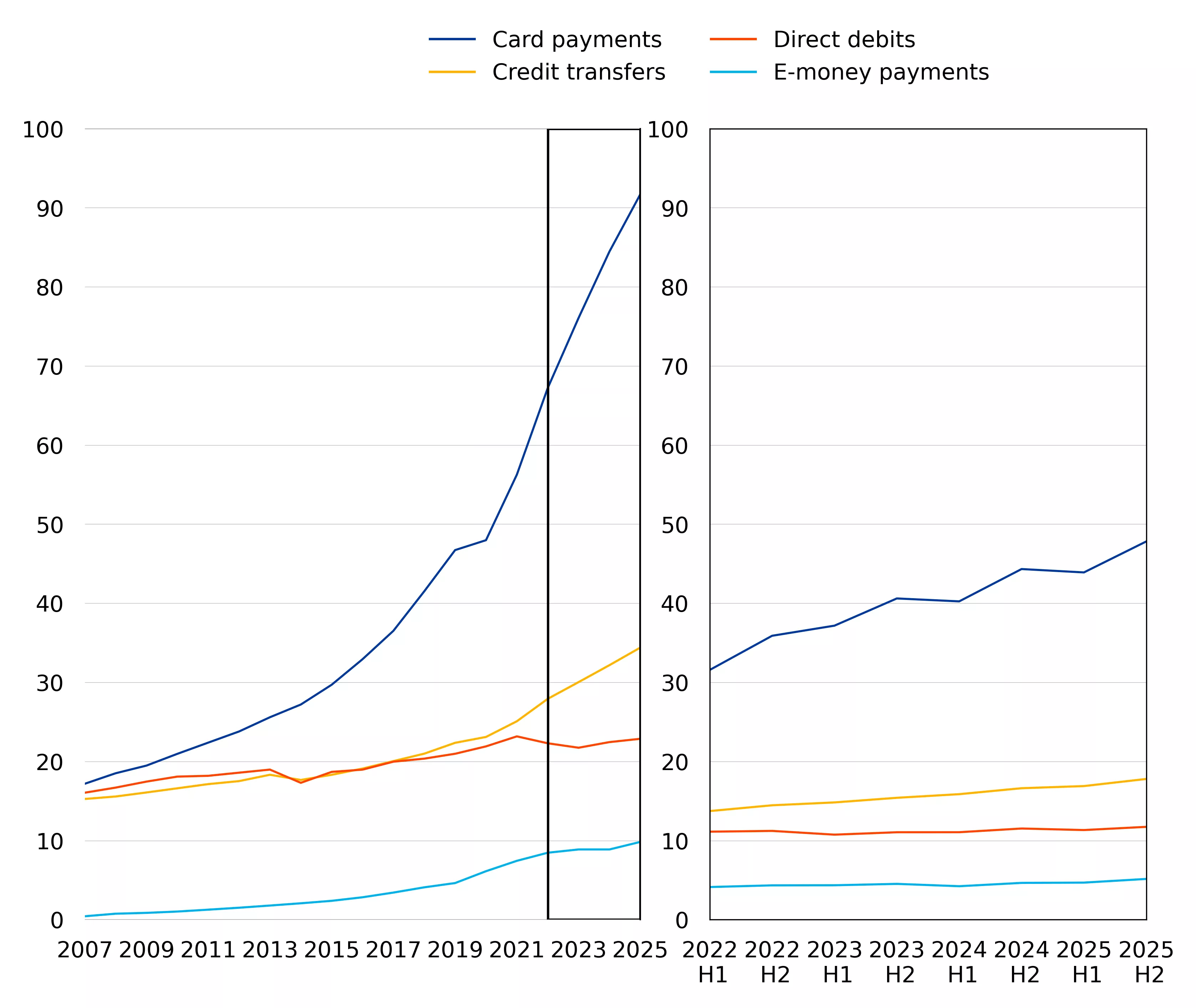
The change is visible in payment infrastructure. The European Central Bank's Payments Statistics recorded around 25.7 million POS terminals across the euro area at the end of 2025, up 24.6% year over year. At the same time, 93% of those terminals accepted contactless payments, while contactless transactions at physical POS terminals reached 32.9 billion in the second half of 2025.
Payment behavior is also becoming more varied across regions. Worldpay's 2025 Global Payments Report shows that digital payments increased from 3% of global in-person shopping value in 2014 to 38% in 2024. The payment mix differs substantially by market, with cards, digital wallets, account-to-account payments, and other payment methods playing different roles across regions.
These market changes are increasingly reflected in the B2B purchasing requirements we observe across different markets. Recent requirements from buyers in the Philippines, the UK, North America, and Europe have covered single-screen Android terminals, Windows POS hardware, dual-screen POS systems, 4G connectivity, CE compliance, and support for external peripherals.
While the specific configurations vary by market and application, these requirements point to a common procurement shift: B2B POS hardware selection is becoming increasingly deployment-driven. Buyers are evaluating the terminal together with its operating system, connectivity, payment capabilities, peripherals, and compliance requirements based on how the system will be deployed, rather than selecting a terminal from hardware specifications alone.
Payment Diversity Is Reshaping the POS Terminal
The expansion of digital payment methods is changing the role of the POS terminal.
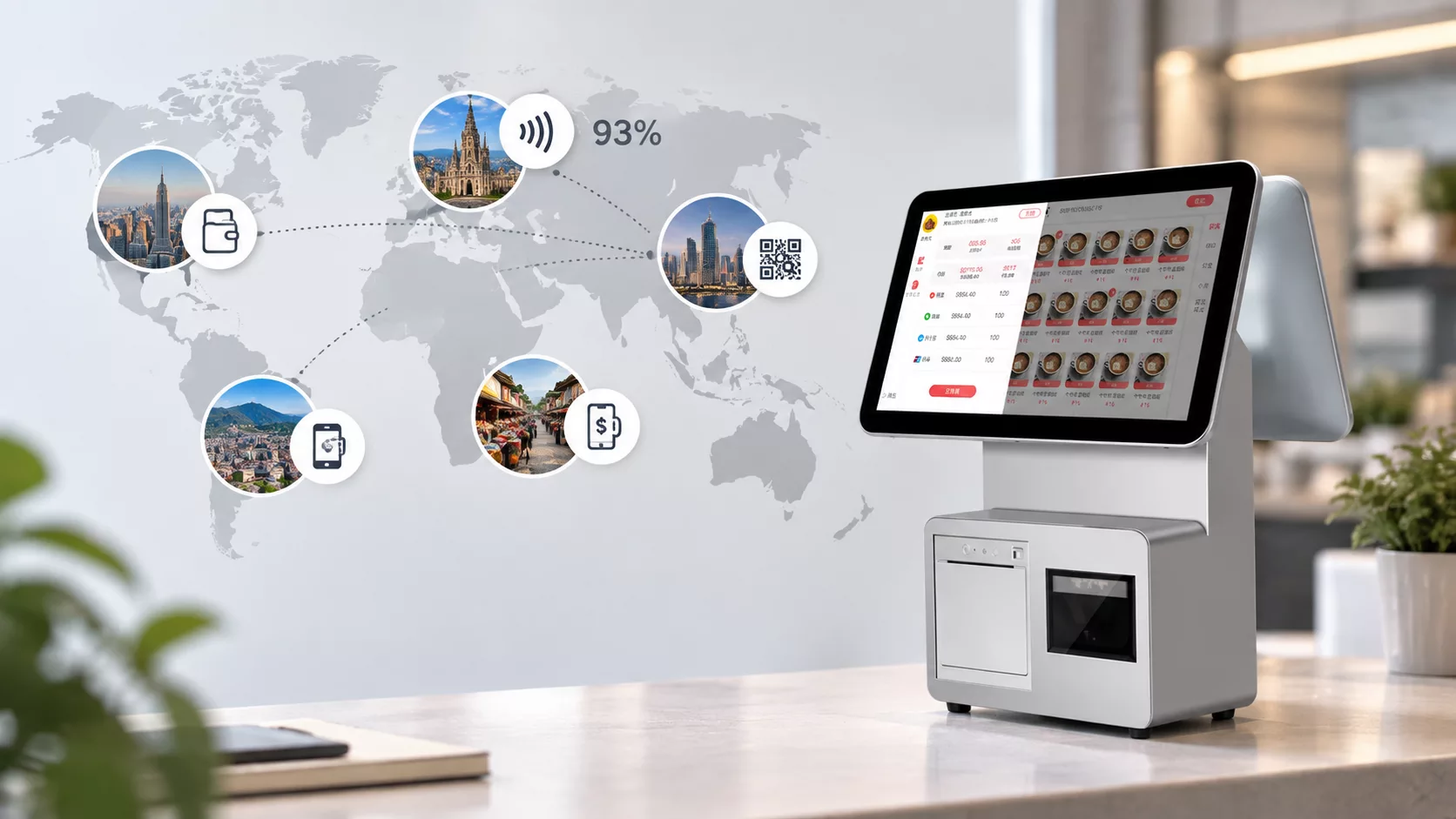
Contactless acceptance illustrates this shift particularly well. With 93% of euro-area POS terminals supporting contactless payments at the end of 2025, contactless has become deeply integrated into the physical payment environment. The 32.9 billion contactless transactions recorded during the second half of 2025 also show how frequently this capability is being used in everyday commerce. The underlying figures come directly from the ECB's 2025 second-half payment statistics.
The wider payment market is moving in the same direction. Digital payment methods accounted for 38% of global in-person shopping value in 2024, according to Worldpay's Global Payments Report 2025, compared with only 3% in 2014. The important point for hardware procurement is not simply the growth of digital payments. It is the increasing diversity of payment environments between markets.
For POS terminal procurement, that regional variation can affect the configuration required at the point of sale.
A terminal deployed in a market where contactless card payments dominate may have different requirements from one operating in an environment where digital wallets, QR-based payments, mobile money, or other payment methods have a stronger role. Connectivity, interaction design, peripheral integration, and software compatibility can all become part of the POS hardware specification.
The Federal Reserve has also examined Pay-by-Bank as a potential merchant payment method at the point of sale, reflecting the continued development of account-to-account payment infrastructure.
This creates a more connected procurement chain:
Payment environment → payment capabilities → terminal architecture
The hardware is therefore increasingly shaped by the payment environment in which it will operate.
For an OEM buyer, this changes the starting point of the product selection process. Instead of beginning with processor, RAM, storage, or display size, the specification can begin with the payment workflow and then move toward the hardware capabilities required to support it.
That approach becomes especially important when the same hardware platform is intended for deployment across multiple countries.
Five Real-World Requirements Show How POS Configurations Differ
These market changes are visible in the B2B purchasing requirements we observe across different regions.
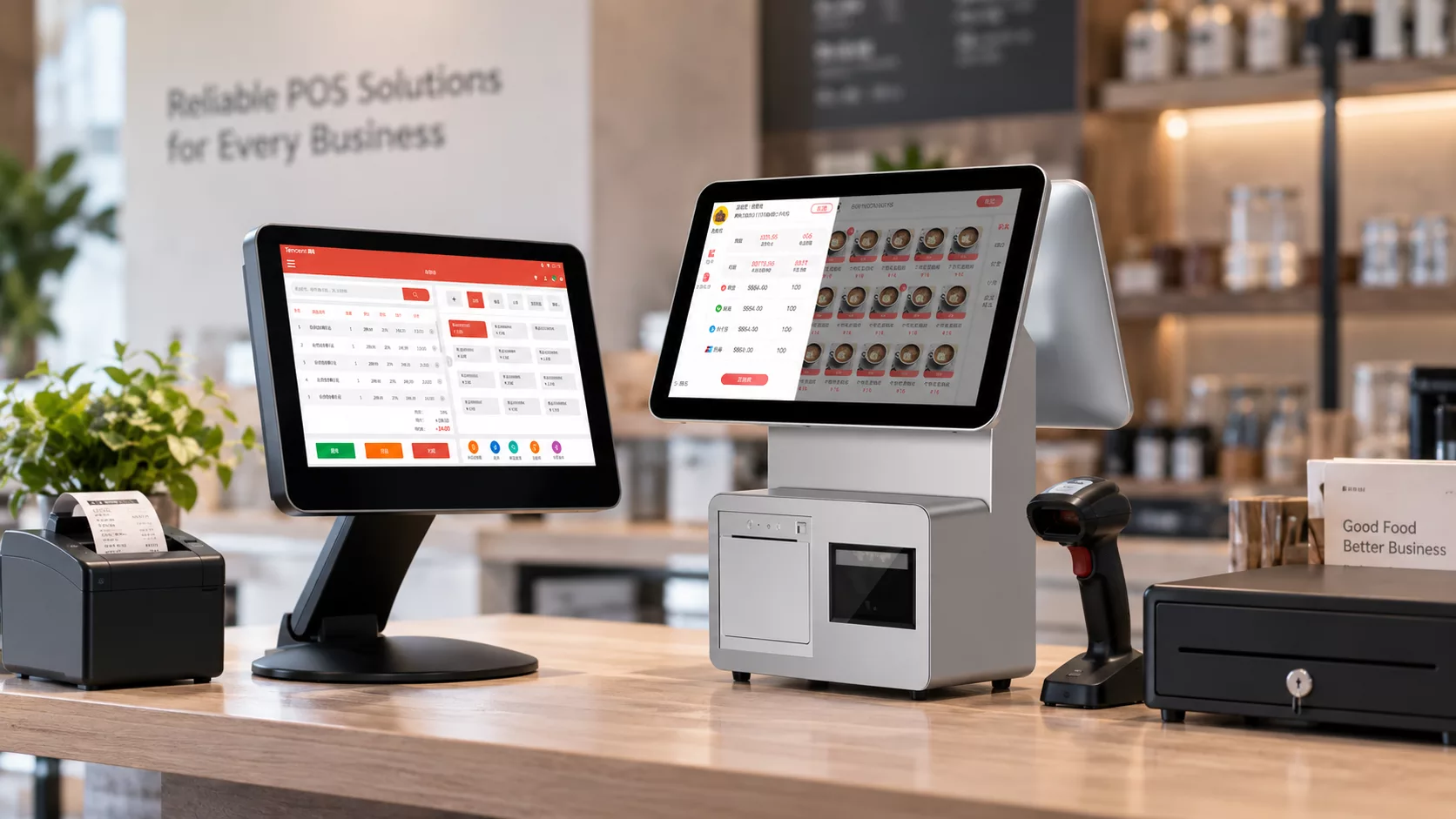
In the Philippines, two recent requirements focused on POS machines using a single-screen Android POS configuration. In the UK, a POS vendor specified Windows 10 together with a 15-inch capacitive touchscreen. A North American requirement focused on a defined POS hardware configuration, while a European requirement described a dual-screen POS system with a cash drawer, printer, scanner, 4G connectivity, and CE compliance.
|
Market |
Configuration observed |
Operating environment |
Additional requirements |
|
Philippines |
Single screen |
Android POS |
POS terminal |
|
UK |
Single screen |
Windows 10 |
15-inch capacitive touchscreen |
|
North America |
POS terminal |
Defined hardware configuration |
Specific product requirements |
|
Europe |
Dual screen |
POS system |
4G, CE, cash drawer, printer, scanner |
The regional requirements can be summarized as follows:
The differences show how quickly a broad POS category can divide into different hardware configurations once the deployment environment is defined.
The Philippines requirements point toward a focused Android terminal. The UK requirement places greater emphasis on Windows compatibility and display configuration. The European requirement expands the system boundary further by combining the terminal with several external peripherals, connectivity, and regional compliance.
This is where retail POS hardware becomes closely connected with merchant workflow.
A terminal installed at a conventional checkout counter can have very different requirements from one integrated into a customer-facing checkout environment. When the deployment includes a second screen, printer, scanner, and cash drawer, the terminal becomes part of a larger operating system rather than a standalone computing device.
The purchasing requirements therefore reveal a common pattern: the deployment defines the configuration.
This pattern also helps explain the emerging dual screen POS trend. The move toward additional customer-facing interaction does not simply create demand for a second display; it changes how the terminal, peripherals, software, and checkout workflow need to operate together.
Android POS, Windows POS, Single Screen, and Dual Screen Follow Different Deployment Logic
Operating system is one of the clearest examples of deployment-driven hardware selection.
The Philippines requirements include an Android-based POS configuration, while the UK requirement explicitly specifies Windows 10. These configurations should not be evaluated simply as competing operating systems.
For a business already operating Windows-based POS software, Windows compatibility can influence terminal selection because the hardware may need to work with existing applications, drivers, peripherals, and management systems.
An Android deployment creates a different software environment. The terminal may need to support Android applications, device management, peripheral connections, and a specific application ecosystem.
This makes an Android POS Windows POS comparison fundamentally different from a conventional hardware comparison. The relevant question is how each operating system fits the software and management environment surrounding the terminal.
The same principle applies to screen configuration.
A single-screen terminal concentrates the primary POS interaction on one display. This configuration can suit environments where the operator interface is the central point of interaction and the surrounding hardware remains relatively simple.
A dual-screen configuration introduces a different interaction model. The operator and customer can have separate display areas, which can become useful when customer-facing information or interaction forms part of the checkout workflow.
The European requirement demonstrates how this can extend into a broader system. The dual-screen configuration appeared alongside a cash drawer, printer, scanner, 4G connectivity, and CE requirements.
Once those elements enter the same deployment, the buyer is evaluating more than the terminal itself. The hardware needs to function as part of a coordinated checkout environment.
This creates another procurement relationship:
Merchant workflow → screen configuration → peripherals → system architecture
For a POS OEM inquiry, this means the supplier discussion should begin with the deployment requirements that determine the hardware configuration.
A supplier may have a standard single-screen Android terminal, a Windows-based model, or a dual-screen platform. The relevant question is whether that configuration fits the software, workflow, peripherals, connectivity, and market requirements of the intended project.
Why POS Hardware Procurement Is Becoming Deployment-Driven
The market data and the purchasing requirements observed across different regions connect through a common development.
Payment environments are becoming more diverse. Contactless has become standard across most euro-area POS terminal installations, while digital payment methods now represent a substantial share of in-person commerce. The ECB payment statistics and Worldpay Global Payments Report provide the underlying data for these changes.
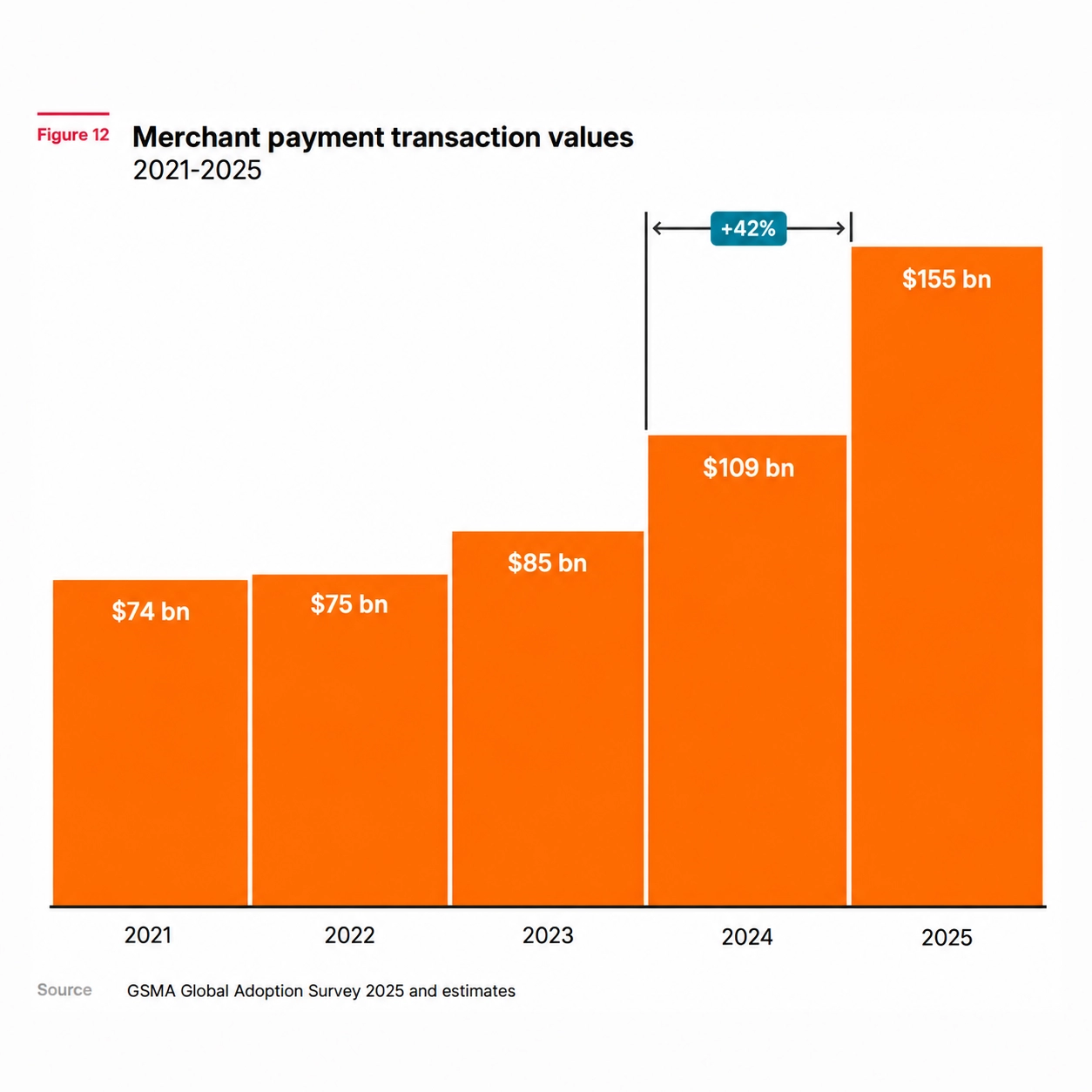
Merchant payment environments are also expanding. The GSMA State of the Industry Report on Mobile Money 2026 reports that merchant payments reached $155 billion in 2025, growing by 42% year over year and becoming the fastest-growing mobile money use case during the year.
At the same time, regional payment behavior continues to differ. A POS system designed for one market may therefore need a different combination of payment capabilities, connectivity, software compatibility, and physical interaction from a system deployed elsewhere.
These changes are reflected directly in the purchasing requirements we observe.
The Philippines requirements point toward single-screen Android deployment. The UK requirement emphasizes Windows compatibility and a 15-inch capacitive touchscreen. The North American requirement centers on a defined hardware configuration. The European requirement combines dual screens, external peripherals, 4G connectivity, and CE compliance.
The pattern is consistent: the same product category can lead to very different specifications once the deployment environment is established.
This is the fundamental shift in the POS terminal market.
The terminal is no longer evaluated only as a combination of processor, memory, storage, and display. Its suitability depends on how it interacts with the payment environment, software ecosystem, merchant workflow, connectivity infrastructure, peripherals, and regional requirements.
A more complete procurement framework therefore looks like this:
|
|
Deployment factor |
Hardware implication |
|
|
|
Payment environment |
Contactless, card, wallet, QR or other payment capabilities |
|
|
|
Merchant workflow |
Single-screen or dual-screen interaction |
|
|
|
Software environment |
Android or Windows compatibility |
|
|
|
Connectivity |
Ethernet, Wi-Fi, 4G or other network requirements |
|
|
|
Peripherals |
Printer, scanner, cash drawer and related equipment |
|
|
|
Target market |
CE and other regional compliance requirements |
|
This framework changes how buyers compare suppliers.
A terminal with a stronger processor is not automatically a better fit if it cannot support the required software environment or peripheral configuration. Likewise, a highly configurable terminal may have limited practical value if its architecture does not match the payment and operational requirements of the target market.
The procurement decision increasingly works backward from the deployment.
That has implications for OEM and ODM suppliers as well. Standardized POS products remain suitable for standardized deployments, but configurable hardware platforms become increasingly relevant when customers operate across different markets, software environments, or merchant workflows.
For companies evaluating retail POS hardware OEM options, this makes configuration flexibility increasingly relevant. The supplier needs to support the combinations that real deployments require without turning every project into an entirely new hardware development cycle.
The opportunity therefore lies not simply in offering more POS models. It lies in supporting the combinations that real deployments require.
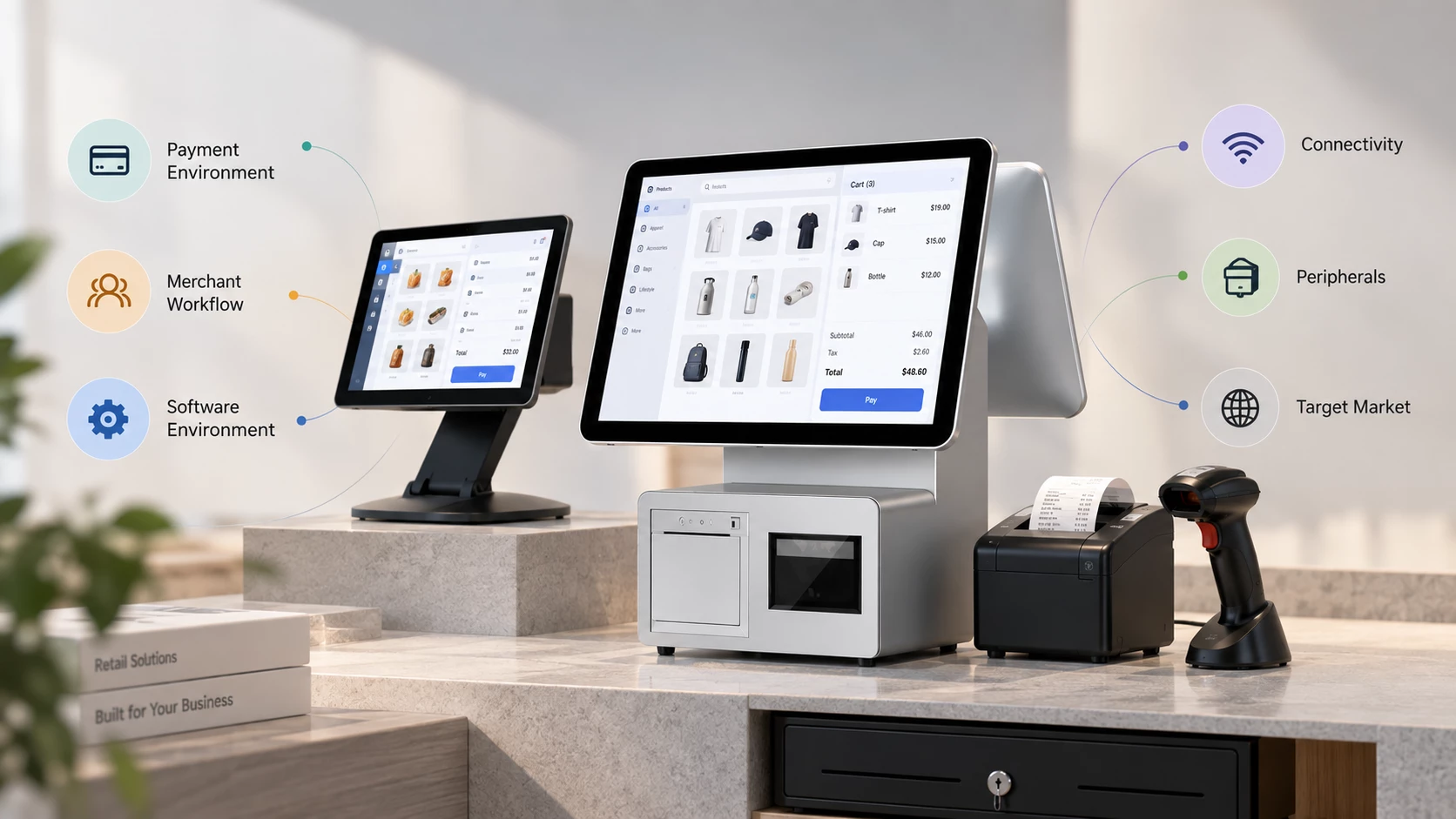
What B2B POS Buyers Should Define Before Supplier Selection
A deployment-driven purchasing process does not necessarily require a longer specification sheet. It requires the right sequence of decisions.
The merchant environment should establish the starting point. The buyer needs to understand who operates the terminal, who interacts with it, where it will be installed, and how the checkout process works.
Payment requirements follow naturally from that environment. Contactless, cards, wallets, QR, mobile money, or other payment methods can influence the capabilities expected from the terminal.
The software environment then determines whether Android or Windows is appropriate. This decision should follow application compatibility, peripheral support, and system architecture rather than being treated as an isolated hardware preference.
Physical configuration becomes easier to define once those requirements are clear. Single screen, dual screen, touchscreen size, connectivity, printer, scanner, and cash drawer can then be matched to the actual deployment.
Regional requirements should also be incorporated before the final hardware configuration is fixed. The European purchasing requirement shows how 4G and CE can appear alongside terminal and peripheral specifications within the same deployment.
For an OEM project, the most useful specification connects each hardware requirement to its intended function. Instead of simply requesting a 15-inch touchscreen terminal, the buyer can define the operating system, application environment, payment requirements, user interaction, peripherals, connectivity, and target market.
This gives suppliers a clearer basis for configuration and gives buyers a more consistent framework for comparing OEM options.
The purchasing requirements observed across the Philippines, UK, North America, and Europe demonstrate how this approach works in practice. Single-screen Android, Windows-based touchscreen terminals, defined POS configurations, and dual-screen systems with peripherals all belong to the broader POS category, but their hardw&
 Android Tablet Selection: What Should You Consider First?