
 86 13392660243
 hope17@cnhopestar.com
 whatsapp
From Monitor Distributor to Brand: Is Private Label Gaming Monitor OEM Worth It?
 2026-08-13
 cnhopestar
Introduction
The gaming monitor market is continuing to expand, but the opportunity is no longer simply about selling more units. As the market develops, gaming monitors are becoming increasingly segmented by performance, price positioning, and user needs, creating more room for brands and distributors to build differentiated product portfolios.
According to Omdia research, global gaming monitor shipments reached approximately 41 million units in 2025, reflecting the continued expansion of gaming-focused display demand. At the same time, the growth of premium display technologies is creating additional opportunities within the category. TrendForce estimates that OLED monitor shipments reached around 2.66 million units in 2025, with gaming remaining an important driver of OLED adoption.
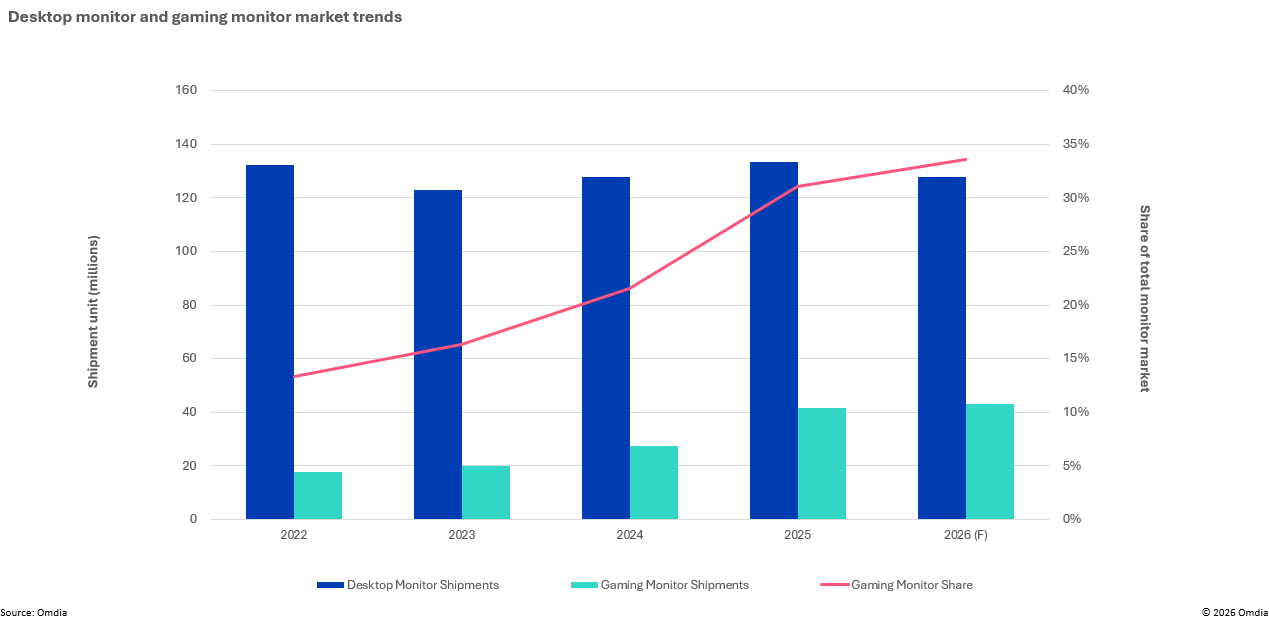
For distributors, the practical implication is that a gaming monitor portfolio should not be built around a single specification or price point. A more balanced product strategy can start with mainstream 24-inch and 27-inch high-refresh-rate monitors as volume-oriented SKUs, providing broad market coverage and an accessible entry point for customers. QHD/240Hz and curved gaming monitors can then be introduced as higher-tier products, helping create clearer performance differentiation and support a stronger brand position. Premium technologies such as OLED can serve as a further step for brands targeting higher-value gaming segments.
This creates a different product planning logic: instead of asking only which monitor specifications are currently popular, distributors need to consider how different SKUs work together across the portfolio—which products generate volume, which products create differentiation, and which products allow the brand to move into higher-value segments.
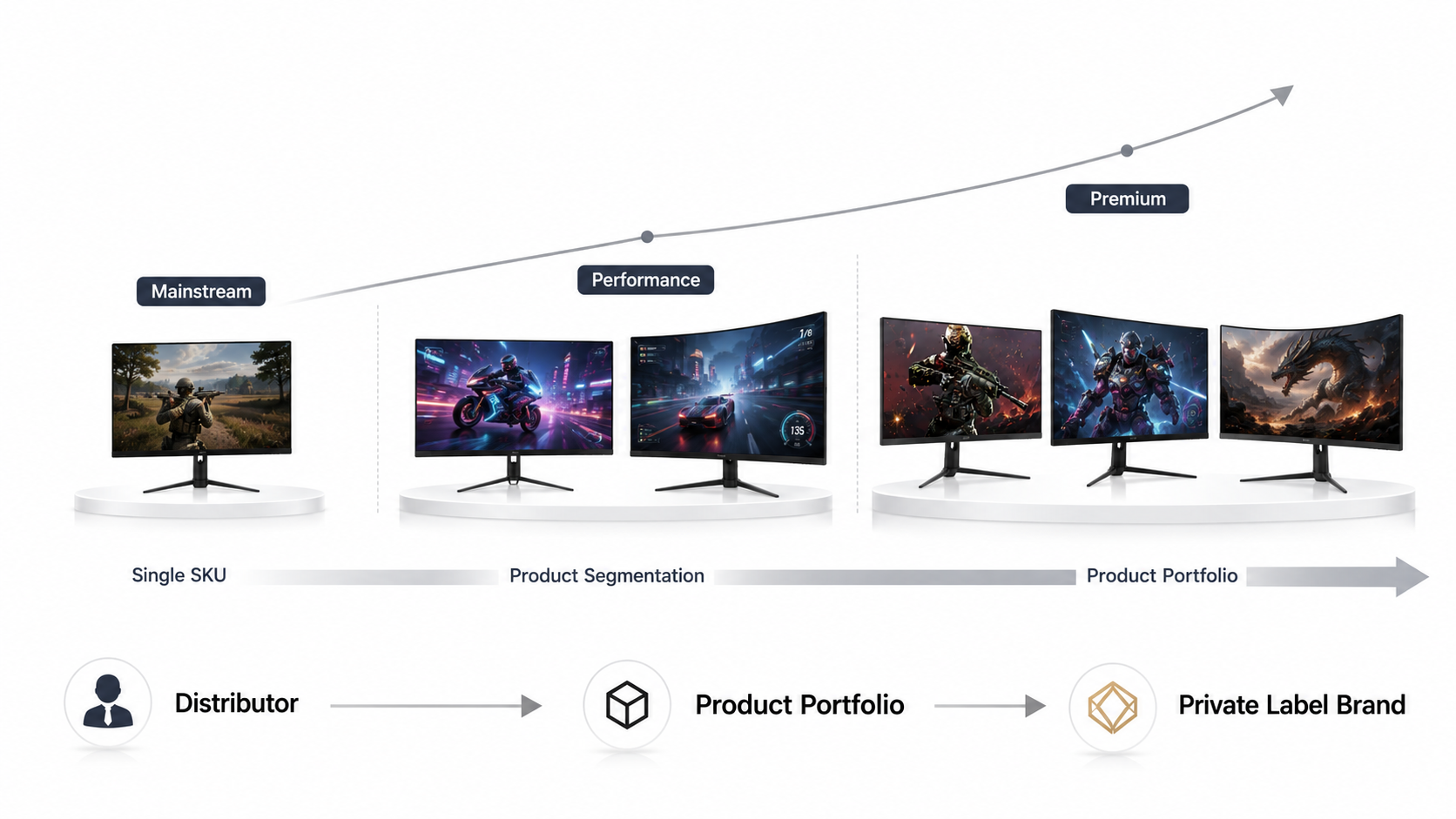
For distributors that have traditionally relied on established monitor brands, this raises a broader commercial question: if the market is becoming more segmented, but the products available for distribution are largely defined by other brands, how much control does the distributor actually have over its product mix, positioning, and future growth?
That question is driving more distributors and electronics companies to explore private label gaming monitor opportunities.
Why Some Distributors Are Exploring Private Label Monitor Opportunities
As the gaming monitor market becomes more segmented, distributors are facing a different competitive environment. Selling established brands still provides access to proven products and existing demand, but it also limits how much control a distributor has over the products it sells. Screen size, panel configuration, resolution, refresh rate, appearance, packaging, and pricing are ultimately defined by the brand's product strategy rather than the distributor's own market requirements.
This is where private label becomes a strategic option. For distributors, private label is not simply about putting a company logo on an existing monitor. It allows them to take a more active role in deciding what the product should be and where it should compete.
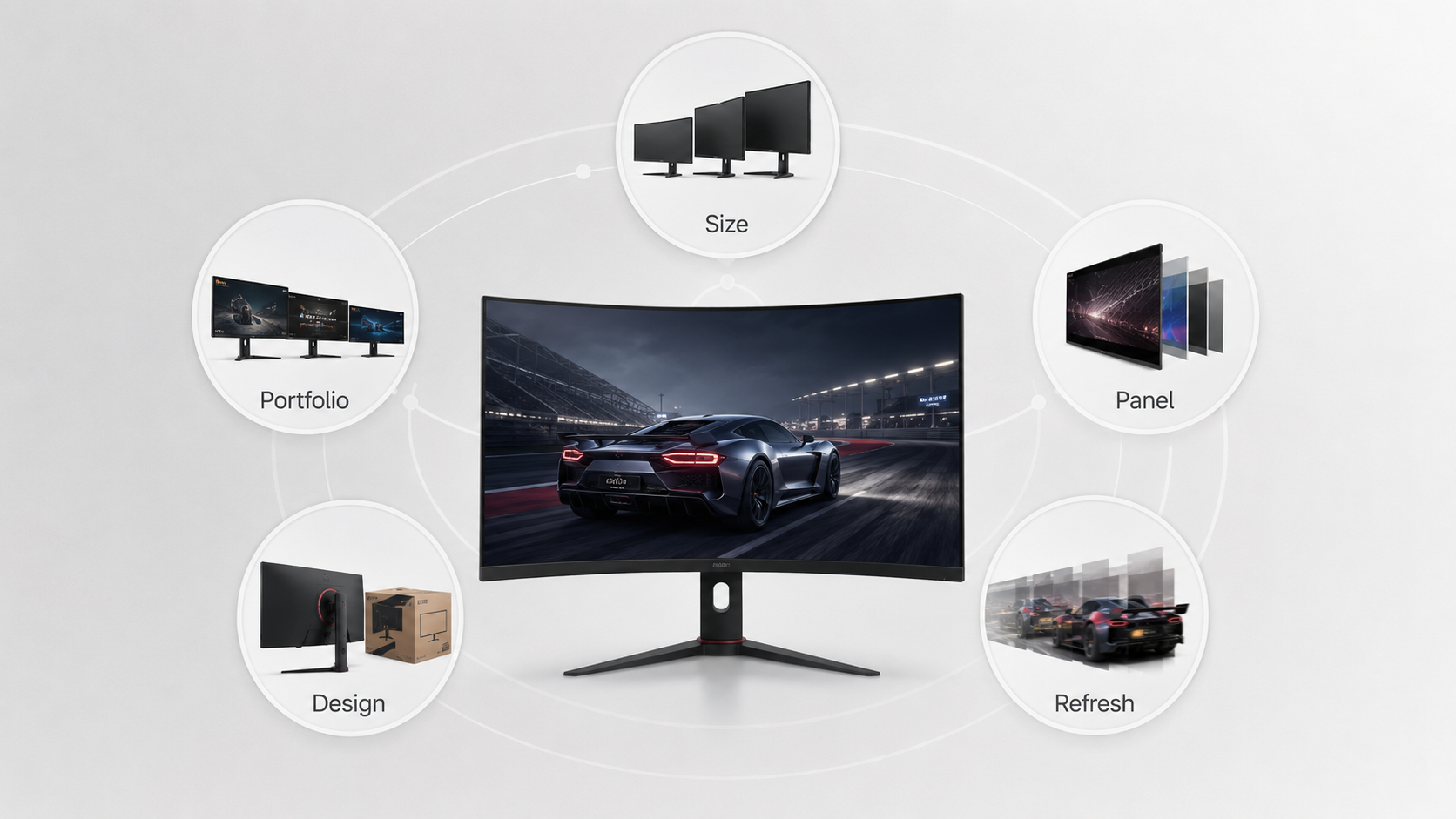
In practical terms, a private label gaming monitor project can give distributors greater control over five areas:
| Decision Area | What the Distributor Can Control |
|---|---|
| Screen Size | Select 24-inch, 27-inch, larger formats, or other sizes according to target-market demand |
| Panel & Resolution | Define configurations such as IPS, VA, OLED, FHD, or QHD based on performance and price positioning |
| Refresh Rate | Build different performance levels, such as 144Hz, 165Hz, 180Hz, or 240Hz |
| Appearance & Packaging | Customize product design, stand, housing details, branding, and packaging |
| Product Portfolio & Pricing | Decide how different SKUs are structured across target customer groups and price tiers |
The commercial value is that distributors can turn their existing market knowledge into product decisions instead of competing only through the products and prices available from third-party brands.
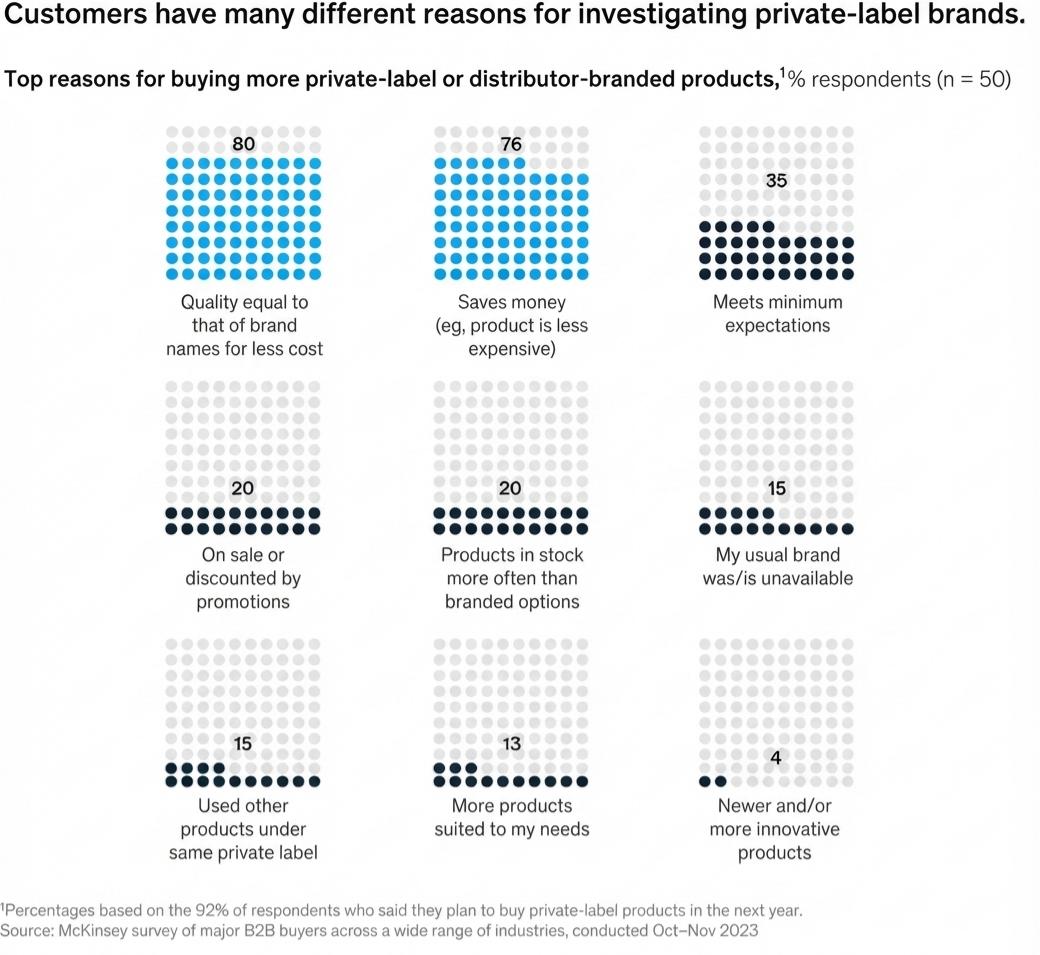
This shift is supported by broader changes in the distribution industry. McKinsey's research on B2B distribution found that around 92% of surveyed B2B buyers planned to purchase private-label or distributor-branded products in the following year, while respondents expected their private-label purchasing volume to increase by approximately 21% over the next one to three years. McKinsey also identifies potential benefits including stronger margins, customer relationships, and supply-chain control.
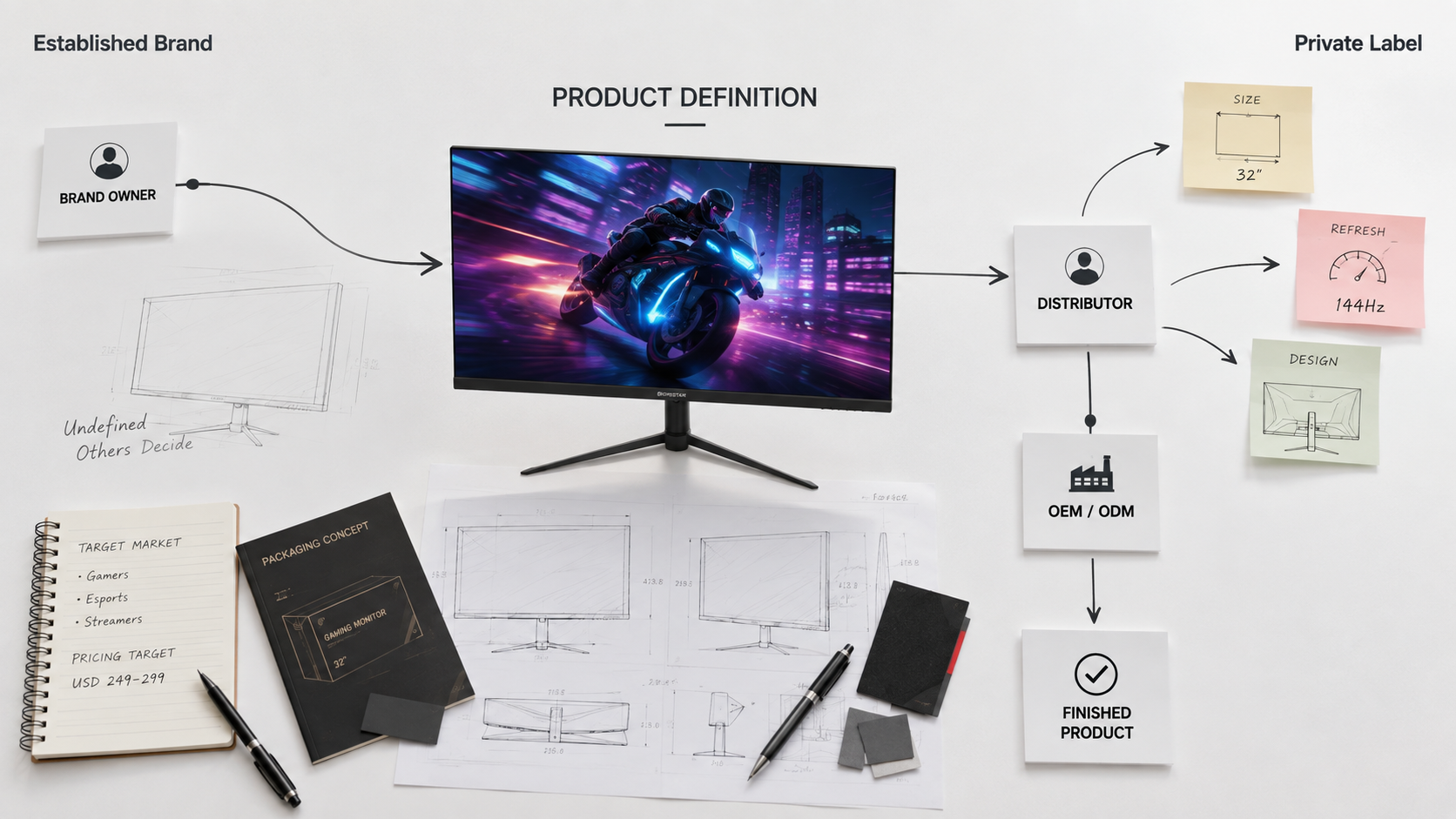
For a distributor, however, gaining control over the product does not mean building a monitor factory. The more practical model is to bring market requirements—such as target specifications, price positioning, expected volumes, and branding requirements—to a manufacturing partner that can evaluate panel availability, electronics configuration, mechanical design, tooling, testing, and production feasibility.
This is particularly relevant for companies considering a distributor to brand monitor transition. The distributor remains focused on understanding its market and defining the commercial direction, while an experienced monitor manufacturer can help translate those requirements into a manufacturable product.
Our own discussions with distributors reflect this type of evaluation. One US-based distributor has explored a gaming monitor OEM opportunity around a curved gaming display, while a Spain-based electronics distributor has evaluated OEM/ODM cooperation for its own office and gaming monitor portfolio. These individual inquiries do not indicate that the entire distribution market is moving toward private label, but they illustrate a practical question that more established distributors are beginning to consider: can owning the product strategy provide more room for differentiation than continuing to sell third-party brands?
For companies considering a curved monitor private label or broader gaming monitor program, the next challenge is therefore not simply finding a supplier. It is determining what should be developed, what should be customized, and which OEM/ODM model can deliver the required product at a commercially viable cost and volume.
Why OEM/ODM Partnerships Matter for Private Label Monitor Development
Once a distributor decides to build a private label monitor, the next challenge is turning a market opportunity into a product that can actually be manufactured.
This is the practical role of OEM and ODM partnerships. Instead of defining every element of a monitor from scratch, a distributor can start with an existing product platform and determine how much of the product needs to remain standard and how much needs to be customized.
The distinction between ODM and OEM therefore becomes a question of development depth.
| Private Label Situation | Suitable Approach | What It Means |
|---|---|---|
| Testing a new market | Mature ODM platform | Start from an existing product and focus on branding, positioning, and market validation |
| Existing channels with clear specifications | Platform-based customization | Use an existing platform while adapting selected product elements to the brand's requirements |
| Unique appearance or product requirements | Deeper OEM development | Develop further when the existing platform cannot deliver the required product definition |
For a distributor testing a new market, a mature ODM platform can shorten the distance between product selection and market launch. The distributor does not necessarily need to redesign the entire monitor; instead, the focus can remain on whether the existing platform fits the intended market and what elements need to be changed.
When the distributor already understands its customers and has clearer requirements, platform-based customization becomes more relevant. The project can begin with an existing monitor platform and then discuss specific requirements such as logo branding, interface configuration, packaging, functional requirements, software compatibility, or customized appearance.
A more extensive OEM development becomes relevant when differentiation depends on product elements that cannot be adequately addressed through an existing platform. In that case, the project requires a deeper discussion of product definition and development requirements rather than simply applying a brand identity to an existing model.
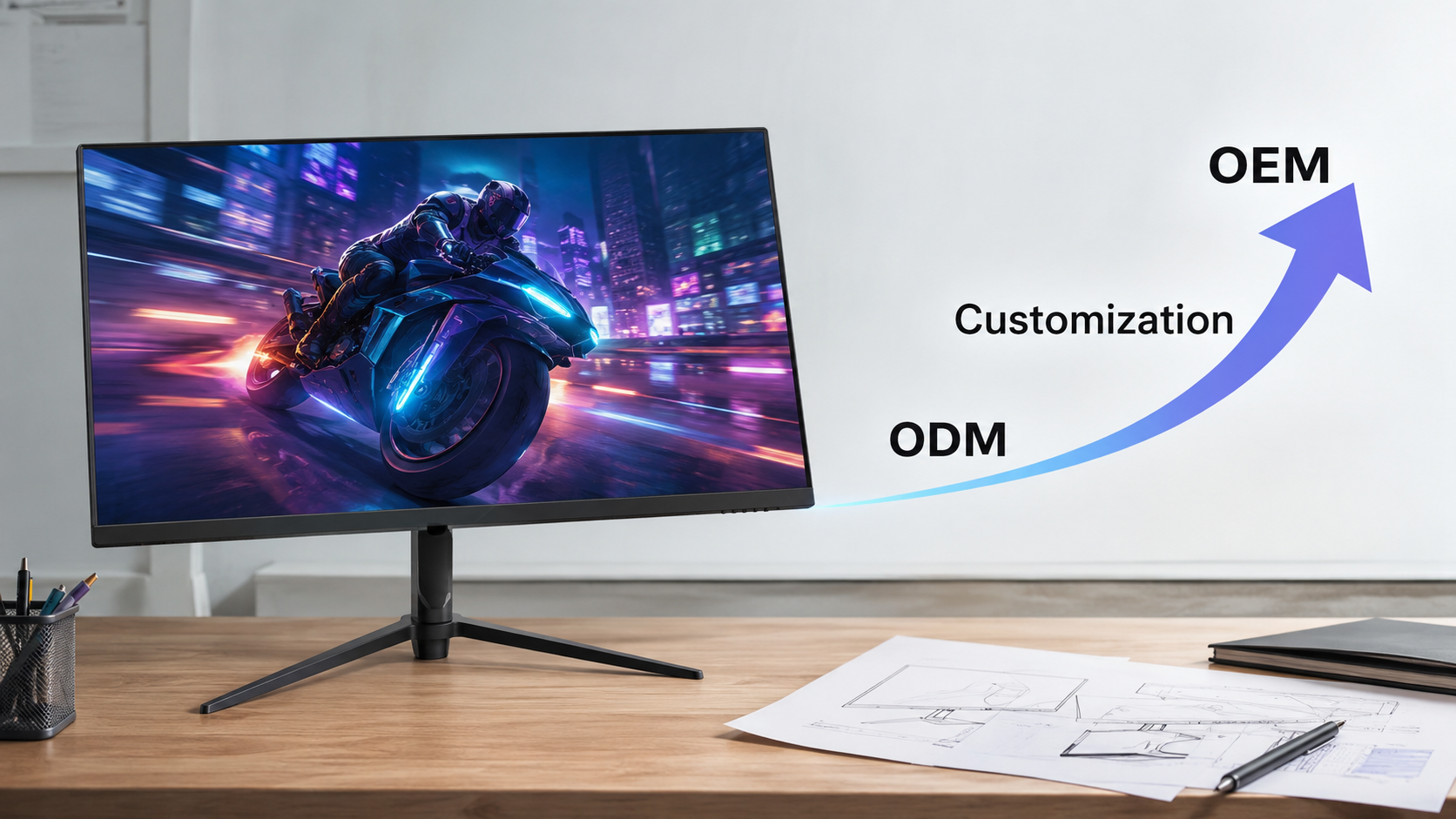
When comparing OEM/ODM suppliers, distributors should first look at how closely the available product platforms match their target specifications and how much customization those platforms can support. A closer match can reduce unnecessary development work, while larger differences may require more extensive OEM development.
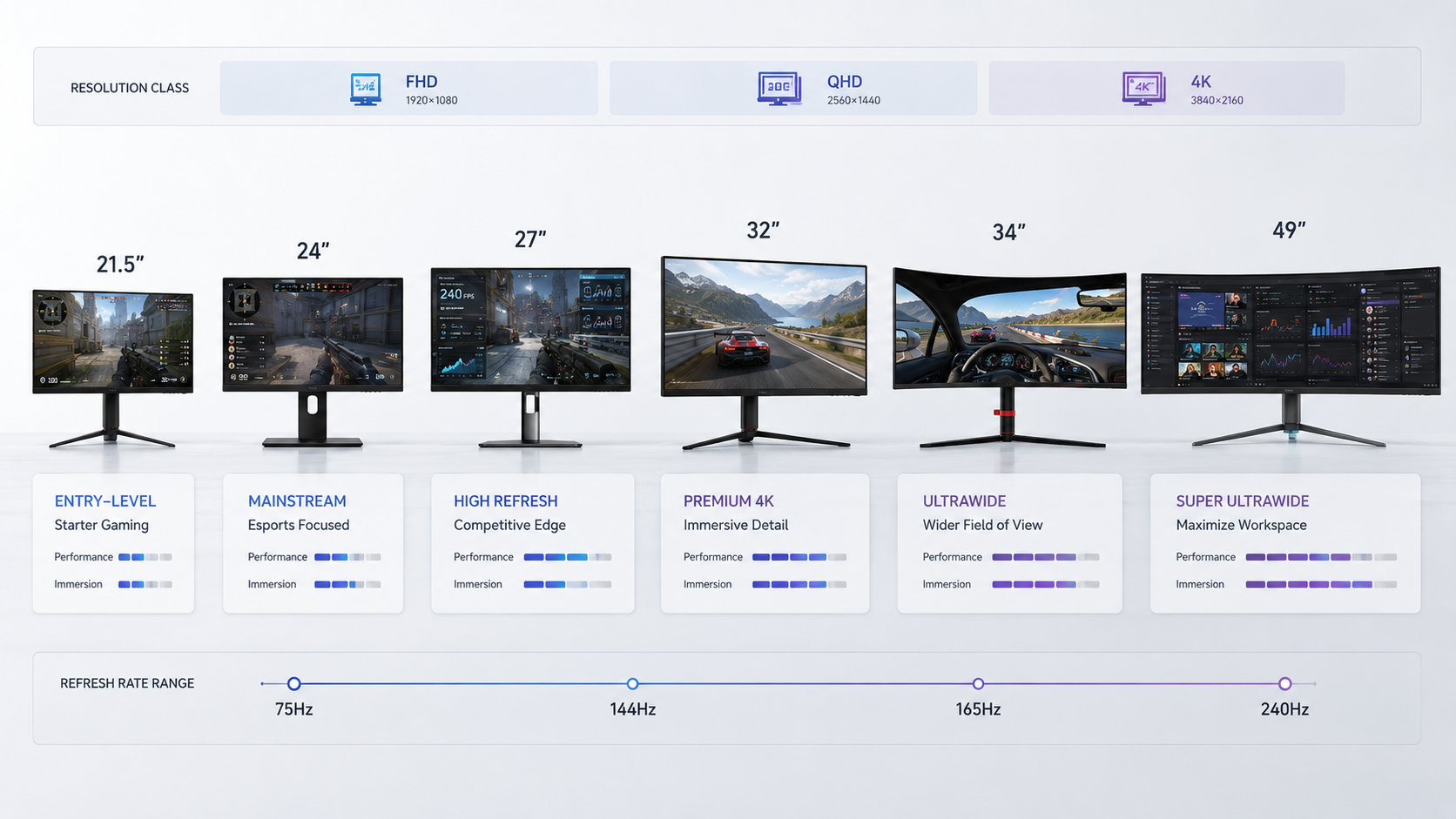
CnHopestar's existing gaming monitor range provides one example. Its portfolio covers 21.5–49-inch models, including flat and curved designs, with refresh rates from 75Hz to 240Hz and resolutions ranging from FHD to 4K. Depending on the selected platform and project requirements, customization options include logo branding, interface configuration, packaging, functional requirements, software compatibility, and customized appearance design. This gives distributors the option to evaluate an existing platform first and determine which product elements need to be adapted for their own brand.
The closer an existing platform is to the target product, the less unnecessary development may be required. When the gap becomes larger, a deeper OEM approach may be more appropriate.
For a distributor entering the private label gaming monitor market, this provides a practical way to approach product development: start with the target market and product requirements, identify suitable existing platforms, and then determine the level of customization needed.
The next question is therefore which gaming monitor products should a new private label brand actually launch—and how should the portfolio be structured across different product types, specifications, and price positions?
What Gaming Monitor Product Portfolio Should a New Private Label Brand Launch?
For distributors entering the gaming monitor category, the goal is not to launch the highest-specification monitor or the largest number of SKUs at the beginning. A stronger private-label gaming monitor strategy is to build a focused portfolio in which each product has a clear commercial role: a core model for mainstream demand, a larger-screen option for immersive or project-based gaming, and a premium model for more differentiated customer segments.
A size-based product strategy can help create this structure. A 27-inch gaming monitor can serve as the core product for mainstream retail, e-commerce, and PC-building channels. A 32-inch gaming monitor can extend the range into larger-screen gaming, gaming cafés, esports venues, and other commercial applications. A 34-inch ultrawide curved monitor can provide a more differentiated option for premium gaming, simulation, and multitasking users.
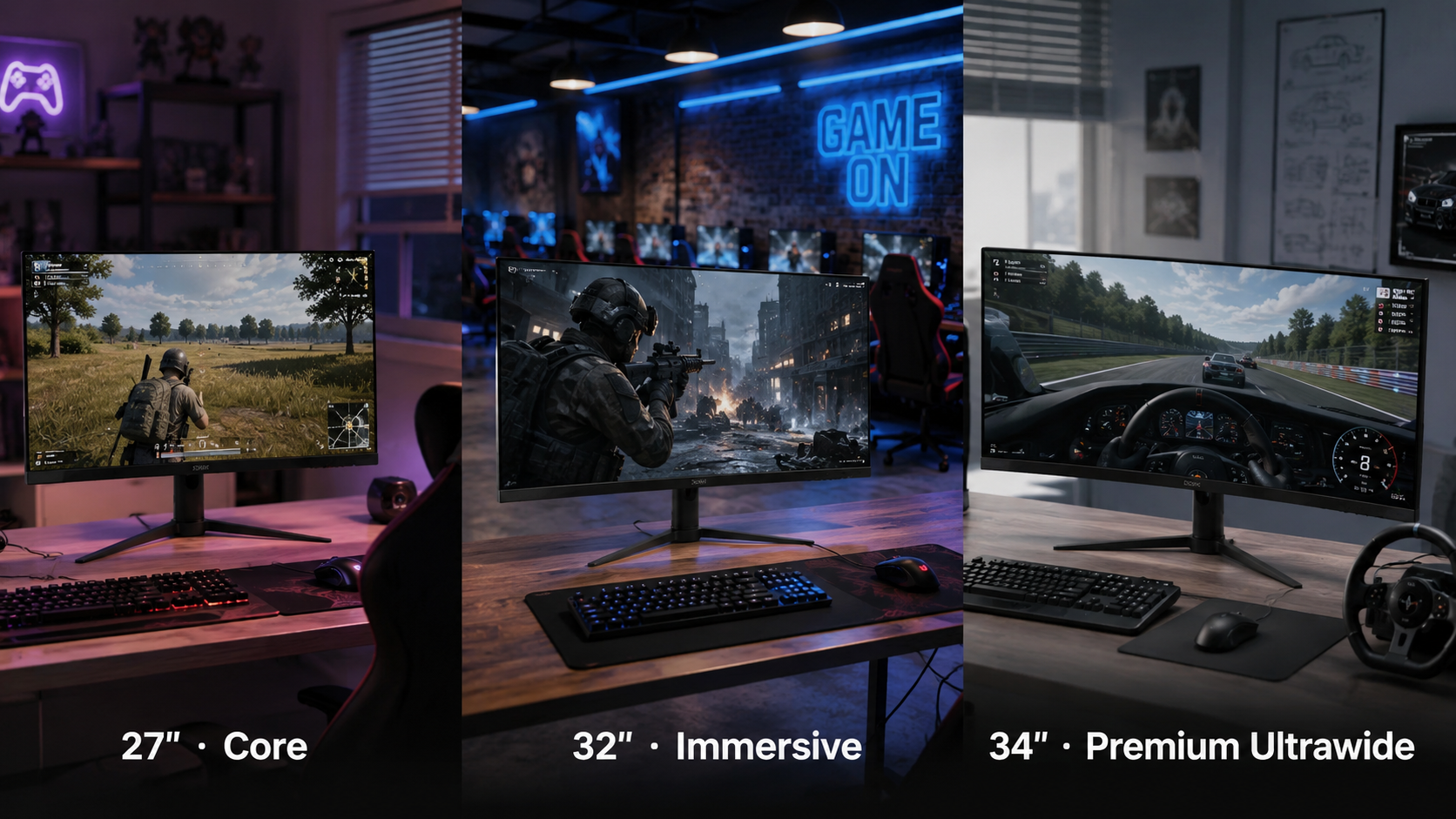
The key is not simply to offer different screen sizes, but to give each SKU a distinct role within the brand's product portfolio.
| Portfolio Role | Suggested Size | Market Role | Typical Target Customers | Private Label Commercial Purpose | Example |
|---|---|---|---|---|---|
| Core Gaming Line | 27-inch | Mainstream gaming | E-commerce retailers, PC accessory distributors, gaming brands, PC builders | Suitable as a first private-label SKU, providing broad market coverage and a foundation for the brand | 27-inch 165Hz Curved Gaming Monitor |
| Immersive Gaming Line | 32-inch | Large-screen gaming and project applications | Gaming cafés, esports venues, system integrators, regional retailers | Expands the portfolio into larger-screen gaming and higher-value project opportunities | 32-inch QHD 165Hz Gaming Monitor |
| Ultrawide / Premium Line | 34-inch | Ultrawide curved gaming | Premium gamers, simulation users, content creators, premium PC builders | Creates a more differentiated product position and gives the brand a potential flagship direction | 34-inch 165Hz Curved Gaming Monitor |
There is no single product combination that fits every distributor. The right starting point depends on the target market, customer segment, expected volume, price positioning, and channel strategy. For some distributors, a 27-inch core model may be the logical starting point; others may already have a customer base for larger-screen or ultrawide products.
This is where CnHopestar can support the product planning process beyond manufacturing. Based on the target market and planned product direction, our team can discuss suitable screen sizes, panel and resolution combinations, refresh-rate configurations, product positioning, customization requirements, and portfolio development options to help distributors determine which gaming monitor platform is the right starting point for their private-label brand.
Planning a private-label gaming monitor line? Talk to CnHopestar Sales about your target market, expected volume, and product roadmap, and we can help evaluate the appropriate product direction and OEM/ODM development options.
 How Software Companies Build Branded Hardware: The OEM Path From App to Smart Home Display