 86 13392660243
 hope17@cnhopestar.com

 whatsapp
How Software Companies Build Branded Hardware: The OEM Path From App to Smart Home Display
 2026-08-04
 cnhopestar
Software Companies Are Becoming a New Type of Hardware Buyer
The relationship between software and hardware is changing.
In the past, hardware purchasing was mainly driven by device manufacturers, electronics brands, and system integrators. Today, software companies are also exploring dedicated hardware products because digital services increasingly need physical interfaces to reach users in real-world environments.
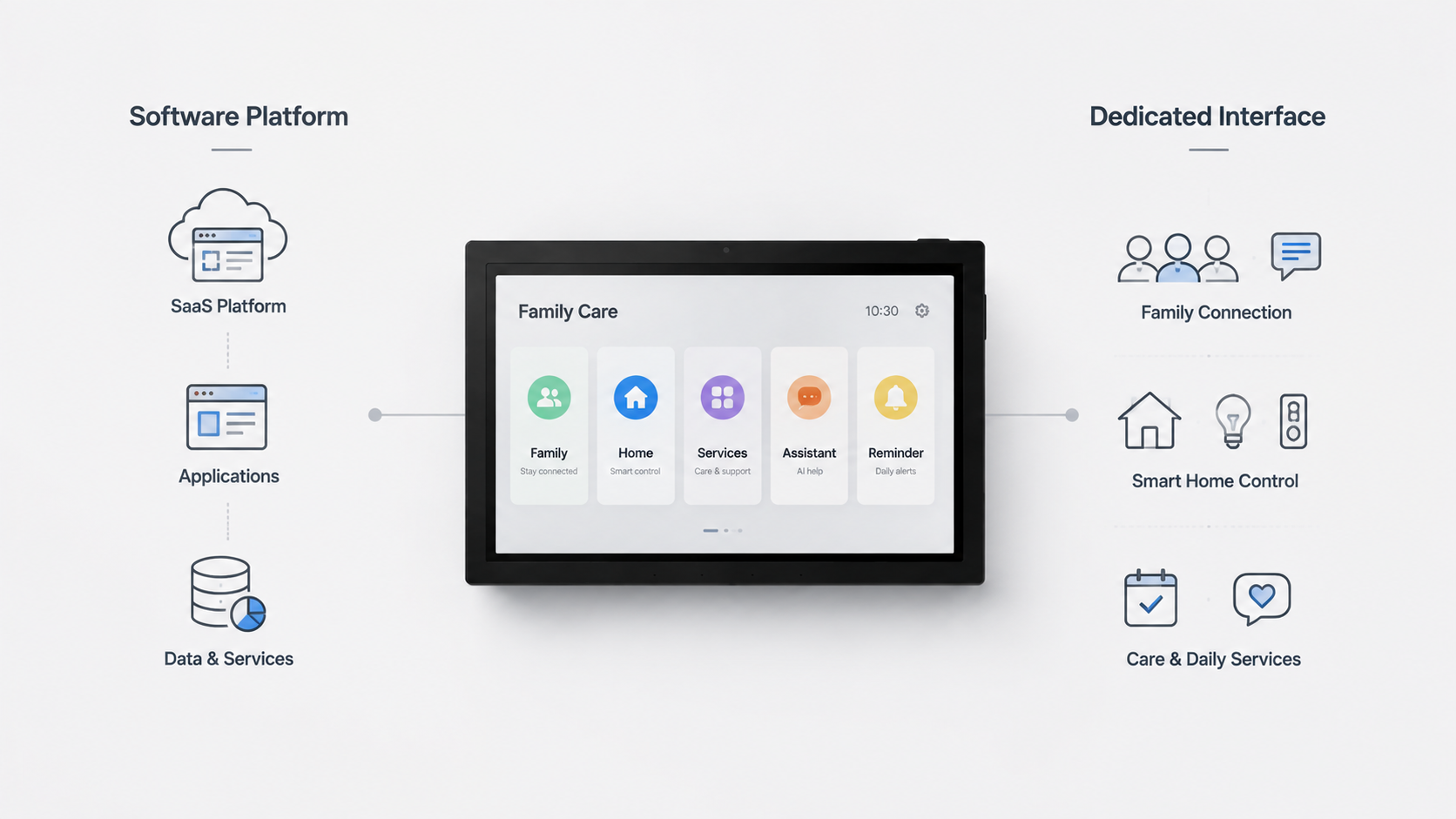
A family management platform, smart home service, or SaaS application may already have a mature software ecosystem, but relying only on smartphones or third-party devices can limit the user experience. A dedicated display terminal allows companies to create a consistent interaction environment where the software becomes part of the user's daily routine.
This shift is creating a new buyer category: software companies looking for branded hardware for software companies.
However, these companies usually face a different challenge from traditional hardware buyers. Their core expertise is software development, customer experience, and digital services. Hardware manufacturing, Android customization, production planning, and supplier management are unfamiliar areas.
The biggest question is therefore not:
“Which Android device should we purchase?”
The real question is:
“How can we transform our existing software product into a reliable branded hardware experience?”
This is where the SaaS to hardware OEM approach becomes valuable.
For software-driven companies, hardware is not the product itself. It is an extension of the software experience. The OEM partner must therefore help connect application requirements with manufacturing reality.
From App Experience to Physical Product: Why Software Companies Need a Different OEM Approach
A software company entering hardware does not usually need a generic tablet supplier. It needs a partner that understands how software requirements affect hardware decisions.
This difference changes the entire procurement process.
Traditional hardware buyers often evaluate specifications, pricing, and delivery capability first. Software companies need to understand whether the device can maintain their application experience after deployment.
A successful OEM smart home display project requires alignment between three elements:
- The physical hardware platform
- The Android system environment
- The company's own software experience
The difficulty is that these elements are developed through different processes. Software teams think about user flows and application behavior, while hardware teams focus on components, firmware, and manufacturing consistency.
A capable OEM partner acts as the connection point between these two worlds.
For example, a smart home platform may not simply need an Android touchscreen. It may need a dedicated terminal that automatically launches its application, prevents unnecessary system access, and maintains a consistent branded interface throughout the product lifecycle.
This creates requirements beyond standard device procurement, including pre-loaded app deployment, kiosk lockdown, and sometimes deeper system-level customization through kiosk mode custom ROM solutions.
The important consideration is not whether every project requires maximum customization. It is whether the OEM partner can identify the right level of customization based on the actual business scenario.
The OEM Path From Prototype Validation to Production Scaling
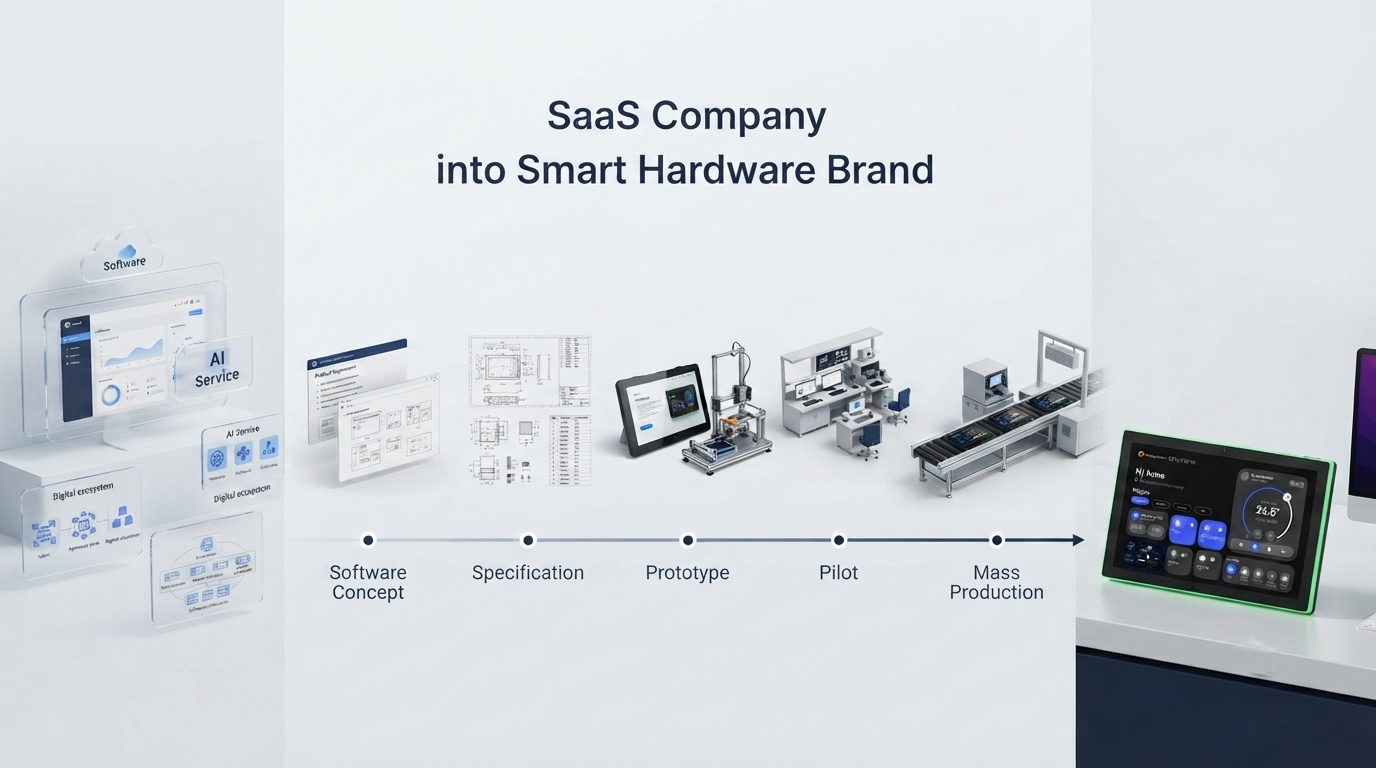
For software companies, moving from an application concept to a physical product is usually a gradual process.
The transition rarely begins with large-volume manufacturing. Instead, companies typically validate the hardware experience first, then gradually expand toward production.
The first stage is defining how the hardware will support the software application.
A smart home display designed for family interaction has different requirements from a commercial service terminal. Screen size, installation environment, power management, system behavior, and user interaction patterns all influence the final product design.
This is why early-stage communication between the software team and OEM partner is critical. Many hardware problems are not caused by manufacturing limitations, but by unclear expectations between software requirements and device capabilities.
Prototype Validation: Connecting Software Expectations With Hardware Reality
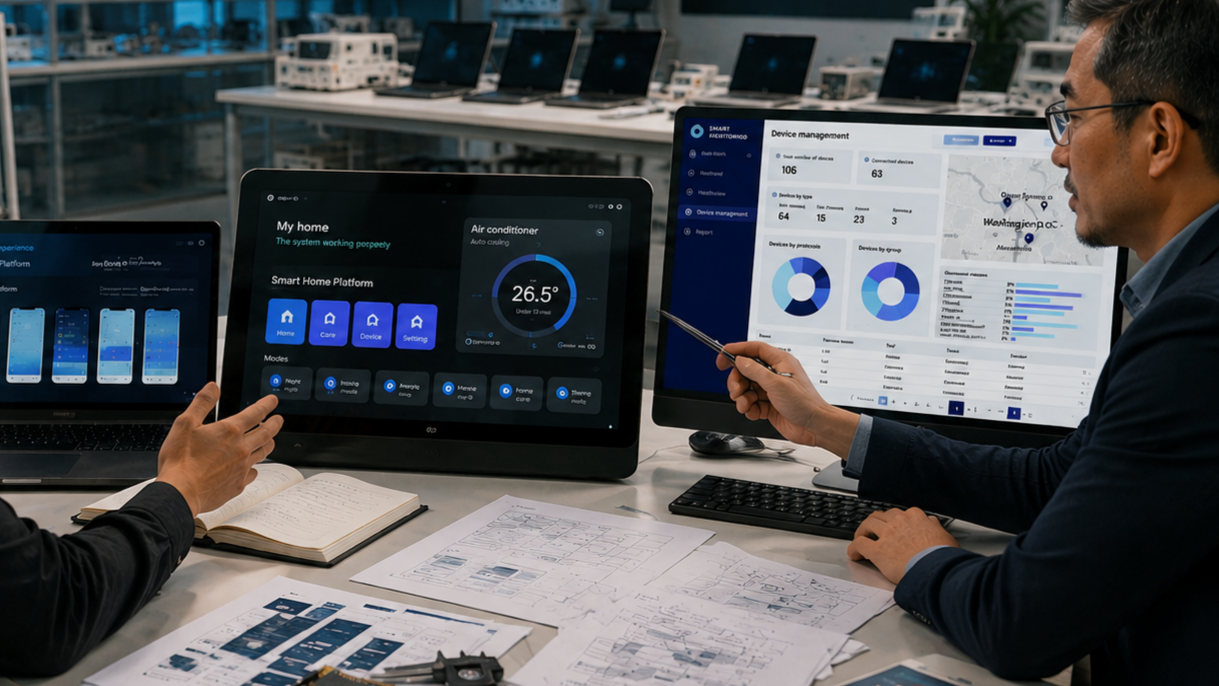
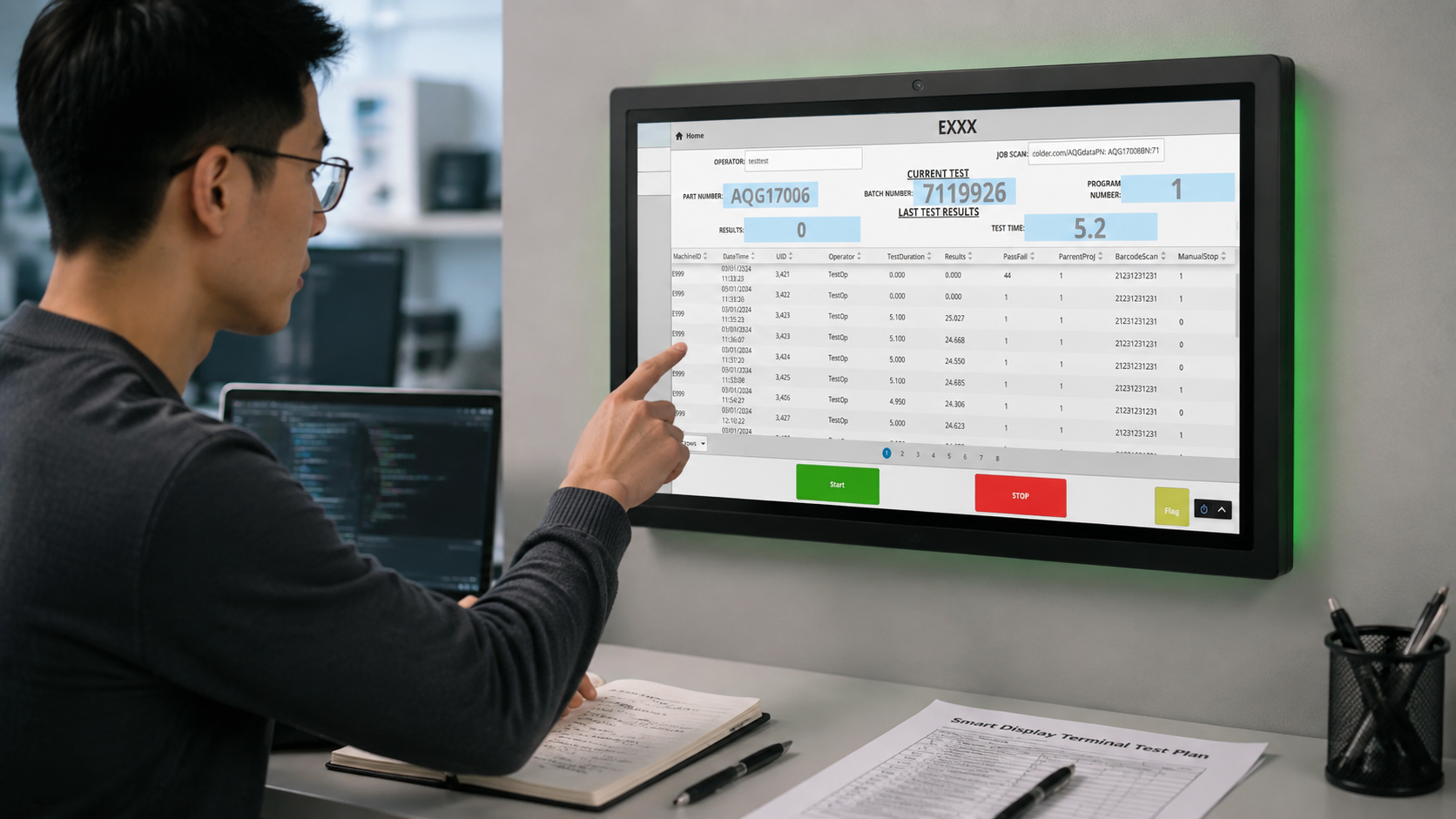
The prototype stage is where software companies test whether their digital experience can successfully move into a physical environment.
A mobile application designed for smartphones may behave differently when deployed on a dedicated touch display. Screen layout, interaction distance, system permissions, and background processes can all influence usability.
Through prototype validation, companies can confirm whether the selected hardware platform supports the intended application experience before moving toward larger investment.
The purpose of this stage is not simply to test whether the device works. It is to verify whether the hardware can become a stable part of the product ecosystem.
Software Integration and Brand-Level Customization
Once the hardware foundation is confirmed, the next challenge is creating a consistent branded experience.
For software companies, the device startup process, application access, and system restrictions are often part of the product design.
A customized solution may involve pre-loaded app installation during manufacturing, a dedicated launcher interface, or firmware customization to control device behavior.
In environments such as smart homes, education, healthcare, or enterprise services, uncontrolled Android access may create unnecessary complexity. This is why kiosk lockdown is often considered for dedicated-purpose devices.
The deeper the customization requirement, the earlier these decisions need to be discussed. System-level changes can influence development timelines, testing processes, and long-term maintenance strategies.
Moving From Prototype to Volume Production
A working prototype does not automatically mean a project is ready for manufacturing.
The transition into volume production introduces new challenges. Hardware consistency, firmware versions, component availability, and quality control become increasingly important when production quantities increase.
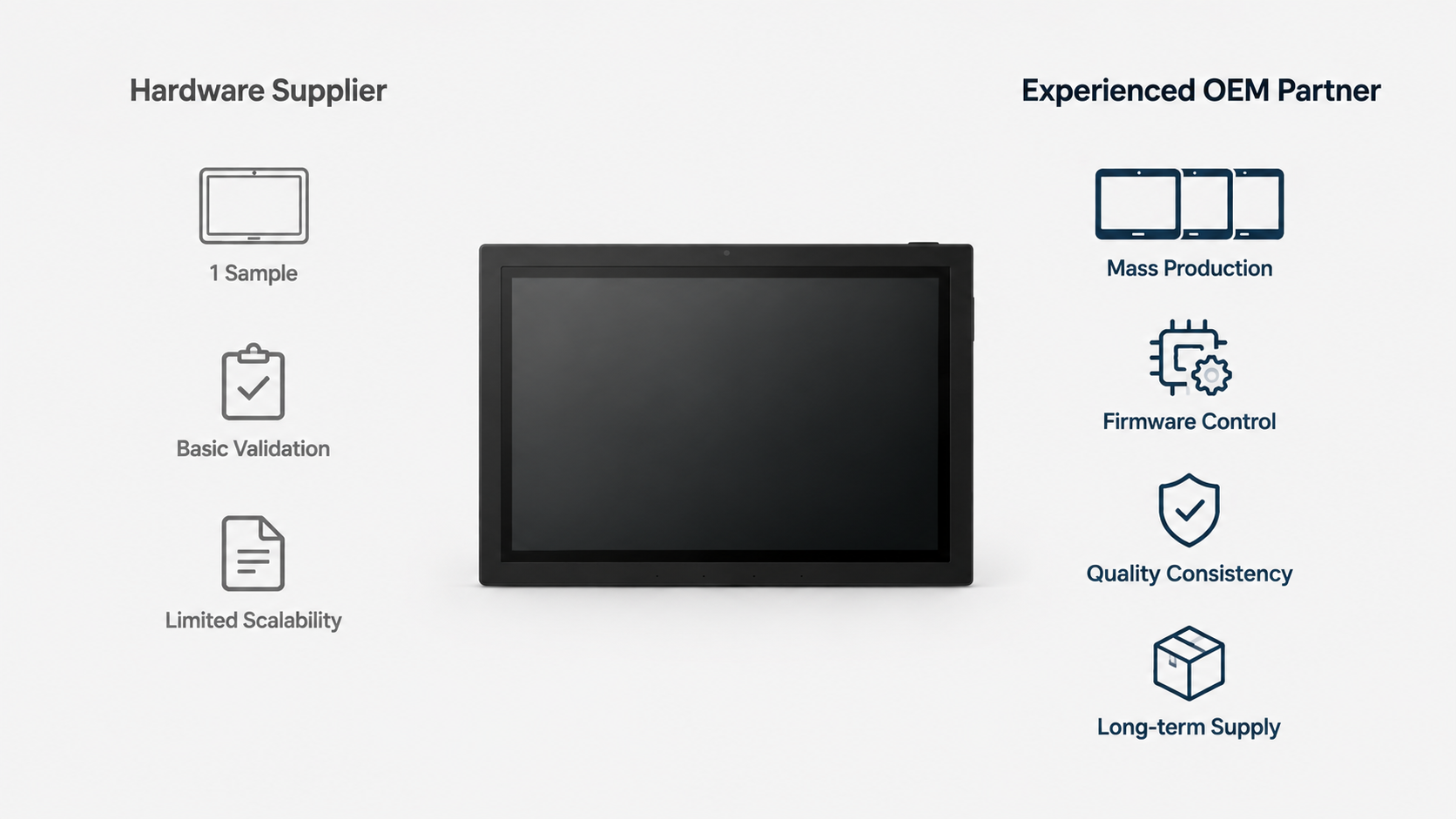
For software companies, this stage often reveals the difference between a hardware supplier and an experienced OEM partner.
A supplier that can produce one sample may not necessarily have the processes required to maintain the same software and hardware experience across larger production runs.
This is why the OEM evaluation process should consider long-term production capability rather than only the initial prototype.
What an Anonymized OEM Project Reveals About Software-Led Hardware Requirements
Recent OEM inquiries from software-driven companies show a similar pattern: these buyers are not simply searching for off-the-shelf devices. They are exploring how to create branded physical interfaces around existing digital services.
One anonymized project from a US-based software company illustrates this type of requirement.
The company was developing a family-oriented software platform and explored a customized Android touch display solution covering 15.6-inch, 21.5-inch, and 24-inch models. The project requirements included application integration, kiosk deployment, and brand customization.
This example does not represent the entire market by itself. Instead, it reflects a broader buyer behavior change: software companies entering hardware need manufacturing partners that understand both software deployment requirements and hardware production processes.
The important procurement lesson is that the device specification is only one part of the decision.
The larger challenge is ensuring that the final hardware product can deliver the same user experience that made the software valuable in the first place.
Choosing an OEM Partner When Software Becomes the Product Experience
For software companies, selecting an OEM partner requires evaluating more than manufacturing capacity.
The first step is understanding the actual project requirement. Some companies may only need private branding and application installation, while others may require deeper Android customization, long-term firmware support, or device management capability.
A suitable private label android tablet partner should be able to support the complete product journey:
Software concept → Prototype validation → Customization → Production scaling
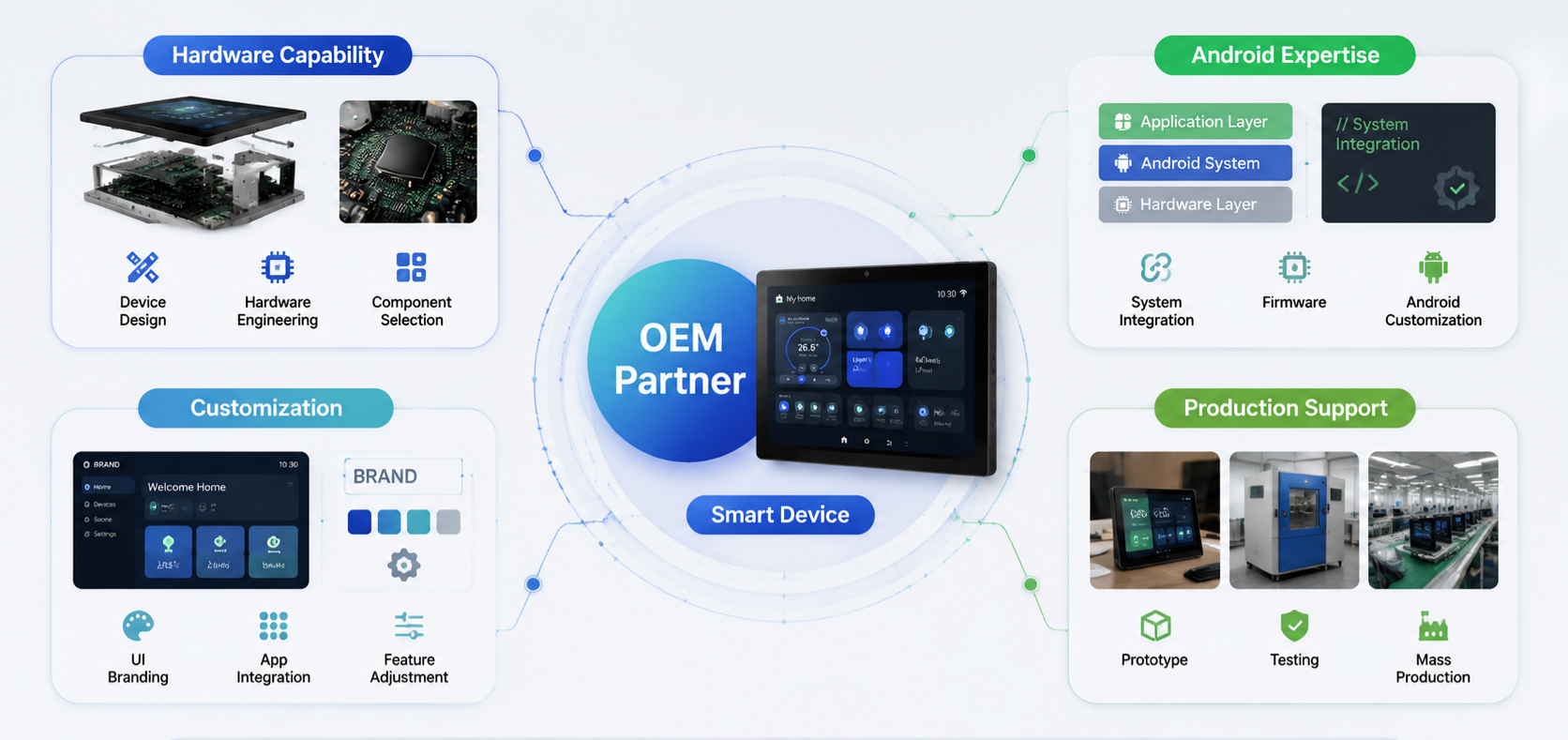
The most important evaluation point is whether the supplier can maintain communication between software requirements and manufacturing execution.
A project can fail even when the hardware quality is acceptable if the software experience cannot be maintained after production.
For this reason, software companies should evaluate OEM partners based on their ability to support integration, customization, and long-term product development.
Building a Clear Path From Software Platform to Branded Hardware
The growth of software-driven hardware projects reflects a broader change in how digital services reach users.
As connected environments become more integrated into daily life, companies are looking for dedicated interfaces that make their services easier to access and more consistent across different scenarios.
For software companies considering hardware expansion, the most important preparation is defining the project requirements before production begins.
Understanding the expected application environment, customization scope, software deployment method, and production goals can significantly reduce development uncertainty.
If your company is planning an OEM smart home display, private label android tablet, or a transition from software service to branded hardware, you can start by discussing your application requirements, customization expectations, and expected production stage with an OEM specialist.
Our OEM team can help evaluate your project scope, recommend suitable hardware configurations, and provide guidance on prototype development, MOQ planning, and production scaling.
 Smart Home Command Center Display: Emerging Requirements From Global OEM Projects