
 86 13392660243
 hope17@cnhopestar.com

 whatsapp
Planning an Android Display for In-Vehicle Advertising: What to Validate Before Fleet Deployment
 2026-10-23
 cnhopestar
For in-vehicle digital signage projects, selecting an Android display is only the starting point. At CnHopestar, we review the intended vehicle application, required hardware configuration, connectivity, advertising software, and installation conditions before determining which requirements may be met by a standard configuration and which need further customization or validation. The goal is to identify a suitable display for the intended deployment rather than assume that one device will fit every vehicle.
For an Android taxi advertising display project, for example, a compact screen may be considered for installation in taxis or auto-rickshaws. However, screen size alone does not establish vehicle suitability. Power behavior, mounting constraints, connectivity, and compatibility with the customer's own advertising application all need to be considered before a configuration is approved for fleet use.
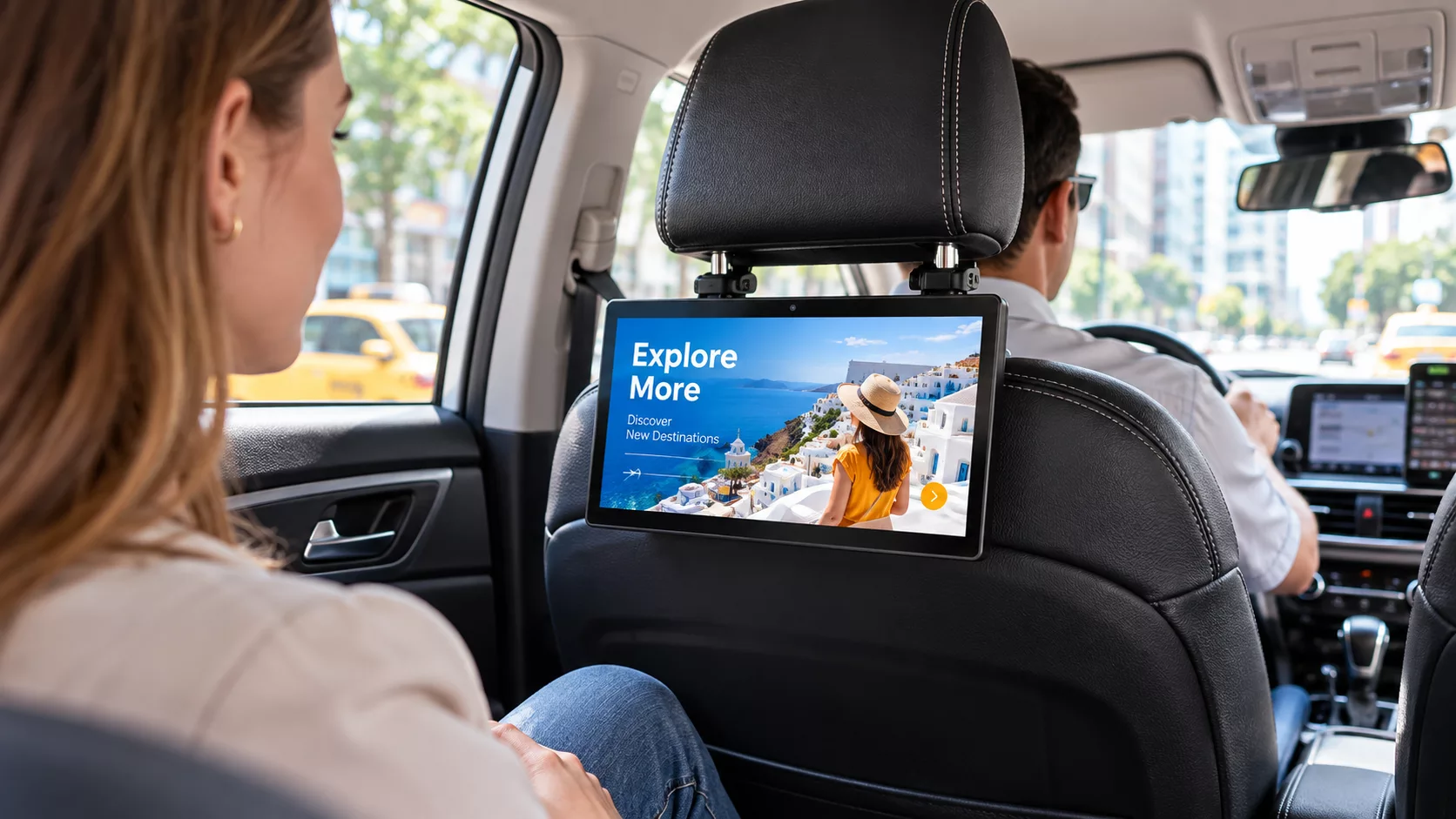
1. Choosing an Android Display Configuration for In-Vehicle Advertising
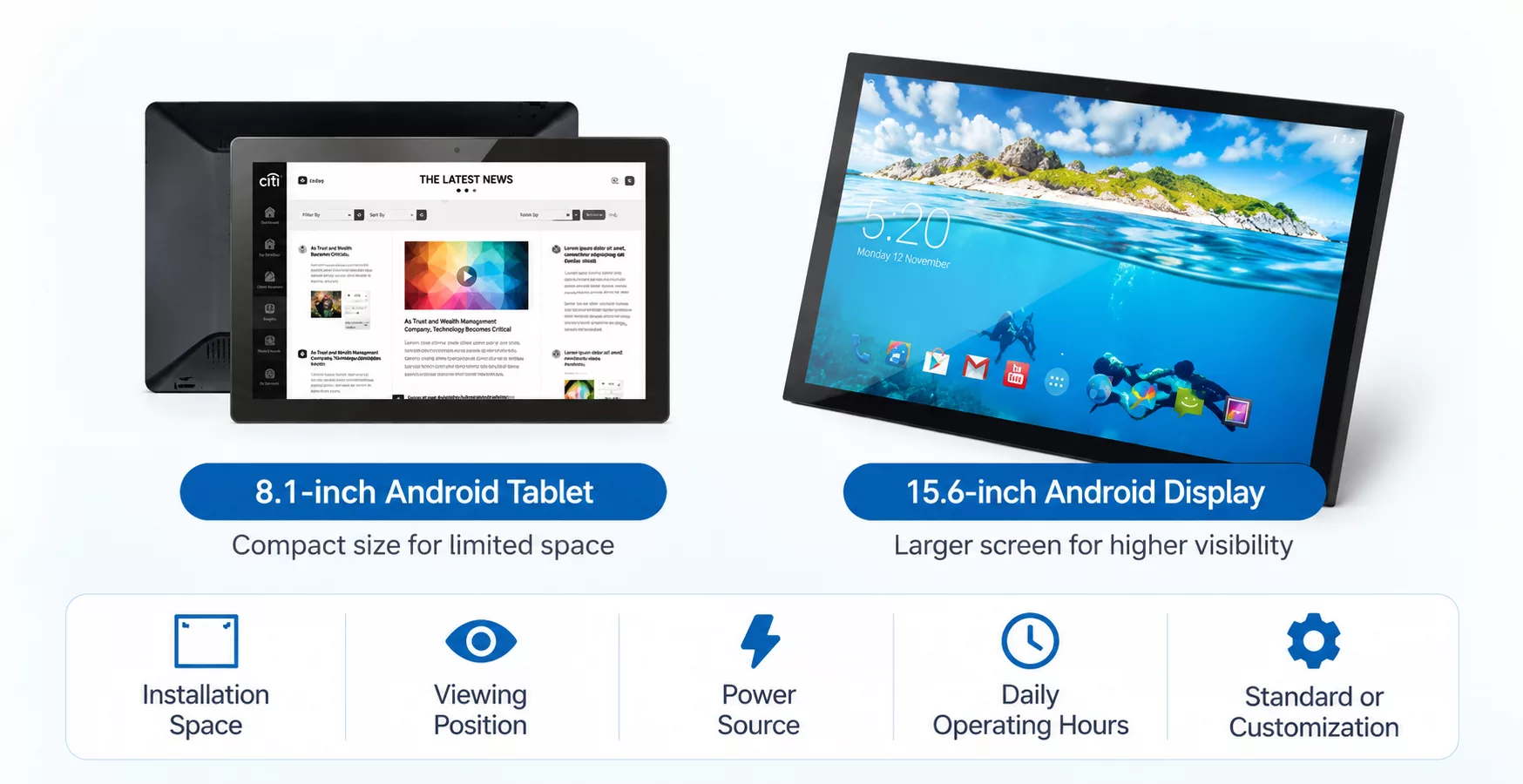
We begin by reviewing how the display will be used, where it will be installed, and what the vehicle environment requires. A product such as an Android display may be relevant to a commercial display project, while a smaller tablet format may be worth evaluating when the available installation space is limited. The appropriate choice depends on the actual dimensions, operating requirements, and mounting arrangement.
For a taxi advertising display or an auto-rickshaw advertising display, we clarify the required screen size, viewing position, installation method, power source, and expected daily operating hours. We also check whether the project needs a standard Android device or additional hardware or software adjustments.
This review helps distinguish documented product specifications from requirements that still need technical assessment. It also helps buyers compare potential Android advertising display options according to their intended application instead of choosing a device based on appearance or screen size alone.
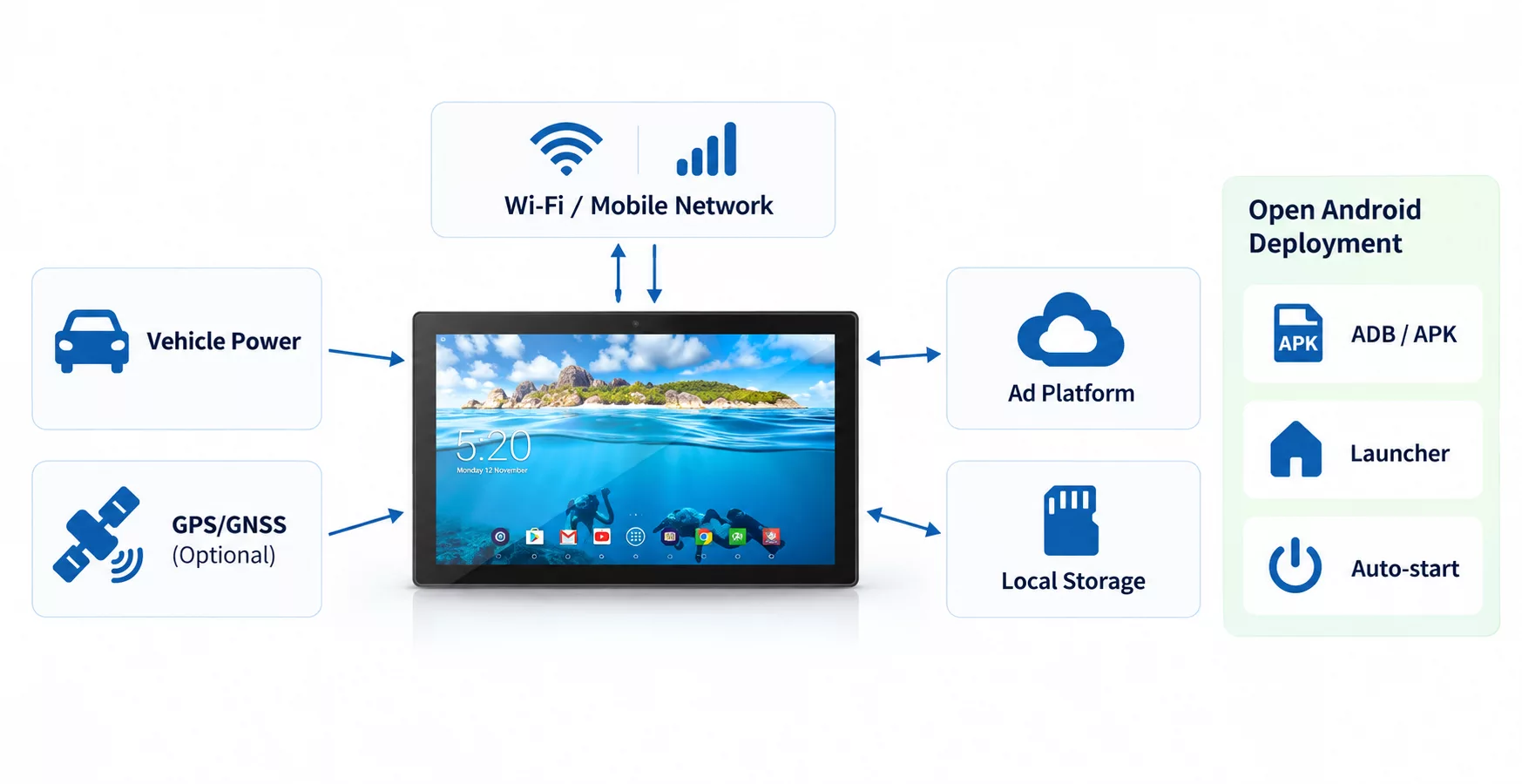
2. Checking Power, Connectivity, and Software Compatibility for Android Advertising Displays
Before proposing a configuration, we check the vehicle's electrical system, the required input range, and whether the display needs to start automatically with the vehicle. Ignition-linked startup behavior must be evaluated against the proposed device and power arrangement rather than assumed from standard Android startup settings.
Connectivity requirements also need to be specific. We confirm the required network compatibility and review GPS/GNSS and Wi-Fi needs alongside the intended advertising workflow. These requirements should be matched to the proposed configuration and the deployment market before the hardware is finalized.
The customer's advertising application introduces another layer of compatibility checks. We distinguish device-level functions, such as automatic startup and kiosk mode, from application-level functions, such as ad scheduling, campaign management, and content synchronization. Remote APK installation, system OTA updates, and advertising content updates are separate requirements and should be confirmed individually.
Offline video playback also needs practical validation. We check whether stored content can continue playing during a network outage, how updated content is synchronized after reconnection, and how interrupted downloads or outdated assets are handled.
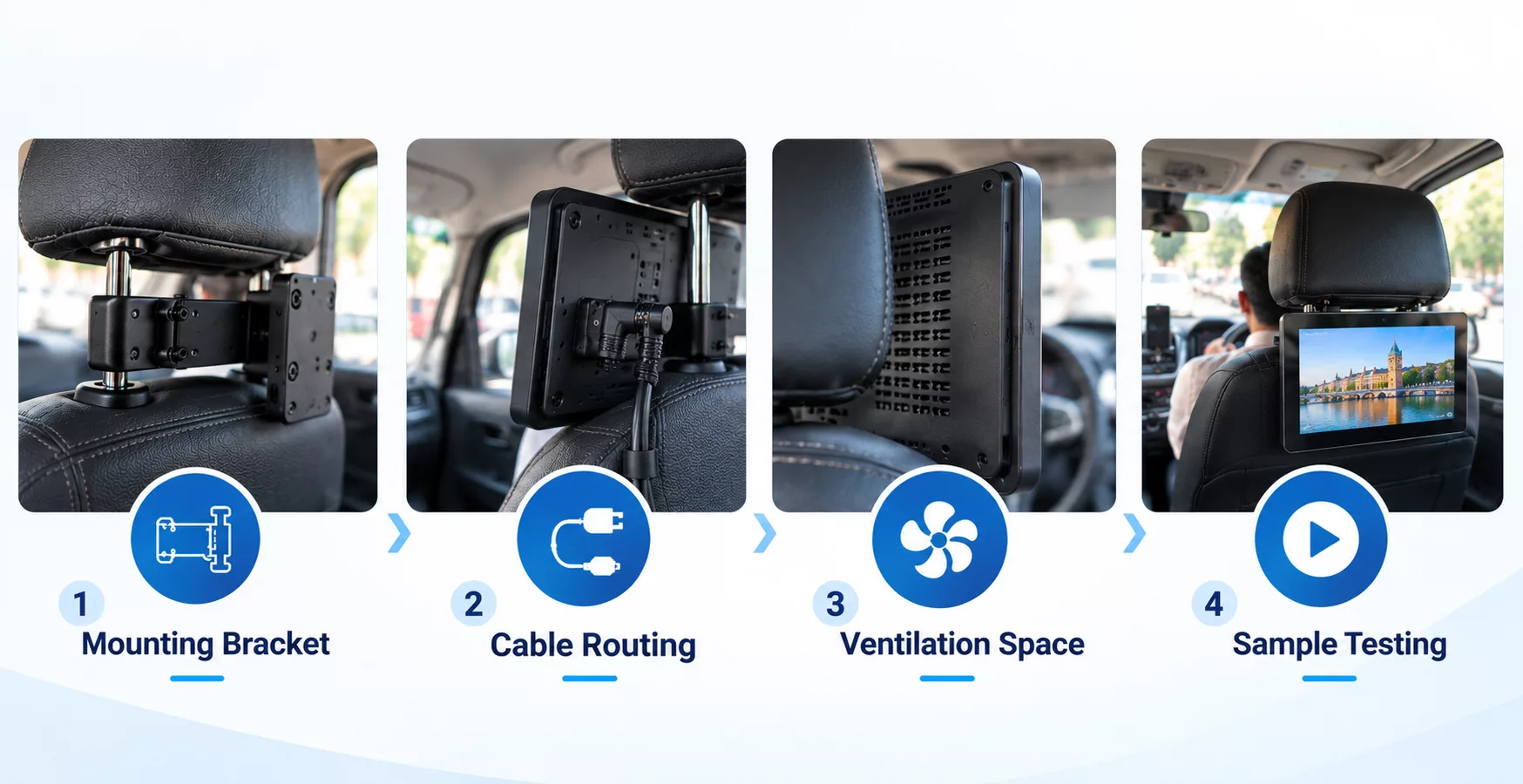
3. Assessing Installation Requirements for Vehicle Advertising Display
Installation suitability depends on more than whether a display physically fits. We review mounting space, fastening, cable routing, ventilation, maintenance access, and the expected temperature and vibration conditions. Depending on the project, a vehicle advertising display may need to be assessed alongside a separate mounting bracket or other installation accessories. The bracket can address physical mounting needs, but it does not by itself establish that the device meets the vehicle's power or environmental requirements.
A pilot evaluation should cover the requirements that matter before wider rollout: power behavior, network connectivity, application launch, offline playback, remote update workflows, mounting stability, and daily operating performance. Each item should have a defined acceptance criterion and a clear status, such as confirmed, demonstrated on a sample, pending vehicle testing, or requiring further technical review.
During sample evaluation, we compare the proposed configuration with the customer's requirements and document any unresolved items. Depending on the project, some checks may need to be completed by the customer or its local installation partner under actual vehicle conditions. This process helps determine whether the proposed in-vehicle display solutions are suitable for the intended application without assuming that a successful bench test guarantees fleet-wide performance.
4. What to Confirm Before Deploying In-Vehicle Display Solutions at Scale
Before volume production, we verify that the approved sample and the production configuration match. This includes the device model, Android version, communication modules, power components, mounting accessories, and any agreed customizations. Where a project calls for a commercial Android display or a larger-format Android digital signage display, the exact model and its documented specifications should be checked against the approved requirements.
We also clarify MOQ, lead time, warranty terms, spare parts, and technical support arrangements. These details help align the selected configuration with the project's purchasing and deployment plan.
Planning fleet advertising solutions for taxis, auto-rickshaws, or other vehicle applications? Contact CnHopestar to discuss your target vehicle type, installation method, display specifications, connectivity, advertising software, and expected order quantity. Our team can review your requirements, clarify standard and customization options, and help identify the technical details to confirm before sample evaluation or volume production.
 How to Estimate Landed Cost for Imported Android Tablets: From Supplier Quote to Cost per Unit