
 86 13392660243
 hope17@cnhopestar.com
 whatsapp
When Corporate Training Rooms Limit Productivity Instead of Supporting It
 2026-01-16
 cnhopestar
In large organizations, internal learning facilities are meant to accelerate employee development, standardize knowledge, and support long-term growth. However, many enterprise training rooms gradually turn into operational bottlenecks. Bookings overlap, reserved rooms remain unused, and instructors lose time navigating unclear schedules. As these issues scale, they directly affect training efficiency and facility costs.
For this U.S.-based multinational enterprise, the issue became increasingly visible. Their corporate Learning Center lacked real-time transparency, making it difficult to manage space effectively. To restore order and efficiency, the organization introduced a Meeting Reservation Tablet solution designed specifically for enterprise training environments, redefining how rooms were scheduled, monitored, and utilized.
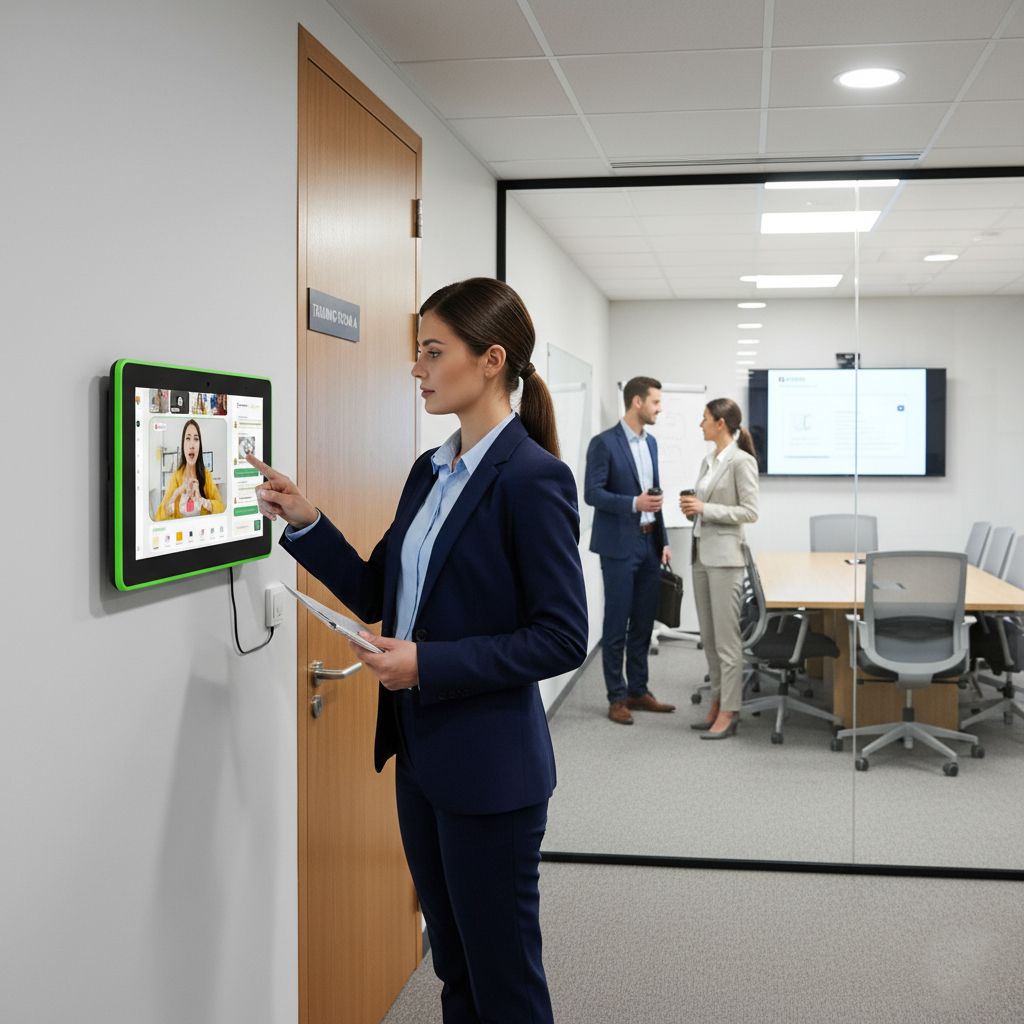
A Corporate Learning Center Supporting Global Teams
The company operates a centralized Learning Center within its U.S. headquarters, hosting onboarding programs, leadership training, compliance sessions, and hybrid workshops for regional teams. More than 40 dedicated training and interview rooms are spread across multiple floors, supporting dozens of sessions each day.
Despite this scale, room management relied heavily on traditional calendar tools. Trainers booked rooms remotely, attendance was unpredictable, and facilities teams had limited insight into real usage. Leadership needed a system that provided instant visibility and operational control. Their requirements pointed toward an enterprise-ready Conference Room Tablet that could integrate with existing scheduling platforms while delivering real-time room status at the door.
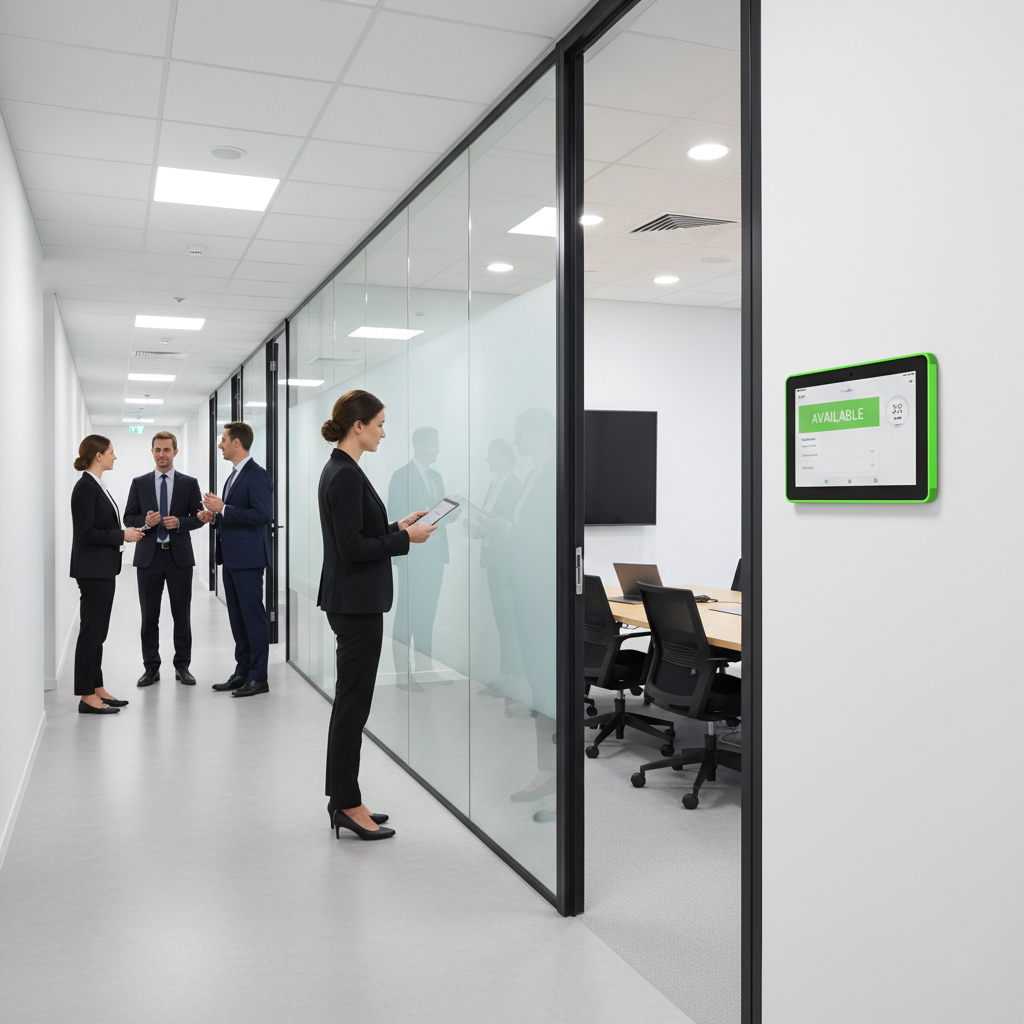
Why Calendar-Based Booking Was No Longer Enough
Standard scheduling tools functioned well on paper, but failed to reflect reality on-site. Rooms appeared booked even when empty, while unplanned sessions caused frequent interruptions. Interview panels competed with training sessions for space, triggering last-minute changes and confusion.
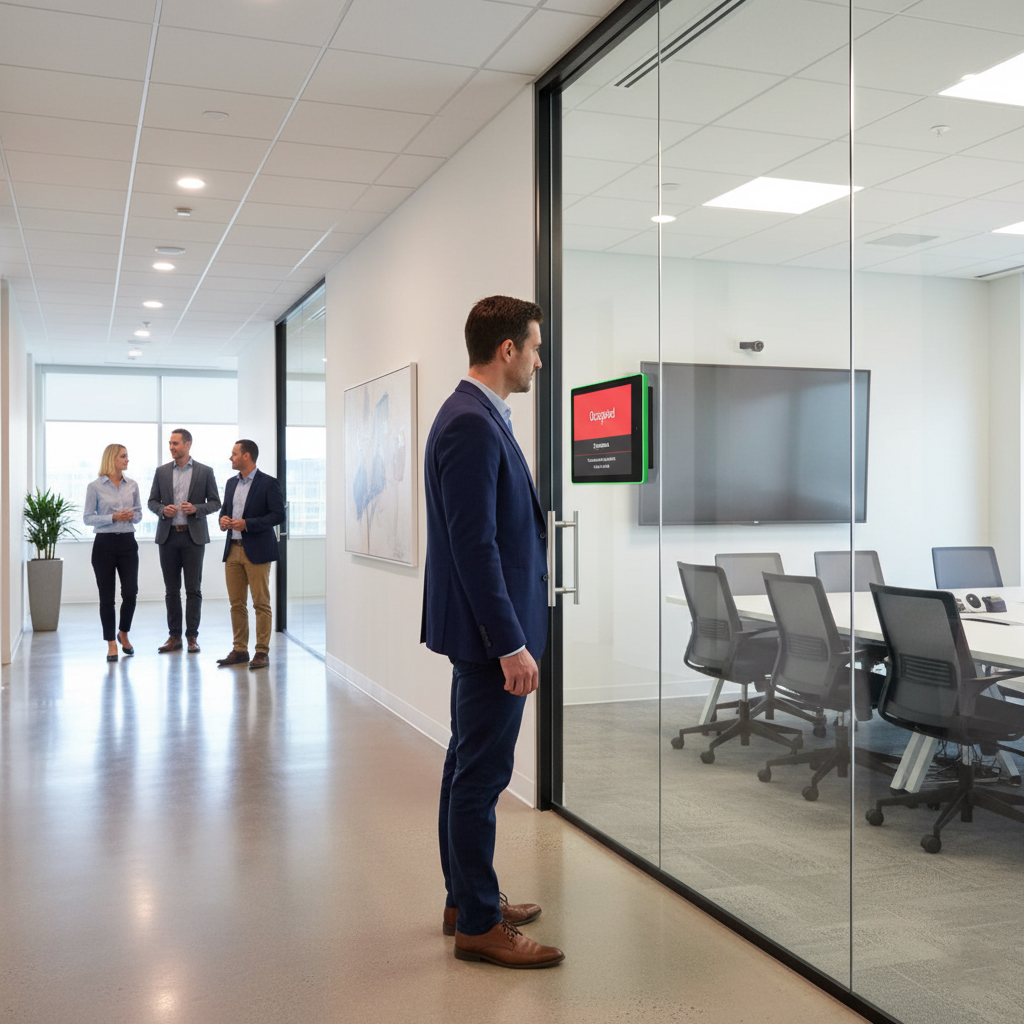
Without a visible indicator outside each room, trainers often interrupted ongoing sessions just to confirm availability. More importantly, leadership lacked data to understand how training spaces were actually being used. What the Learning Center needed was a physical, always-on Digital Meeting Room Sign that connected digital calendars with real-world behavior, while automatically enforcing smarter booking rules.

Building a Structured Training Room Scheduling System
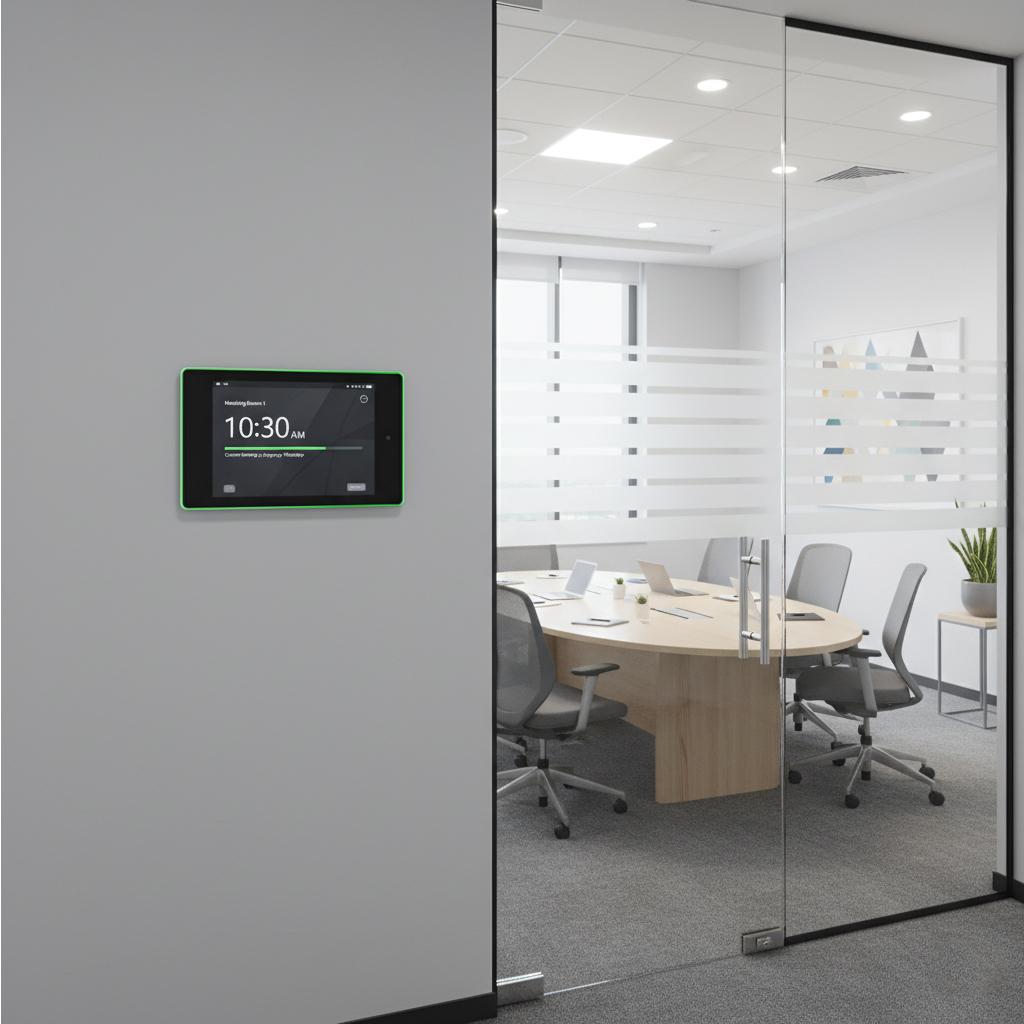
The solution involved deploying Meeting Room Display devices outside every training and interview room. Each Office Booking Tablet synchronized directly with Microsoft 365, ensuring full alignment with existing scheduling workflows.
The system enabled:
Instant visibility into room availability
Walk-up room reservations for last-minute needs
Automatic release of unused bookings
From a management perspective, the Enterprise Room Management Tablet allowed administrators to set buffer times between sessions, prioritize training activities, and assign specific rooms for interviews. This structure protected learning schedules while eliminating manual coordination.
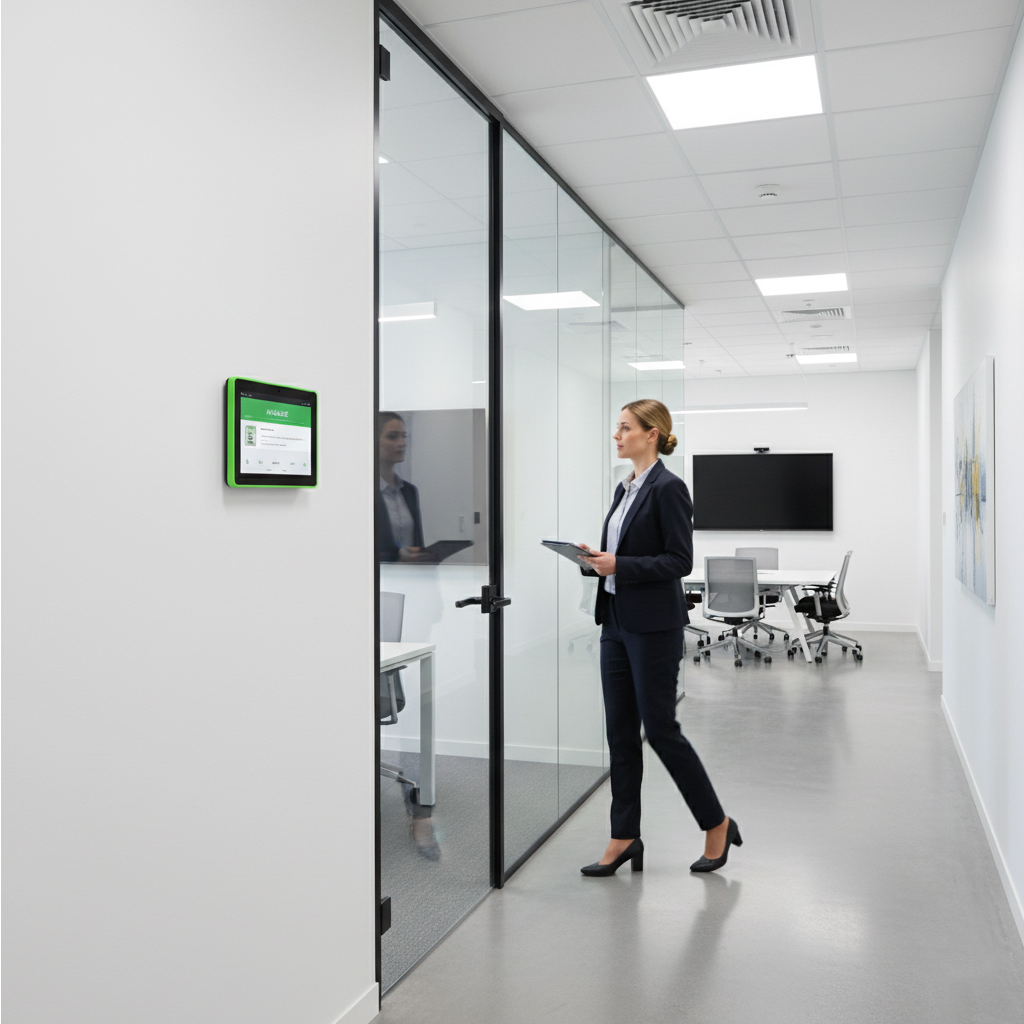
How the System Supports Daily Training Operations
The impact on daily operations was immediate and practical. Trainers arriving for sessions could confirm room readiness instantly via the Room Scheduling Display mounted outside each door. Employees attending workshops no longer hesitated or disrupted sessions to confirm locations.
Interview coordinators used the Conference Scheduling Tablet to locate and reserve available rooms in seconds. Meanwhile, facilities teams monitored real-time usage data through the Office Scheduling Device, identifying peak hours and underutilized spaces. The tablets quietly guided behavior across the Learning Center without requiring additional training or policy enforcement.
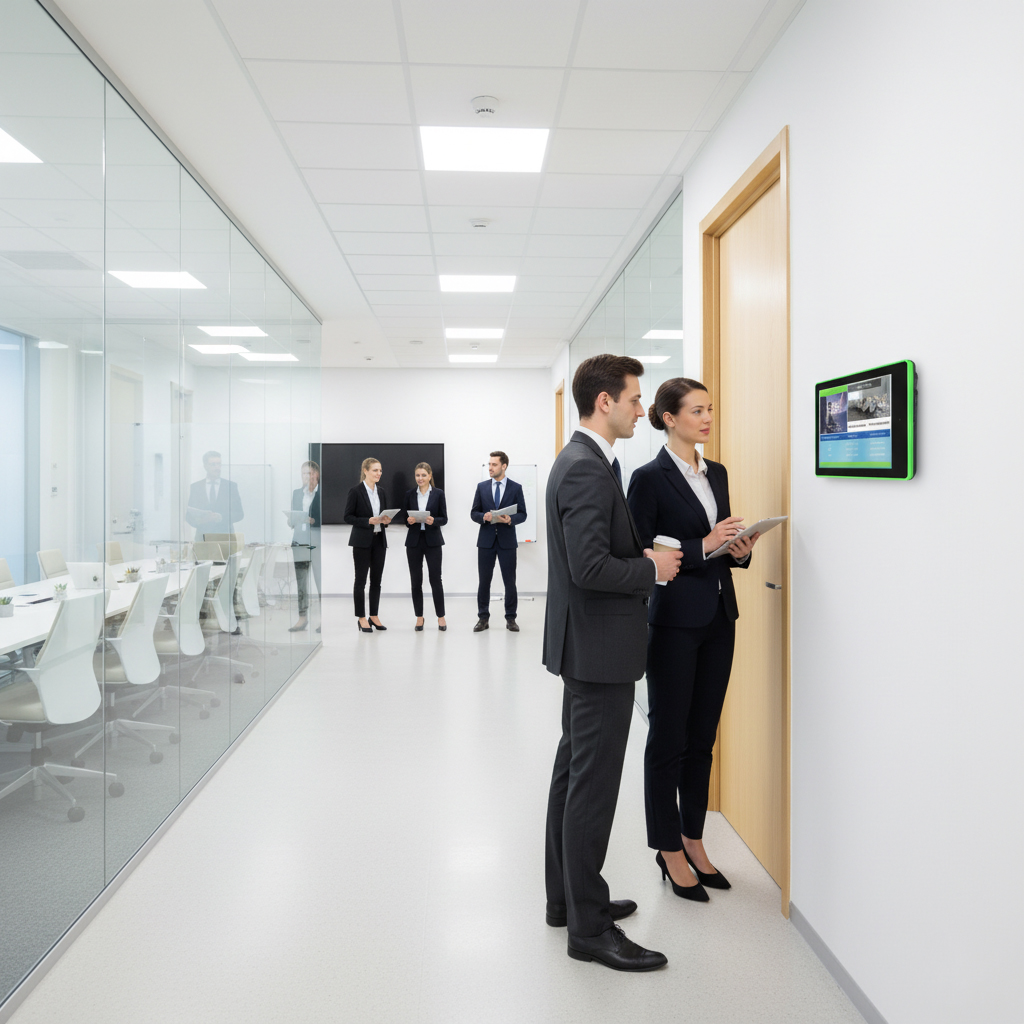
Measurable Gains in Space Utilization and Training Efficiency
Within three months of deployment, the Learning Center reported clear, measurable improvements. No-show reservations dropped by 58% due to automated room release rules. Overall room utilization increased by 31%, enabling the organization to host more sessions without expanding physical space.
Trainers experienced smoother session transitions, while facilities teams reduced time spent on manual coordination. The Smart Conference Tablet ecosystem also delivered actionable insights, allowing leadership to adjust room layouts and training schedules based on real usage data. These changes translated directly into improved learning outcomes and lower operational overhead.
What Stakeholders Noticed After Implementation
According to the Global Learning Operations Manager:
“Before deploying the tablets, our training rooms felt unpredictable. Now, everything is transparent. We know what’s happening, where, and when—and our trainers can focus on teaching instead of logistics.”
A regional HR leader added:
“The system is intuitive. Even new employees understand it immediately. The Meeting Reservation Tablet has become part of how our Learning Center operates.”
Their feedback highlights a key success factor: technology adoption worked because it aligned naturally with existing workflows.
A Scalable Model for Enterprise Learning Environments
This case illustrates how enterprises can elevate internal training operations through intelligent space management. By combining visibility, automation, and data-driven insights, a Corporate Meeting Management Tablet solution transformed a complex Learning Center into a predictable, efficient, and scalable environment.
For multinational organizations investing in continuous learning, structured room management is no longer optional—it is foundational. As hybrid work and global training initiatives expand, solutions like the Conference Room Tablet are becoming essential infrastructure for delivering consistent, high-quality learning experiences across regions.
 Smart Healthcare Case Study: Implementing Android Terminals for Hospital Self-Service Registration