 86 13392660243
 hope17@cnhopestar.com

 whatsapp
15.6-Inch Android Kitchen Display for Restaurants: Hardware Selection and Customization
 2026-11-02
 cnhopestar
Customer Background: A 15.6-Inch Wall-Mounted Android Kitchen Display Requirement
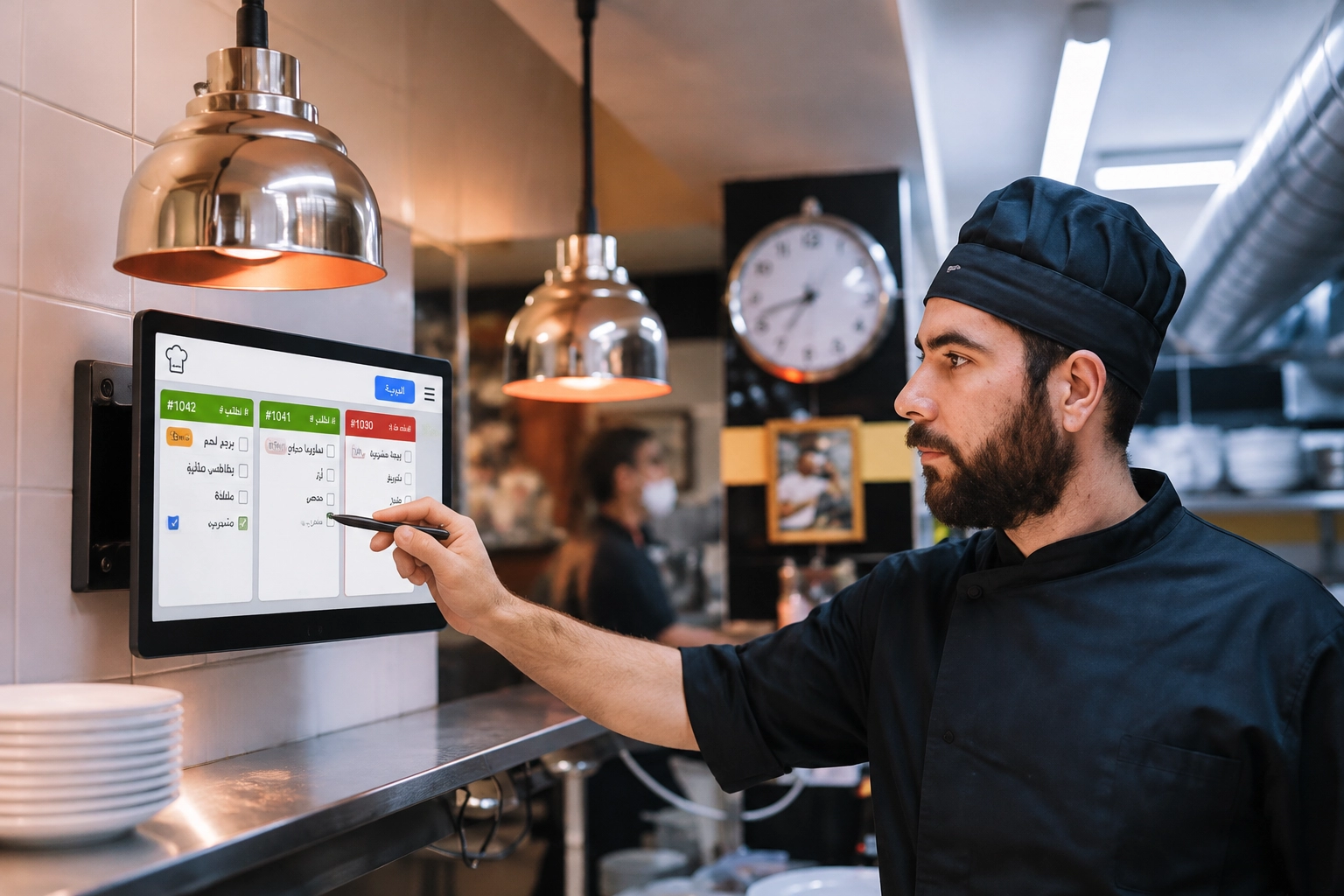
A system integrator from Saudi Arabia approached Cnhopestar with a requirement for a 15.6-inch wall-mounted Android display designed for kitchen operations.
The customer already had its own Android application and wanted to integrate it into the display system. The requested configuration included built-in speakers and a microphone, Arabic and English language support, and OTA management for future device updates.
At first glance, the requirements seemed straightforward. However, the project involved more than selecting a display with the right screen size and Android operating system. The hardware needed to work with the customer's existing application, support a multilingual operating environment, and provide a practical approach to device maintenance after deployment.
Cnhopestar therefore approached the request as an OEM hardware configuration project rather than a standard tablet purchase.
Key Challenges: Hardware Configuration, Android App Compatibility, and Multilingual Support
Challenge 1: Finding the Right Hardware Configuration for Kitchen Operations
The customer needed a 15.6-inch wall-mounted terminal with integrated audio capabilities. A standard Android tablet might meet the basic display requirements, but that did not automatically make it suitable for the intended installation and workflow.
Several hardware details needed to be considered together:
- Mounting: The device needed to support wall installation, making the mounting structure and installation method important selection factors.
- Audio: Both speaker and microphone requirements had to be considered as part of the complete hardware configuration, rather than treated as optional accessories.
- Display and touch: Screen visibility, touch responsiveness, and the intended operating distance needed to match the kitchen environment.
- Hardware platform: The processor, memory, storage, and Android system version needed to support the customer's application requirements.
The challenge was not simply finding a 15.6-inch screen. It was identifying a commercial Android platform that could accommodate the complete set of requirements without introducing unnecessary hardware customization.
Challenge 2: Ensuring Compatibility with the Customer's Own Android Application
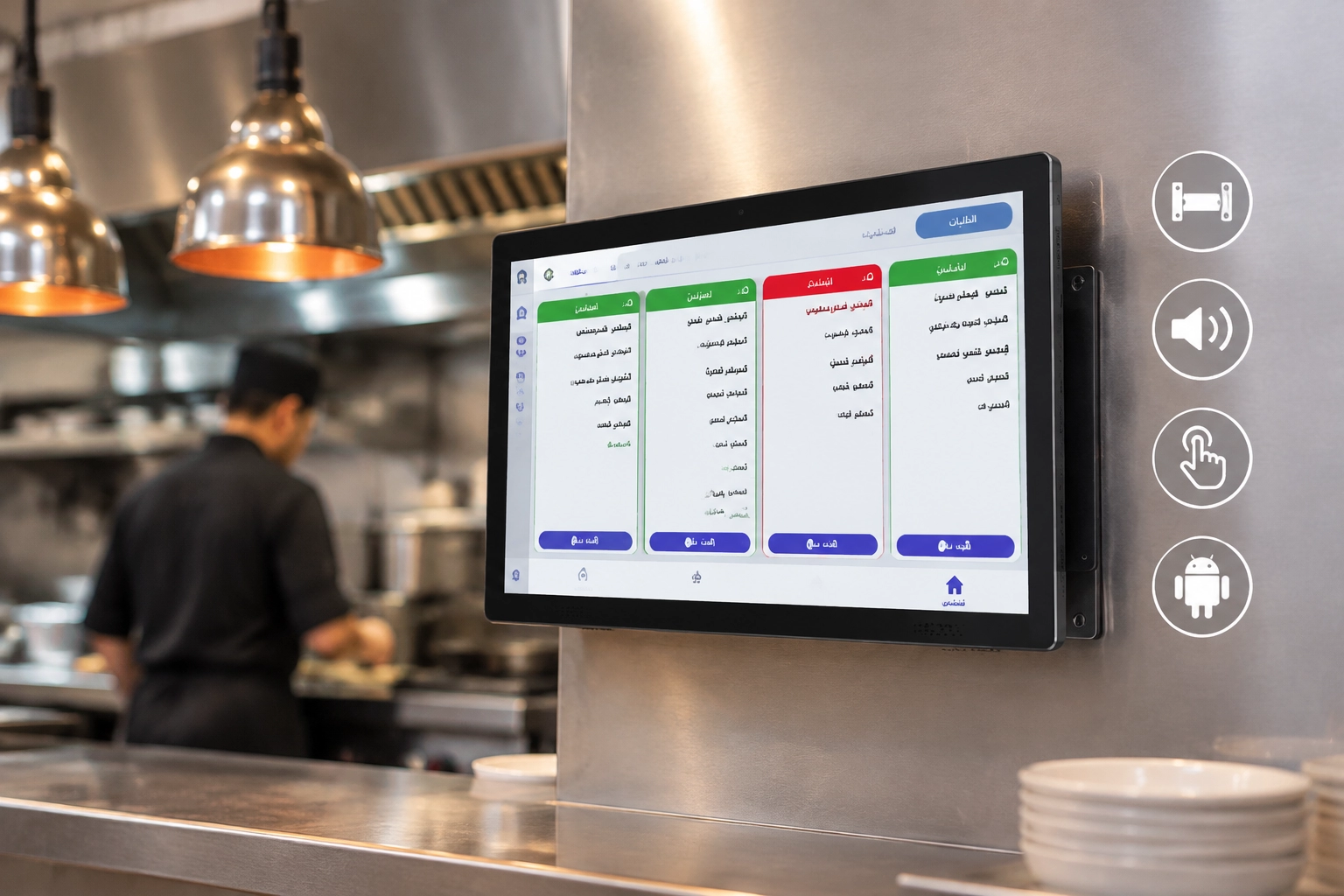
The customer planned to use its existing Android application instead of adopting a new software platform.
This introduced an important compatibility question: would the selected hardware and Android system provide the environment the application needed?
There were two aspects to consider.
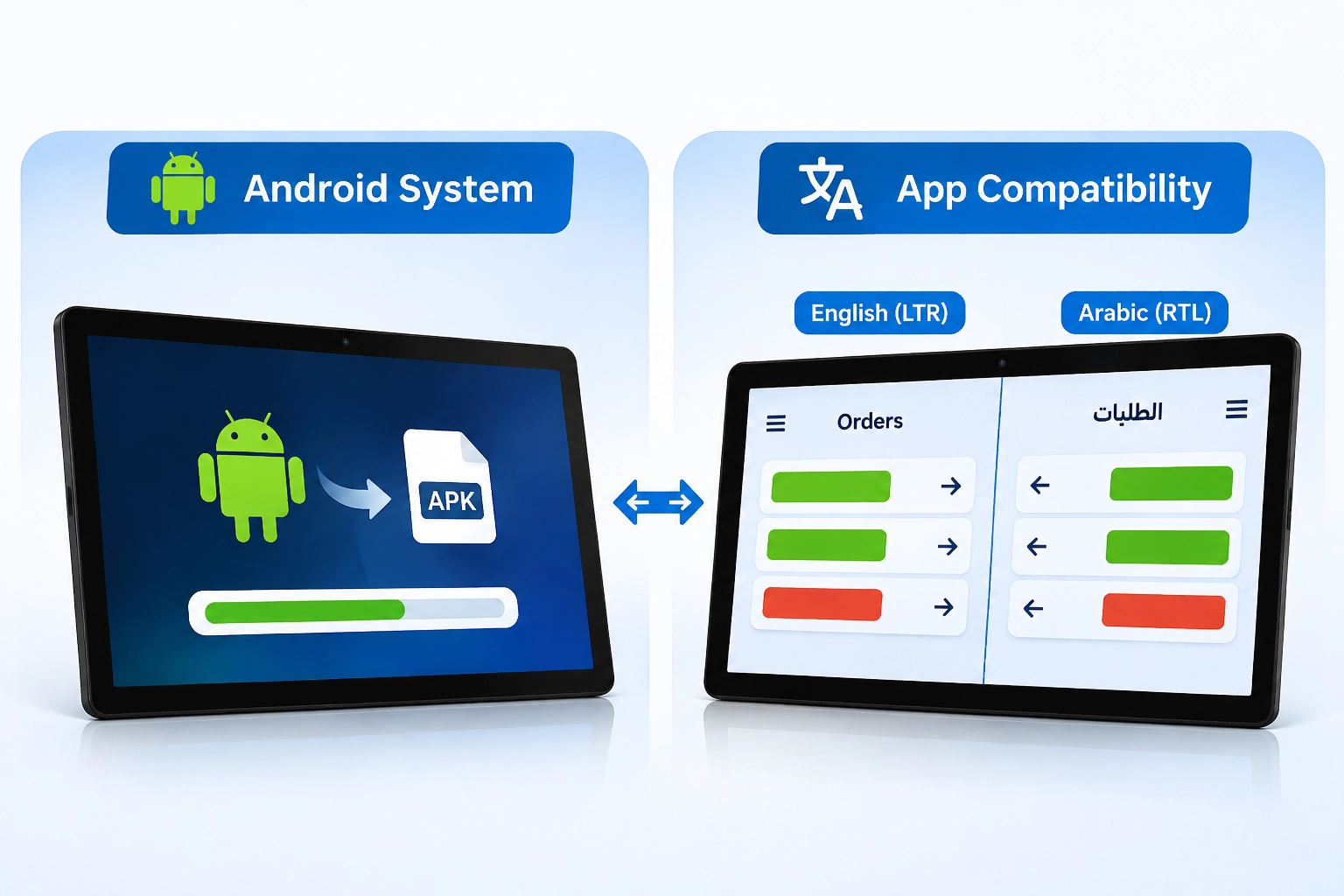
First, the Android version and hardware performance needed to meet the application's operating requirements. An Android device being capable of installing APK files does not guarantee that every application will run correctly on it.
Second, the customer required both Arabic and English support. Arabic introduces additional considerations because its written layout follows a right-to-left (RTL) direction. System-level language support alone does not guarantee that the customer's application will display menus, text fields, buttons, and other interface elements correctly.
For this reason, hardware selection and application compatibility needed to be evaluated together. The distinction between Android system support and application-level language adaptation also had to be made clear before moving toward production.
Challenge 3: Defining OTA Management Beyond the Initial Device Delivery
The OTA requirement indicated that the customer was also considering what would happen after the terminals were installed.
For a multi-device restaurant deployment, updating and maintaining individual terminals manually can become difficult as the number of devices increases.
However, OTA can refer to different operations:
- Android firmware and system updates;
- Customer application updates;
- Remote device configuration and maintenance.
These functions do not necessarily use the same technical solution or management platform.
Without defining the intended update process, it would be difficult to determine which capabilities should be provided by the hardware supplier and which should remain under the customer's software or device management system.
The key challenge was therefore to clarify the management requirements early, rather than treating OTA as a single checkbox in the hardware specification.
3. OEM Hardware Solution: Configuring a 15.6-Inch Android Kitchen Display for Restaurant Applications
Instead of starting with a completely new hardware design, Cnhopestar evaluated the customer's requirements against existing commercial Android tablet platforms.
Two relevant 15.6-inch Android platforms provided a starting point for the assessment:
15.6-inch RK3399 Wall-Mounted Android Tablet: A commercial platform with a 1920 × 1080 display, 300 cd/m² brightness, and capacitive touch.
View RK3399 Wall-Mounted Android Tablet
15.6-inch RK3568 Wall-Mounted Android Tablet: An Android 11 platform with configurable memory and storage options.
View RK3568 Wall-Mounted Android Tablet
These platforms helped establish a practical hardware starting point instead of requiring the customer to develop a device from scratch.
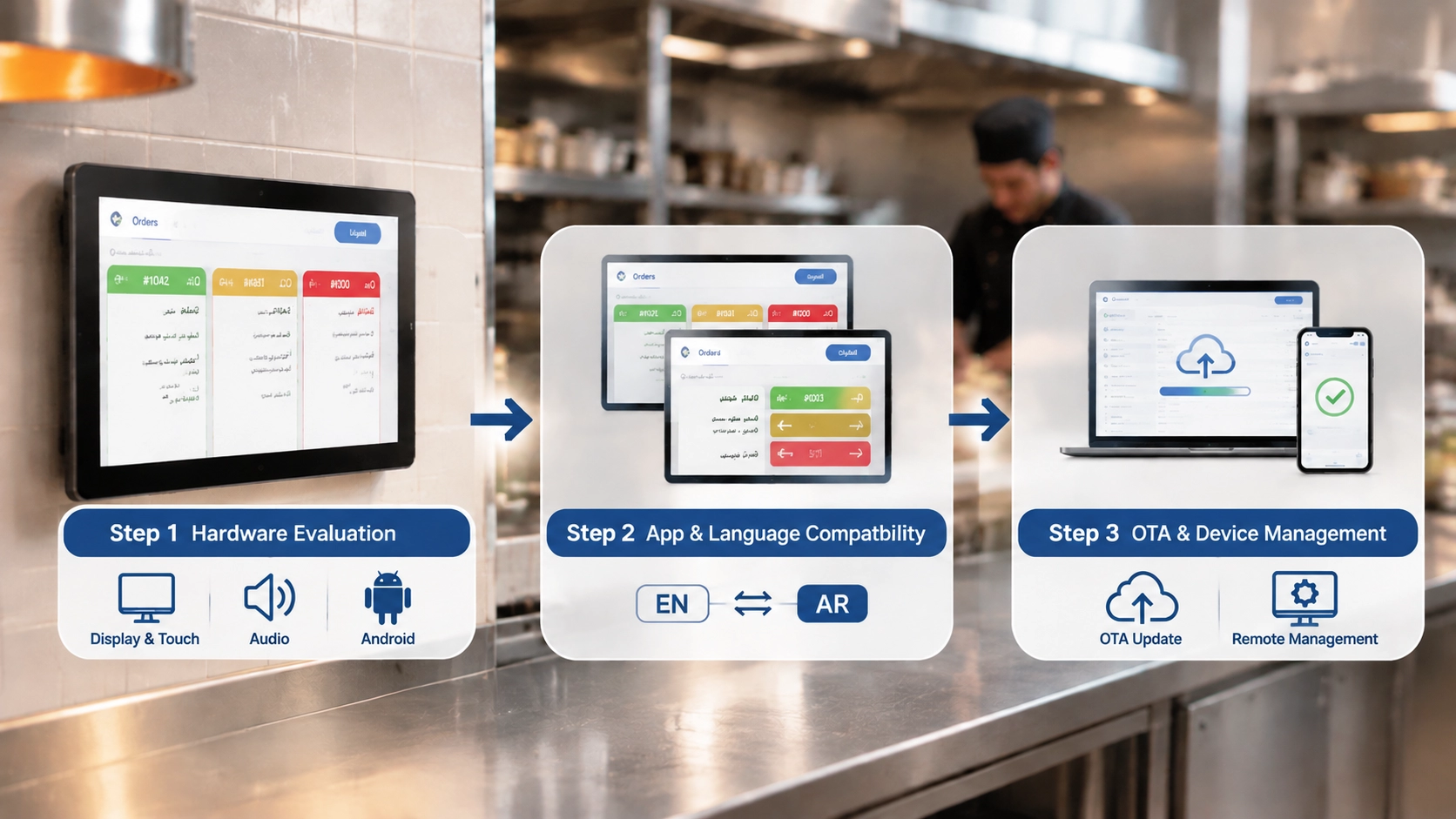
Step 1: Evaluate the Existing Hardware and Identify Configuration Requirements
We first considered the core hardware requirements, including the 15.6-inch display, wall-mount installation, speaker and microphone configuration, and the Android platform.
The purpose was to distinguish between features already available on standard platforms and requirements that might need additional configuration or customization.
This approach helps avoid unnecessary development costs. If an existing commercial platform can meet most of the application requirements, targeted configuration adjustments are often more practical than redesigning the entire device.
Step 2: Align the Android Platform with Application and Language Requirements
We treated the customer's application as an important part of the hardware selection process.
Rather than assuming that all Android platforms offer identical compatibility, the assessment needed to consider the Android version, available system resources, application installation requirements, and language environment.
For Arabic and English support, we also distinguished between system-level language capabilities and the customer's application interface.
The Android system can provide the underlying language environment, while the application itself must correctly implement Arabic RTL layouts and multilingual content. Defining this boundary helps both parties understand what needs to be supported by the device and what needs to be handled within the application.
This is particularly important for OEM projects involving customer-owned software, where hardware and application responsibilities need to be coordinated from the beginning.
Step 3: Clarify the OTA and Long-Term Management Requirements
We separated the OTA requirement into system updates, application updates, and device management.
This made it easier to identify the appropriate technical responsibilities:
The hardware and system side needs to establish the available firmware update capabilities.
The customer's software team needs to determine how its own application will be distributed and updated.
Remote device management requirements need to be evaluated according to the customer's deployment scale and existing management infrastructure.
By clarifying these requirements before finalizing the hardware configuration, the project can avoid a common problem: selecting a device that meets the initial specification but lacks a clearly defined maintenance approach after installation.
Project Outcome: Reducing OEM Development Costs Through Existing Android Hardware Platforms
By evaluating the customer's application requirements alongside the available 15.6-inch Android hardware platforms, Cnhopestar helped the customer identify a suitable hardware direction without starting the project from a completely new device design.
Rather than investing in unnecessary hardware development, the customer could build on an existing commercial Android platform and focus customization efforts on the specific functions required for the kitchen application.
This approach brought several practical benefits:
- Lower development costs: Using an existing hardware platform reduced the need for developing a completely new device from scratch, avoiding unnecessary design and engineering investment.
- More accurate hardware selection: Processor platform, display configuration, audio requirements, Android environment, and installation needs were considered together, helping the customer select hardware based on its actual application requirements rather than specifications alone.
- Reduced compatibility risks: Identifying Android version andArabic RTLrequirements early helped prevent potential application compatibility issues from being discovered only after hardware production.
- A clearer path for future deployment: Clarifying firmware updates, application updates, and device management requirements gave the customer a more practical basis for planning ongoing device maintenance.
The key outcome was that the customer could move forward with a more suitable hardware selection while avoiding the cost and complexity of unnecessary development. Instead of building everything from the ground up, the project could make better use of an existing commercial platform and concentrate resources on the custom requirements that actually mattered.
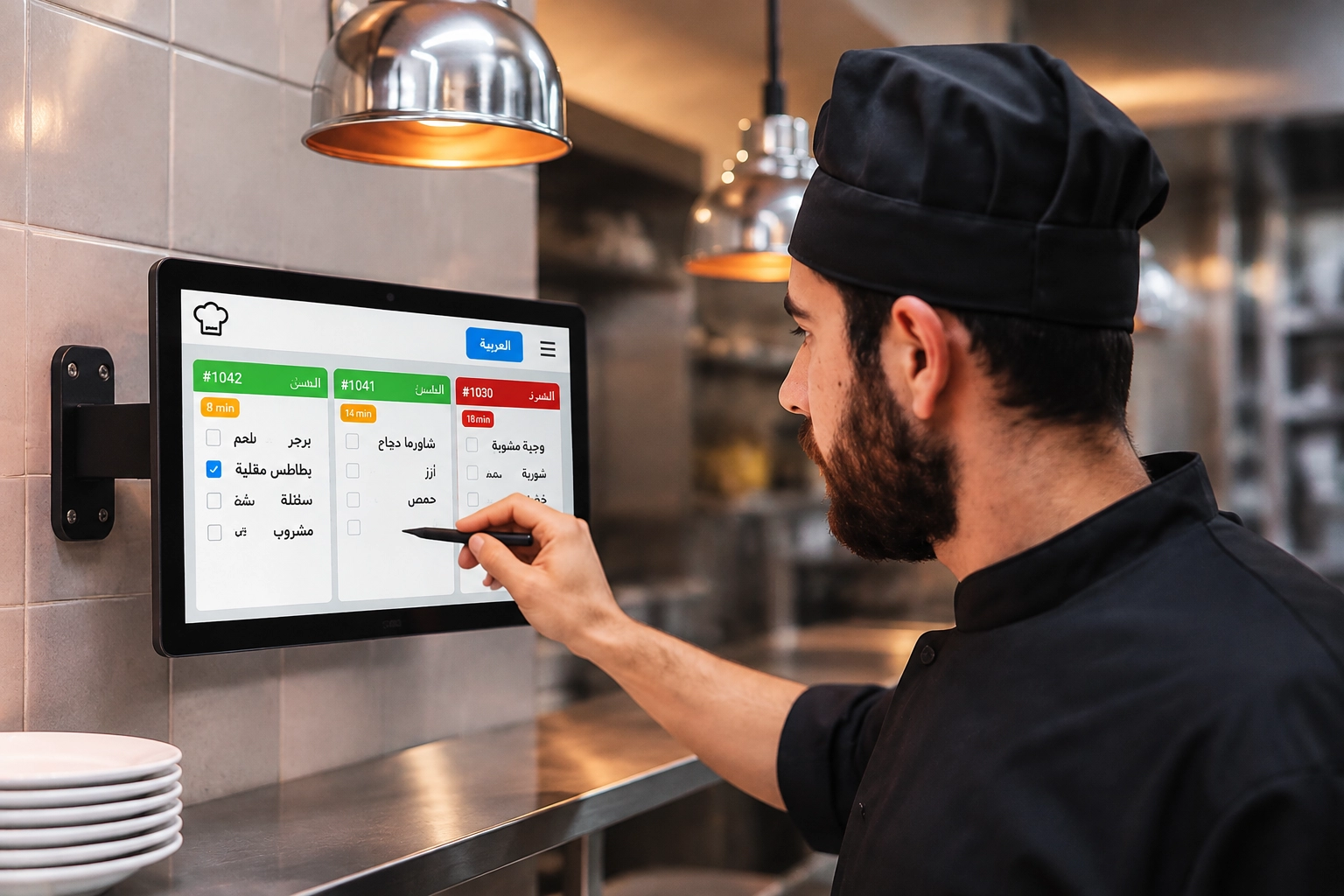
Looking for an Android Kitchen Display OEM/ODM Supplier?
If you are sourcing a 15.6-inch Android kitchen display or planning to integrate your own Android application into a commercial display terminal, Cnhopestar can help you evaluate hardware configurations based on your application, audio, multilingual, and OTA requirements.
Share your project specifications, preferred display size, and application requirements with our team to discuss suitable existing hardware platforms and potential OEM/ODM customization options.
Contact Cnhopestar to discuss your Android kitchen display requirements and explore a suitable hardware configuration.
 How to Choose a Gaming Monitor for OEM: 27 inch FHD, 32 inch QHD or 4K OLED 240Hz