 86 13392660243
 hope17@cnhopestar.com

 whatsapp
Industrial Panel PC Applications Are Diversifying: Understanding the Changing Demand for Embedded Computing Platforms
 2026-08-24
 cnhopestar
Industrial Panel PC demand is becoming more fragmented as businesses deploy connected devices across factories, healthcare environments, retail spaces, logistics operations, and commercial facilities. Instead of purchasing a simple touchscreen display, many buyers are now evaluating embedded terminals based on their ability to integrate with existing systems, support customized interfaces, and maintain reliable operation throughout the product lifecycle.
Market research also shows that the change is not simply about increasing Industrial PC shipments. The broader industrial computing landscape is shifting toward edge-based architectures, where computing power is moving closer to operational environments. IDC’s research on field-level edge computing devices and industrial computers highlights the growing overlap between traditional industrial PCs, edge computing equipment, industrial control devices, and AI-enabled applications. Meanwhile, Gartner and Omdia research on Industrial Edge reflects a broader transition toward distributed intelligence and application-specific computing.
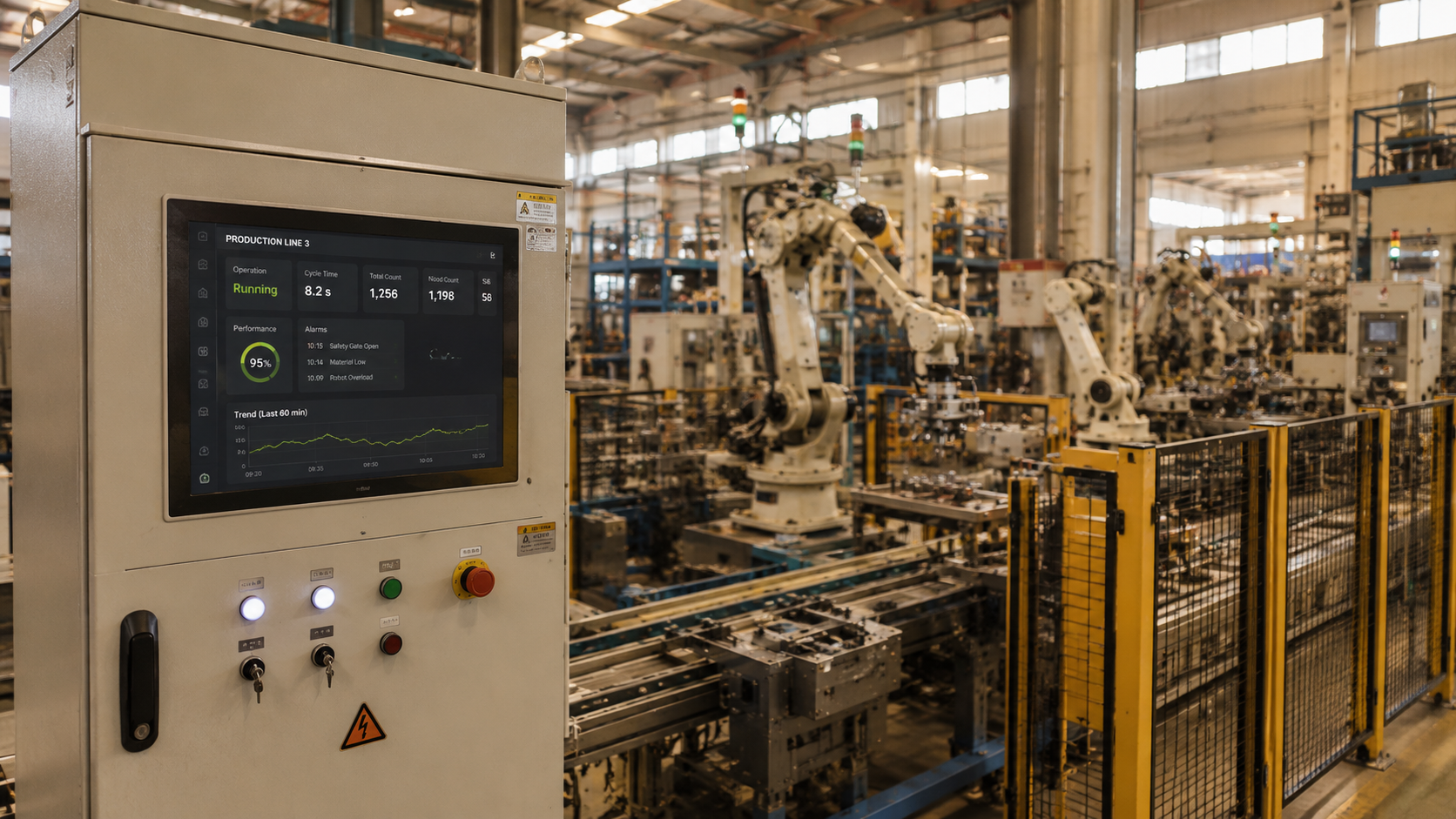
This shift creates new requirements for Industrial Panel PC suppliers. Buyers increasingly need platforms that can adapt to different application scenarios while maintaining a stable hardware foundation, software environment, and supply chain capability.
Based on nine anonymized OEM project requirements received from buyers across Africa, Europe, Asia, North America, and Oceania, this article examines how embedded terminal requirements are changing, what these signals reveal about industrial computing demand, and how procurement teams can evaluate suitable Industrial Panel PC suppliers.
Why Industrial Panel PC Requirements Are Becoming More Application-Specific
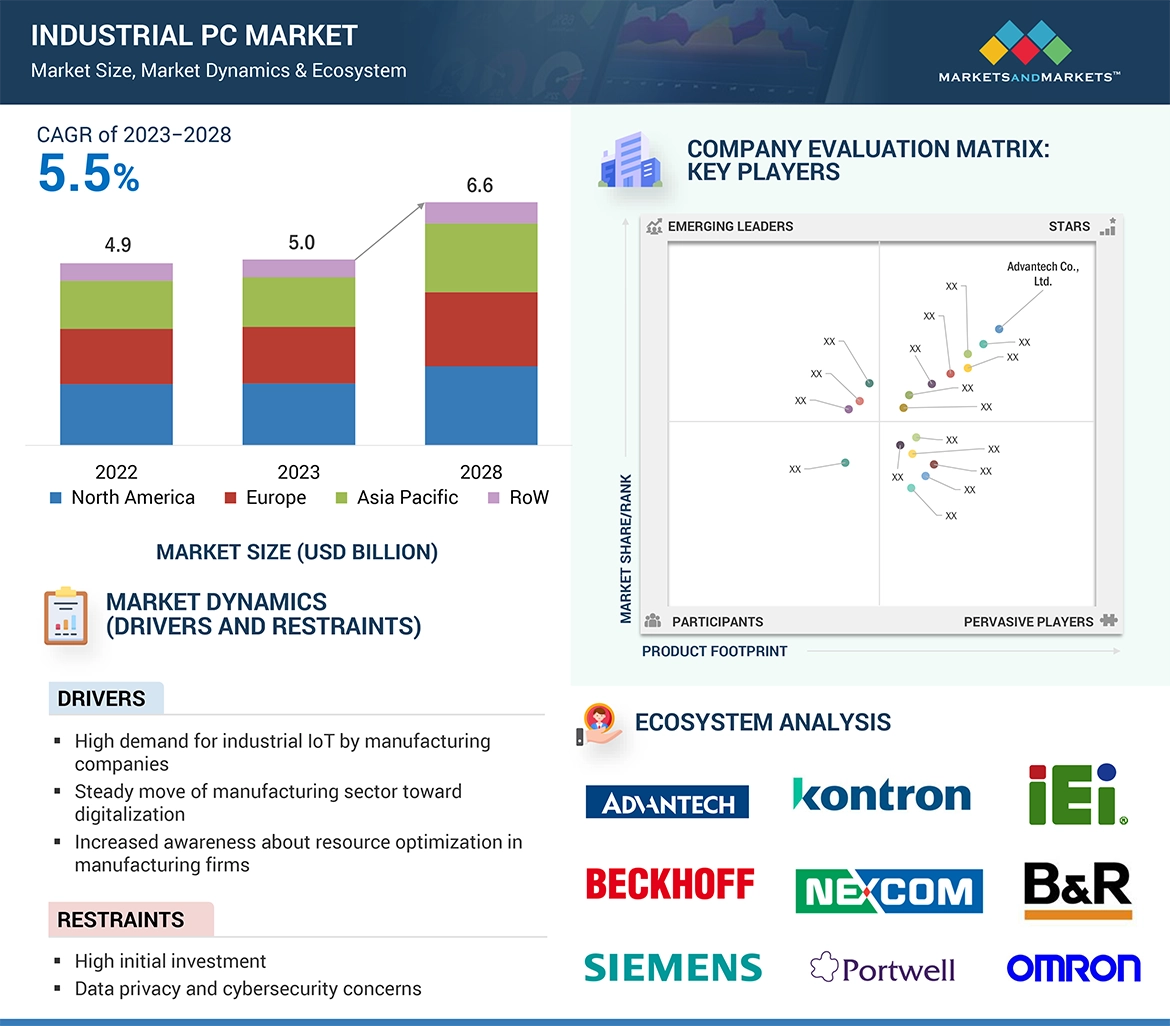
The Industrial PC market is developing through gradual transformation rather than sudden expansion. According to MarketsandMarkets research cited in public company disclosures, the global Industrial PC market was valued at approximately USD 5.0 billion in 2023 and is projected to reach around USD 6.6 billion by 2028, representing a CAGR of approximately 5.5%. This indicates a mature market where growth is increasingly driven by application evolution rather than simple hardware replacement.
A major change is the movement from centralized computing toward edge-based processing. IDC’s research on field-level edge computing devices shows that industrial computing equipment is increasingly connected with edge intelligence, machine vision, equipment monitoring, and industrial automation scenarios. In this environment, Industrial Panel PCs are no longer viewed only as operator displays. They are becoming human-machine interfaces that combine visualization, local processing, connectivity, and software interaction.
This change explains why buyers from different industries often request similar hardware foundations with different configurations. A factory automation project may require serial communication and GPIO expansion, while a digital signage deployment may prioritize network connectivity and media management. A logistics terminal may require barcode scanning and mobile connectivity, while a commercial kiosk may focus on NFC interaction and customer-facing applications.
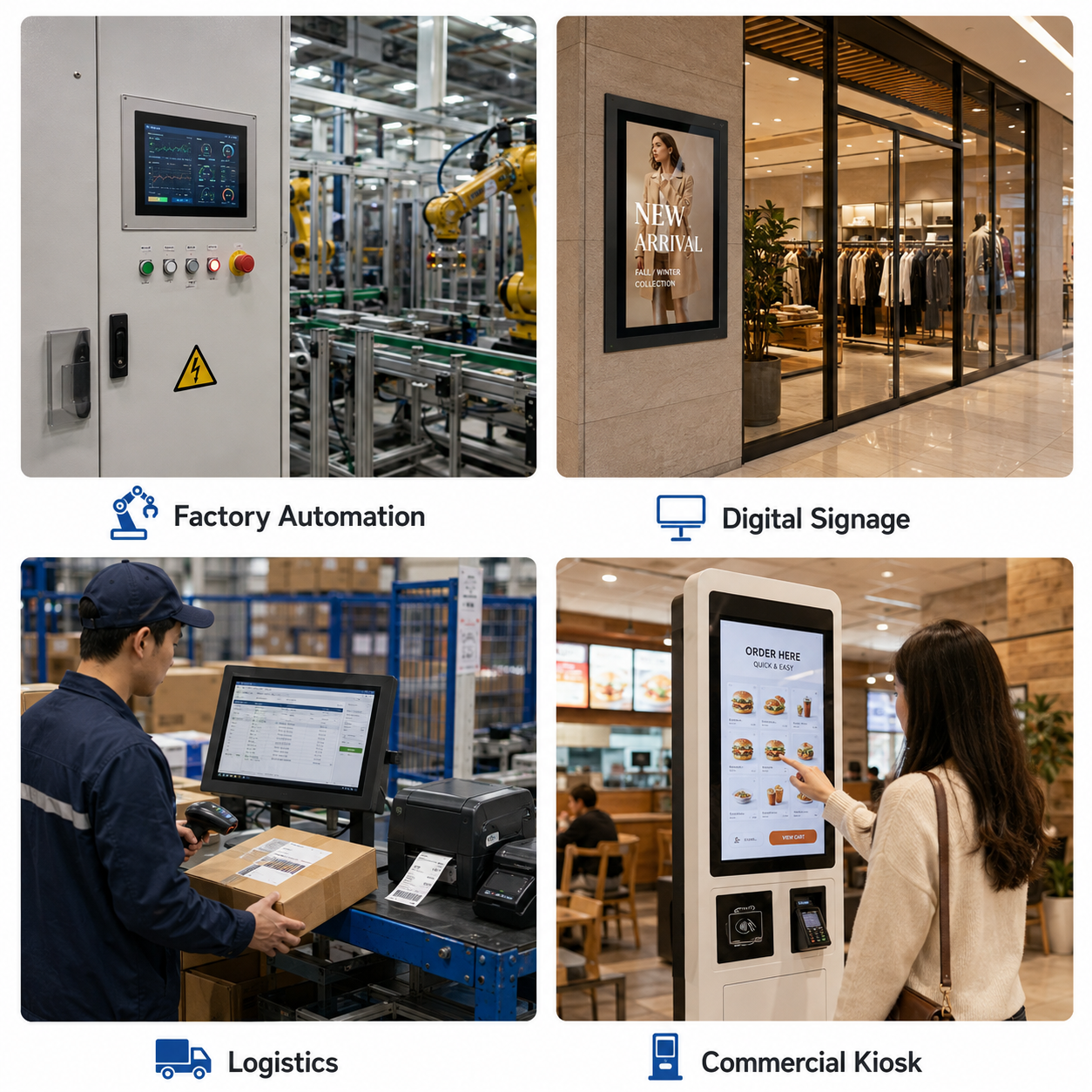
The common requirement is not a single universal device. Instead, buyers are looking for adaptable embedded computing platforms that can be configured around specific operational environments.
However, application similarities do not eliminate industry-specific barriers. Medical applications may require additional regulatory verification, outdoor deployments may require higher environmental protection standards, and industrial environments may introduce different mechanical or electrical requirements. The ability to customize a platform does not replace the need for application-specific validation.
This distinction is becoming increasingly important for procurement teams. Selecting an Industrial Panel PC supplier is no longer only about comparing screen sizes, processors, or pricing. It requires understanding whether the supplier can support the integration process behind the final deployment.
What Nine Embedded Terminal Projects Reveal About Changing Market Requirements
The nine embedded terminal projects reviewed in this article involved buyers located across multiple regions,including Germany, India, Nigeria, Uzbekistan, Bosnia and Herzegovina, Australia, the United States, and Africa.
These observations should not be interpreted as a global market measurement. A sample of nine projects cannot represent worldwide Industrial Panel PC demand. Instead, they provide a first-party view of how different buyers approach embedded terminal projects and what types of requirements repeatedly appear during early procurement discussions.
Across these projects, the strongest common signals appeared around three areas:
- embedded deployment requirements
- customized hardware interfaces
- flexible operating system and integration options
The diversity of applications was significant. Buyers explored solutions including embedded touch displays, Android-based industrial terminals, medical-related computing devices, rugged mobile terminals, digital signage systems, commercial interactive displays, and industrial control interfaces.
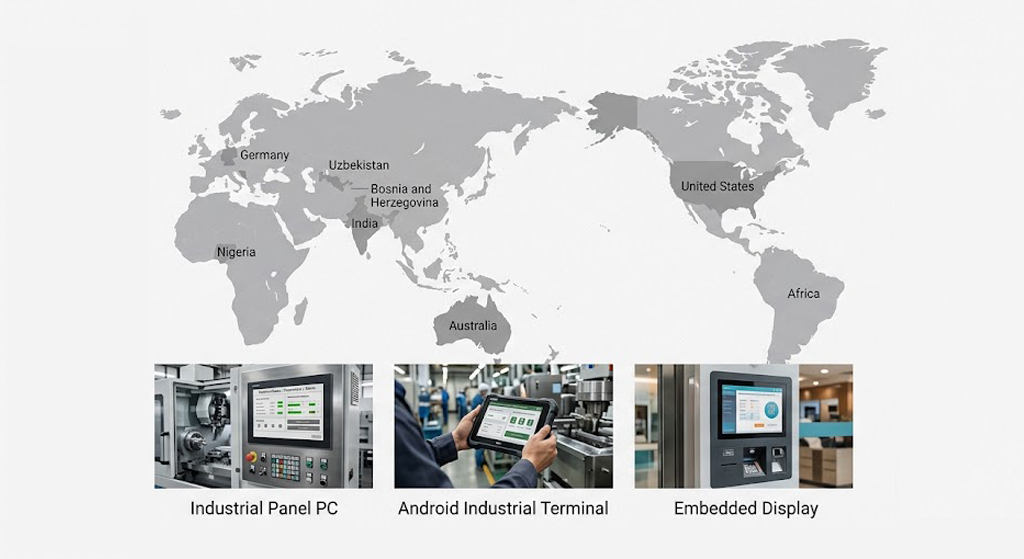
The pattern suggests that Industrial Panel PC demand is becoming increasingly application-driven. Buyers are not simply searching for a display product category; they are looking for a computing terminal that can fit into an existing workflow.
For example, an India-based medical technology integrator explored embedded touch display modules for equipment interfaces. A Nigeria-based rugged device vendor evaluated Android terminals with outdoor visibility, GPS, and barcode scanning requirements. A Bosnia-based digital signage provider investigated Android devices with open system access and flexible mounting options.
These projects represent different industries, but the procurement logic is similar: the hardware must integrate into a larger system.
This is where configurable product platforms become valuable. Instead of developing every terminal from the beginning, system integrators and OEM brands often prefer a hardware foundation that allows adjustments in interfaces, software configuration, installation method, and optional modules.
For example, a 10.1-inch Android industrial tablet with optional PoE, NFC, and RFID integration demonstrates how embedded terminals can be adapted for interactive access, commercial automation, or kiosk-style applications. A larger 15.6-inch wall-mounted Android tablet shows another approach, where larger display formats, GPIO availability, and multi-interface expansion support embedded deployment scenarios.
These examples illustrate a broader procurement trend: buyers increasingly evaluate how easily a device can become part of their system rather than simply evaluating the device itself.
Why Platform Flexibility Matters More Than Standard Hardware Specifications
Traditional hardware purchasing often focused on fixed specifications: display size, processor model, memory capacity, and unit price. Those factors remain important, but they no longer fully determine project success.
Embedded terminal projects frequently involve integration challenges that appear after hardware selection. A device may need to communicate with external equipment, connect to enterprise software, support additional modules, or operate under a specific installation environment.
This is why platform flexibility has become an important evaluation factor.
A configurable Android-based platform can support different application requirements through adjustments in hardware configuration, interfaces, software customization, and mechanical design. The goal is not to create one identical product for every market, but to reduce repeated engineering effort when multiple projects share similar technical foundations.
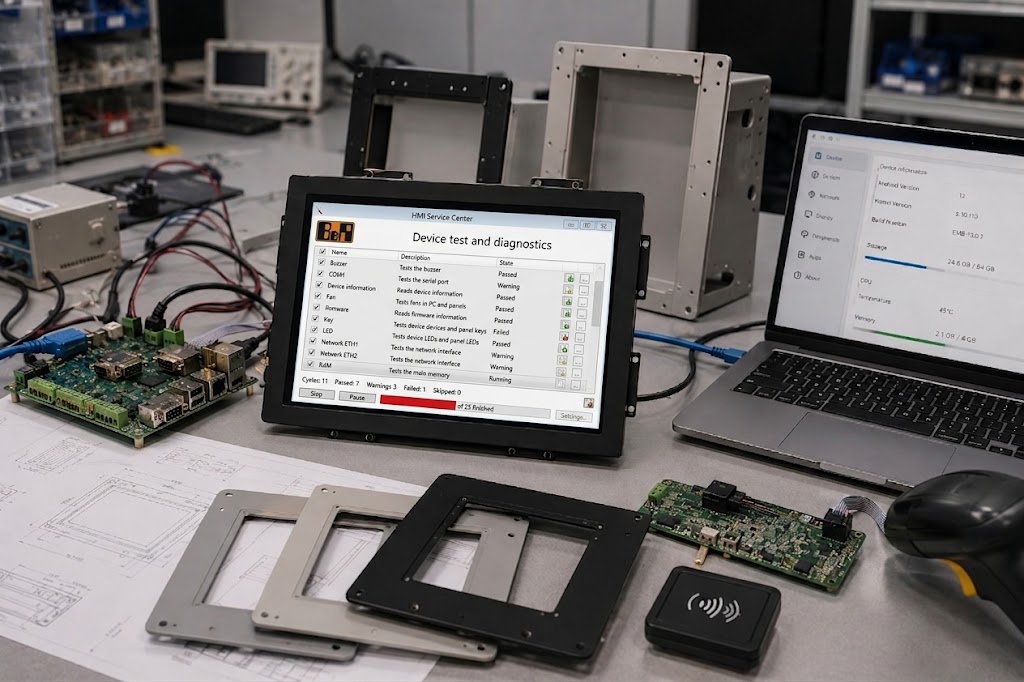
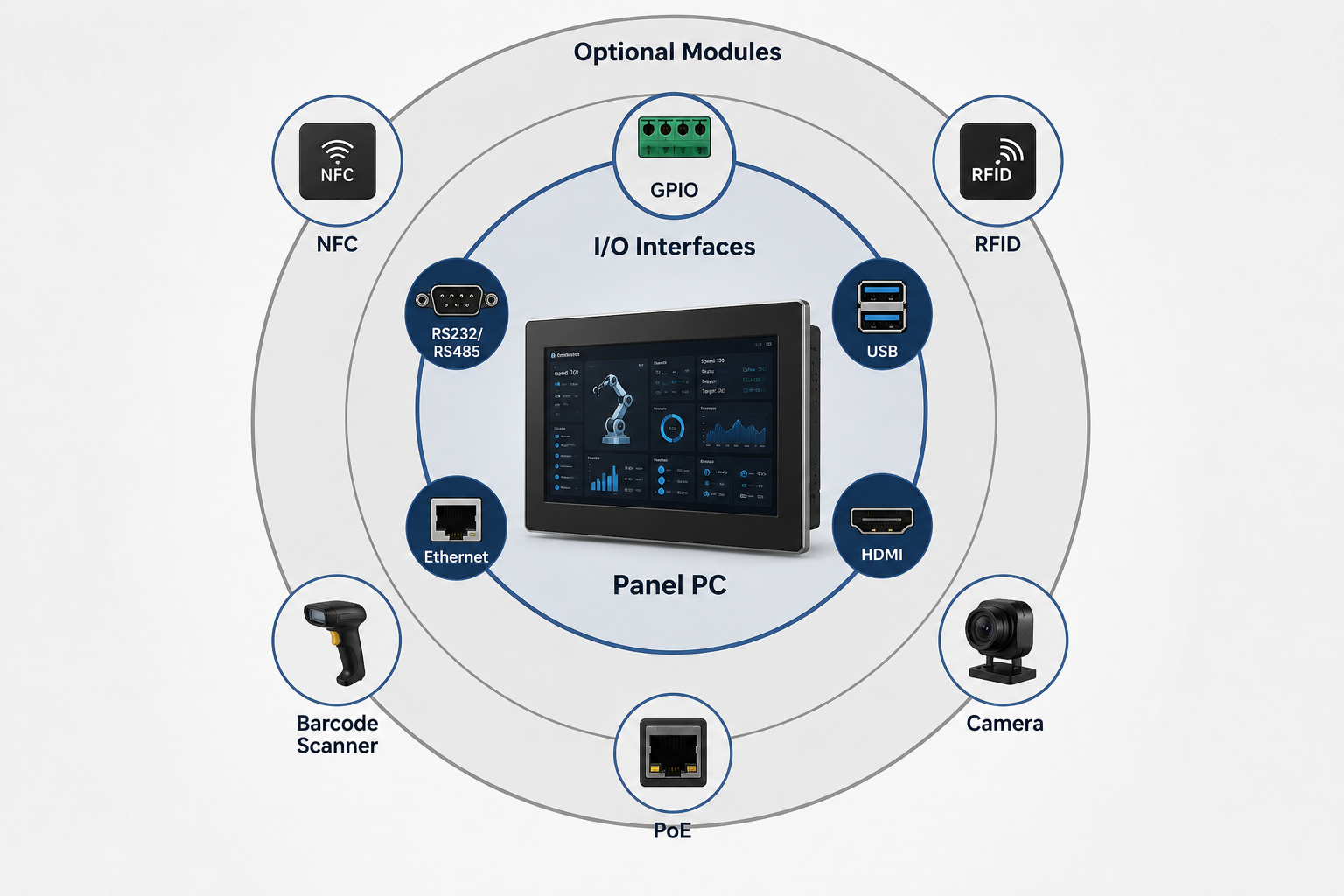
For Industrial Panel PC applications, interface flexibility is often closely connected with deployment requirements. Industrial and commercial projects may require connections to external systems through interfaces such as GPIO, RS232/RS485, USB, HDMI, and Ethernet.
Additional modules can further extend application possibilities. Depending on project requirements, embedded terminals may integrate options such as:
- NFC modules for identification or access applications
- RFID readers for card-based interaction
- barcode scanners for logistics and retail workflows
- cameras for video communication or monitoring applications
- PoE connectivity for network-powered installations
These capabilities are particularly relevant for applications where the terminal is part of a larger operational system.
A digital signage deployment, for example, may require customer interaction through NFC, scanning, or camera modules. An industrial workstation may require serial communication with external equipment. A kiosk installation may prioritize network connectivity and simplified maintenance.
Product portfolios with broader form-factor coverage also provide additional flexibility. Industrial and commercial terminals may range from compact 8-inch devices to larger 21.5-inch or above display formats, depending on whether the application requires portable interaction, embedded control, or large-format information display.
A supplier with experience across different sizes and installation methods can help buyers select a suitable platform without rebuilding the hardware architecture for every project.
How OEM Buyers Should Evaluate Industrial Panel PC Suppliers
As Industrial Panel PC projects become more application-specific, supplier evaluation needs to go beyond product catalogs. Buyers should look at four areas in particular: hardware adaptability, software support, manufacturing and validation capability, and compliance.
The first consideration is hardware adaptability. Buyers should examine whether the supplier can support different display sizes, mounting methods, interface configurations, and optional modules to meet specific deployment requirements. For example, Android terminal platforms supporting wall mounting, VESA installation, GPIO expansion, serial interfaces, and network connectivity provide greater flexibility for embedded applications than fixed consumer tablets. The ability to adapt these configurations can also make it easier to develop different product variants from the same hardware platform.
Software support is equally important. Embedded projects often require more than a standard Android installation. Depending on the application, OEM buyers may need customized firmware, UI adjustments, application pre-installation, system lockdown, or integration support through SDK and API resources. Suppliers with both hardware and software capabilities can handle these requirements within the same development process, simplifying customization and reducing integration work.
Manufacturing and validation capability becomes particularly important when a customized terminal moves from prototype to volume production. Buyers should look for suppliers with established production processes and internal reliability testing rather than relying on customization claims alone. At CnHopestar’s ISO9001-certified manufacturing facilities, industrial terminals undergo reliability and quality checks including burn-in aging, drop, vibration, and ESD testing before shipment. These processes help identify potential hardware and assembly issues before products enter large-scale deployment, while controlled production processes help maintain consistency across volume orders.
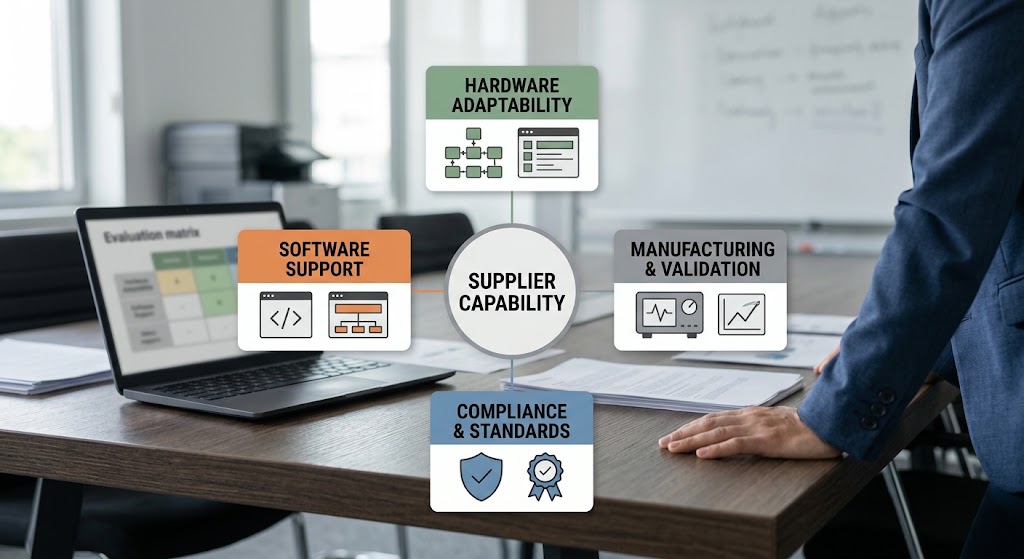
Compliance should also be evaluated according to the target market and application. Certifications such as ISO9001, CE, FCC, and RoHS can provide evidence of quality management and compliance with relevant market requirements, while additional certifications may be required depending on the destination market or specific deployment environment. Buyers should therefore verify certification requirements against the final product configuration and target application rather than treating a standard certification list as sufficient.
For OEM projects, supplier capability ultimately depends on more than the number of customization options listed in a catalog. The stronger suppliers are those that can support the complete process from hardware selection and software customization to reliability testing, compliance, and volume production.
The Future Direction: From Industrial Display to Embedded Computing Interface
The future development of Industrial Panel PC products is closely connected with the broader evolution of Industrial Edge computing.
Industry research from IDC, Gartner, and Omdia indicates that computing is moving closer to operational environments, driven by requirements such as real-time processing, automation, machine vision, and intelligent decision-making.
Within this transition, Industrial Panel PCs occupy an important position because they connect people, machines, and digital systems. Their value increasingly comes from combining display, interaction, connectivity, and computing capability into a deployment-ready terminal.

The recent embedded project patterns reviewed in this article do not prove a global market trend by themselves. However, together with broader Industrial Edge research, they reflect a meaningful change in buyer expectations: embedded computing devices are becoming more specialized, while suppliers need greater flexibility to support diverse applications.
For companies evaluating Industrial Panel PC solutions, the next step is to define the application environment clearly: required interfaces, installation method, operating system requirements, integration modules, and expected lifecycle.
If you are planning an embedded Android terminal project and need to evaluate suitable hardware configurations, customization options, or application-specific requirements, contact our team to discuss your project specifications and OEM possibilities.
 From Monitor Distributor to Brand: Is Private Label Gaming Monitor OEM Worth It?