
 86 13392660243
 hope17@cnhopestar.com

 whatsapp
Catalog to PO: How a First-Time Africa Buyer Starts
 2026-10-01
 cnhopestar
For a first-time buyer in Africa, the first message to an OEM supplier may be straightforward: send me your product catalog, price list, and payment terms.
But behind that request is a much bigger decision. The buyer is not only looking for an Android tablet. They are trying to understand whether an unfamiliar overseas supplier can provide the right product, support customization, arrange samples, meet the required commercial conditions, and eventually deliver a production order to their market.
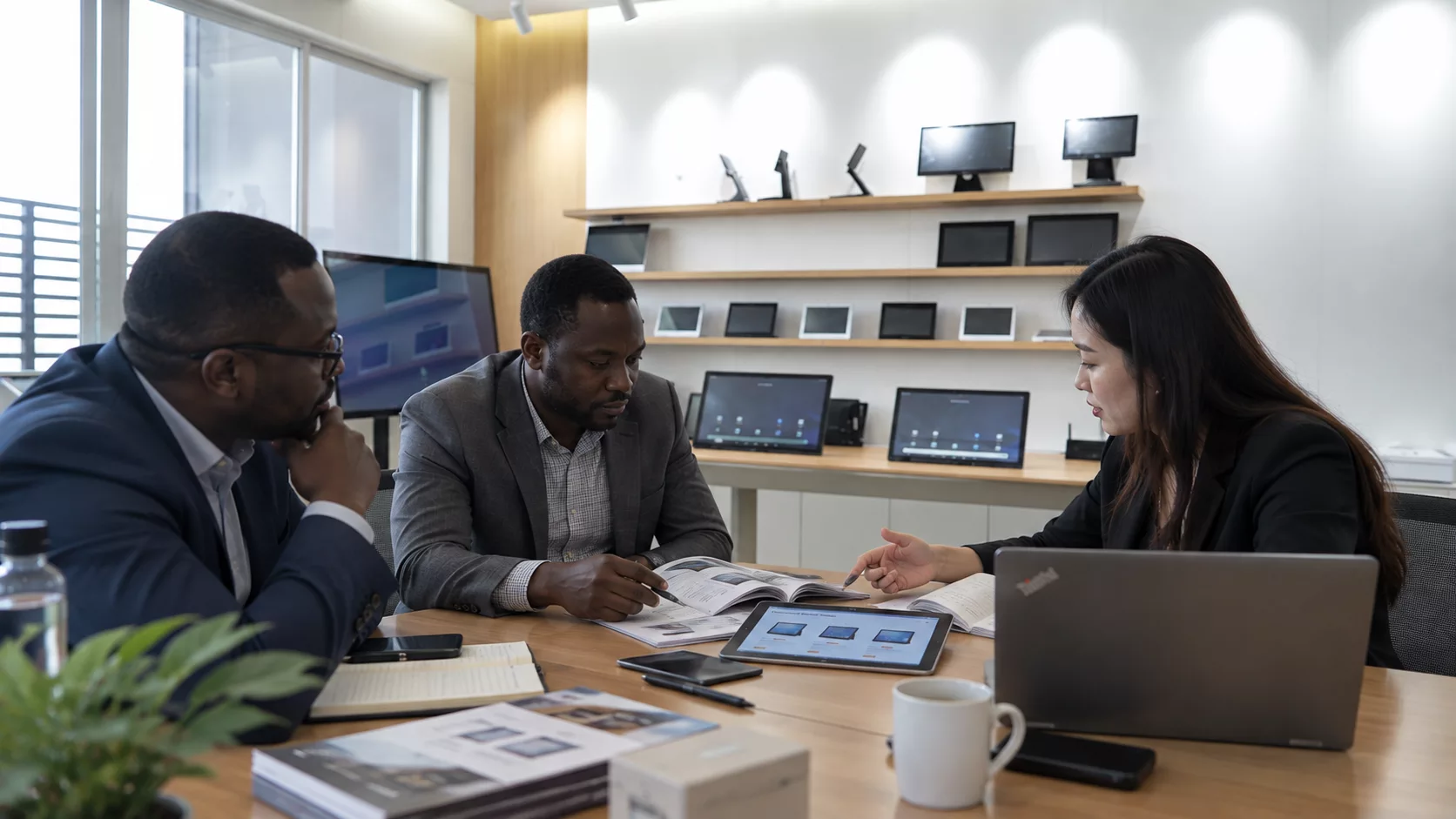
For a first-time cross-border buyer, a product may look suitable on paper, but questions about configuration, sample testing, payment, documentation, and production can remain unanswered. The purchasing path therefore needs to reduce those uncertainties one at a time.
Choosing the Right Catalog, Not the Biggest One
The first problem for a new buyer is usually product selection.
An overseas buyer may know the application and approximate requirements but may not yet know which tablet configuration is appropriate. Sending hundreds of unrelated models does little to solve that problem. The useful catalog is the one that helps narrow the selection.
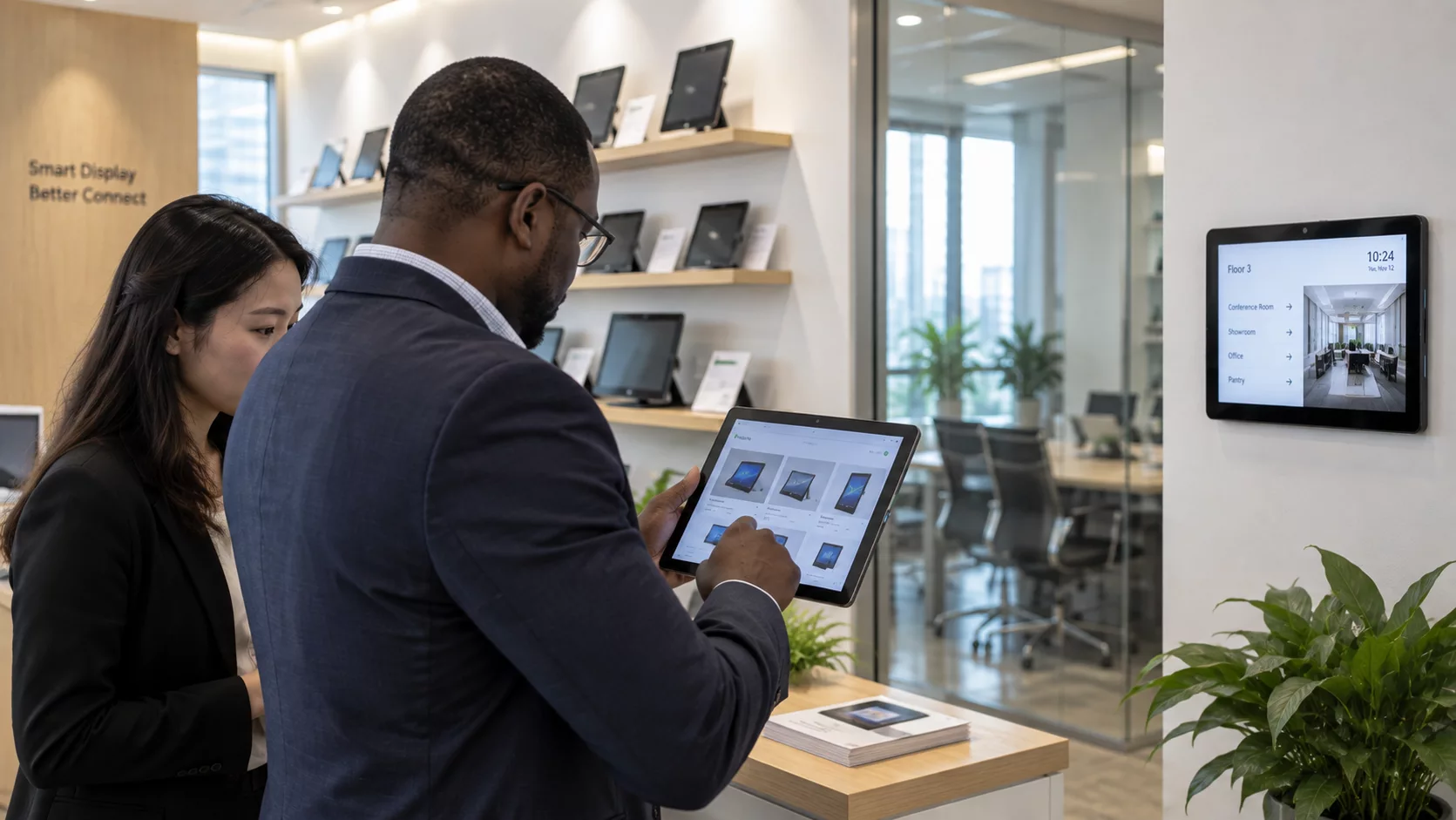
For buyers looking for commercial Android tablets, the relevant questions may include screen size, installation method, Android version, required functions, interfaces, and the environment in which the device will be deployed.
For example, a larger interactive installation may lead the buyer toward a 15.6-inch Android tablet, while a space-constrained wall-mounted application may call for a 10.1-inch wall-mounted Android tablet. The point is not that one size is better. The point is that product selection should follow the application.
This is how we approach a tablet OEM catalog request. Instead of leaving a first-time buyer to work through the entire product range alone, we can use the application and initial requirements to identify relevant models and explain which configurations are worth evaluating further.
For a buyer in Africa, this early filtering can also prevent an unnecessary round of international sample shipping. If the wrong model is selected at the beginning, the cost is not limited to the product itself; time is also spent on freight, customs handling, testing, and communication.
The first decision is therefore simple:
Is this product suitable enough to justify a deeper commercial discussion?
If the answer is yes, the next concern is usually price.
Price, MOQ and Payment Terms as One Decision
A first-time buyer often asks for a price before revealing every project detail. That is understandable. Before spending money on samples or development, the buyer needs to know whether the project is commercially realistic.
However, an OEM price is rarely meaningful without knowing what is being purchased.
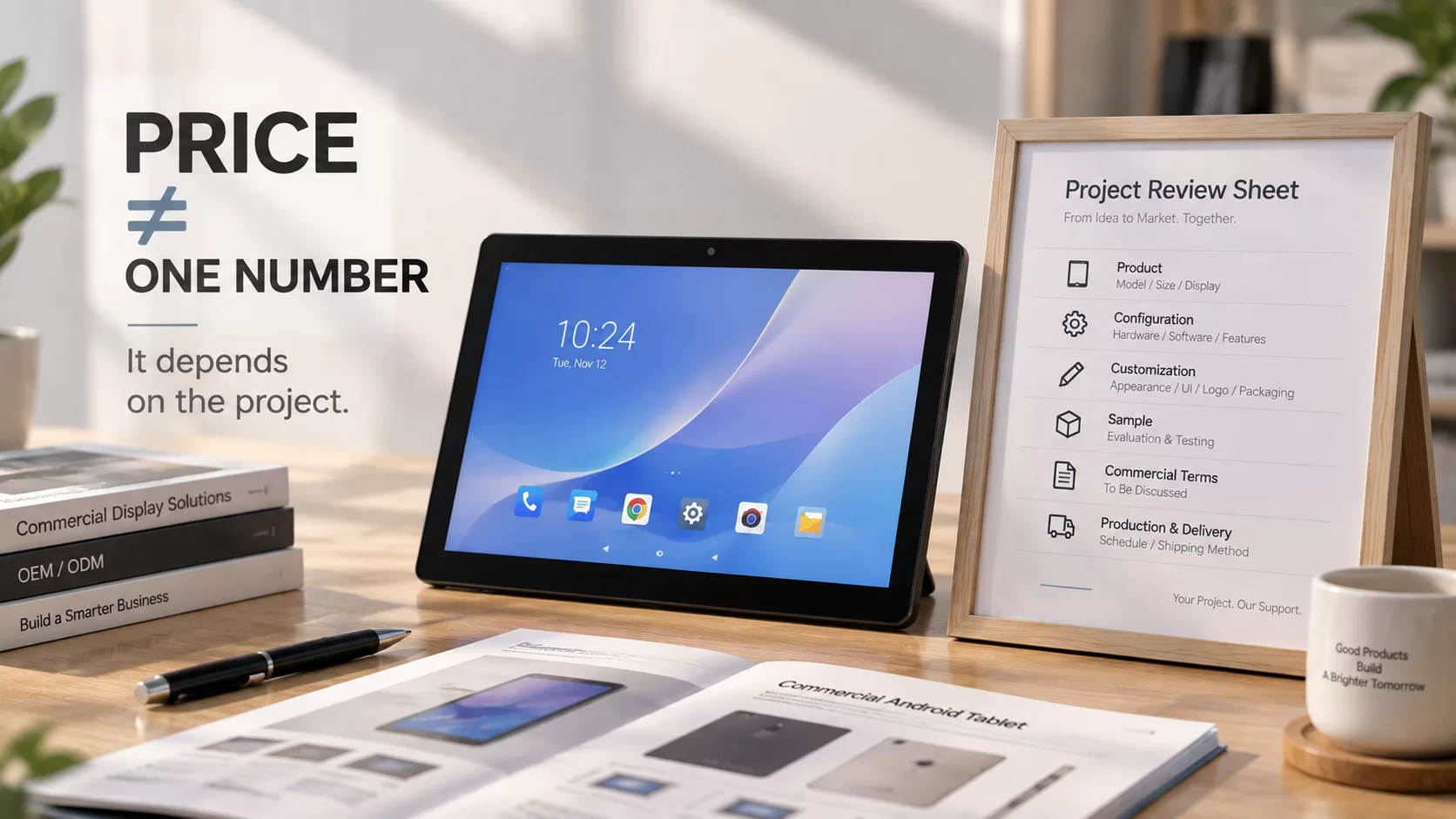
A standard tablet, a customized sample, and a production configuration can have different commercial conditions. MOQ can also depend on the degree of customization and the production requirements. For that reason, simply publishing one number as an “OEM price” can create more confusion than clarity.
When we discuss pricing with a new buyer, the objective is to establish what configuration the price relates to and what stage of the project it represents. This gives the buyer a more useful basis for comparing suppliers and understanding the applicable OEM tablet payment terms.
The same applies to payment.
A buyer evaluating payment conditions may want to know whether the first order requires a particular payment structure, whether different conditions are possible later, and what information is needed before production begins. For a first-time overseas buyer, these payment terms for first-time OEM buyers should be confirmed according to the project and customer credit assessment rather than assumed from another supplier or previous transaction.
The buyer may also need to clarify MOQ, sample charges, production lead time, and shipping arrangements at this stage. These details are commercially important because a product with an attractive unit price may still be unsuitable if its order conditions do not match the buyer's procurement plan.
This is particularly relevant when the buyer is purchasing across borders. The commercial calculation can involve not only the factory price, but also sample freight, import procedures, documentation, and the eventual production shipment.
Our role is to clarify these conditions before the buyer commits to the next stage. If the project requires a specific configuration or customization, we can also explain the applicable OEM cooperation terms rather than giving the buyer a generic price that may not reflect the actual project.
The second decision becomes:
Can this project work under the commercial conditions that actually apply?
Once that question is sufficiently clear, the buyer can move to a sample.
What Only a Sample Can Answer
For a first-time buyer, the sample is often the point where uncertainty becomes much more concrete.
A catalog can show the product. A quotation can show the commercial direction. Neither can tell the buyer whether the actual configuration works in their intended application.
This is why OEM tablet sample evaluation should be planned around specific requirements.
A buyer may need to verify the display, touch response, Android environment, interfaces, software compatibility, installation method, or other functions. If branding or hardware customization is involved, the sample can also help determine whether the proposed changes are suitable before production.
We can support this stage by confirming the sample configuration before it is prepared. That means the buyer knows what is being tested and what remains part of a later production discussion.
This is especially important for an Android tablet OEM customization project. Customization is not simply a matter of adding a logo. Depending on the project, it can involve hardware configuration, appearance, software, UI, packaging, or other requirements. Not every change needs to be completed at the same stage, so defining the sample scope helps avoid misunderstandings.
For an Africa-based buyer, sample evaluation can also be an opportunity to verify practical deployment requirements before committing to production. If the tablets will be installed in a particular commercial environment, the buyer can test the actual device under representative conditions rather than relying entirely on specifications.
Where a project requires more extensive changes, we can discuss the appropriate custom Android tablet route and identify which requirements should be validated during the sample stage.
The objective is not simply to make a sample look good.
It is to answer:
“If I approve this configuration, is it suitable to become the basis of my production order?”
That question leads directly to the PO.
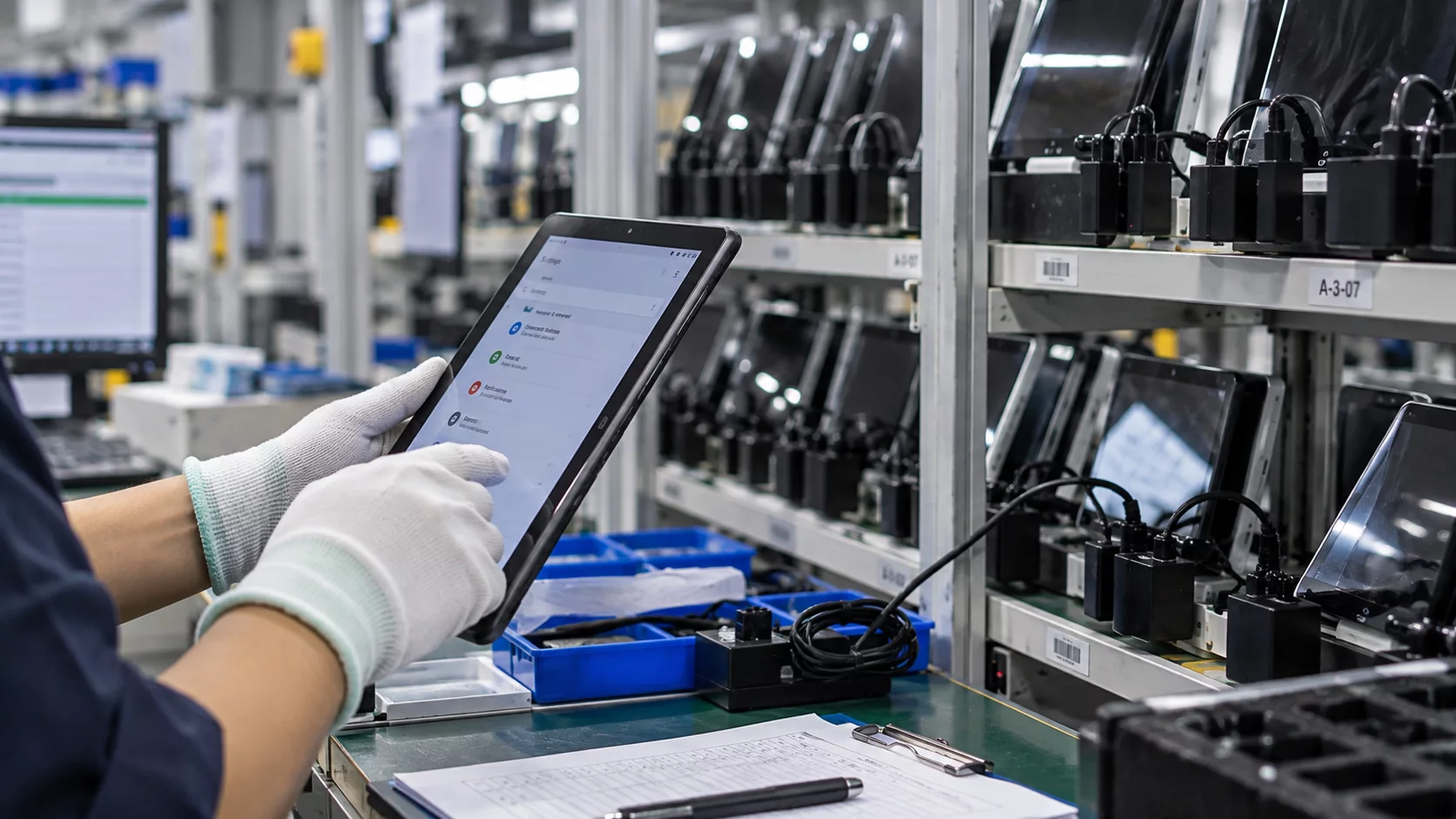 What the First PO Locks In
By the time a first PO is issued, the buyer should not still be discovering basic information about the product.
The catalog should have established the product direction. Commercial discussions should have clarified pricing and applicable payment conditions. Sample evaluation should have tested the requirements that matter to the project.
The PO then turns those decisions into a production commitment.
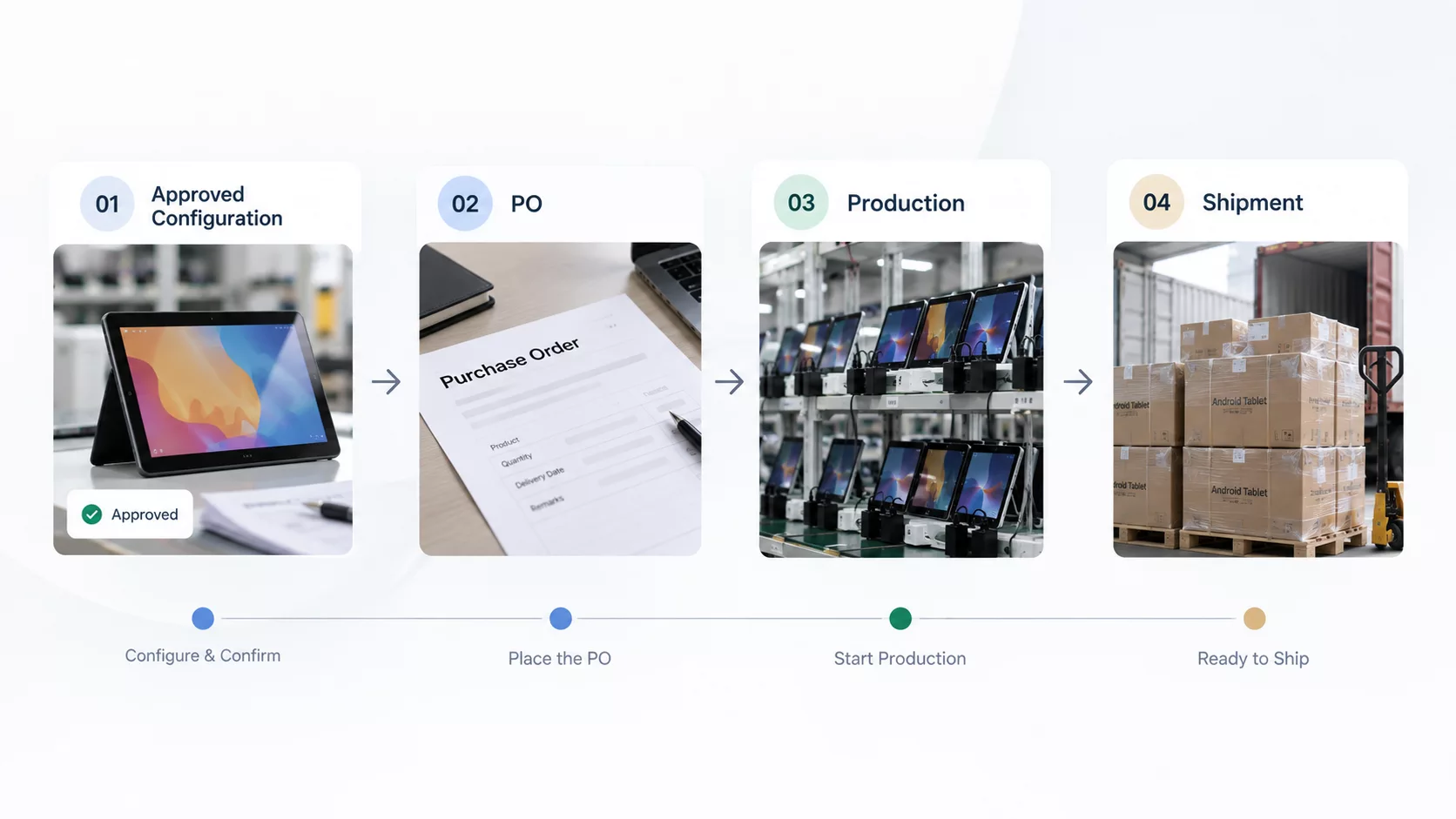
For a first-time OEM buyer, several details deserve particular attention: the approved product configuration, customization scope, applicable commercial terms, payment arrangement, production requirements, shipping information, and any required documentation.
This is also where production lead time becomes important. A buyer planning a deployment in Africa may need to coordinate factory production with international freight and local delivery. The relevant question is therefore not simply “How fast can you produce it?” but “What production and shipping schedule should we plan around for this order?”
The same principle applies to certification and documentation. Requirements can vary according to the destination market and application. Instead of assuming that one certification package automatically covers every project, the buyer should confirm which documents are applicable to the intended shipment and deployment.
We can review these requirements with the buyer before the first PO so that issues relating to configuration, documentation, payment, or production are addressed before the order enters manufacturing.
This creates a more controlled transition from prototype validation to bulk production.
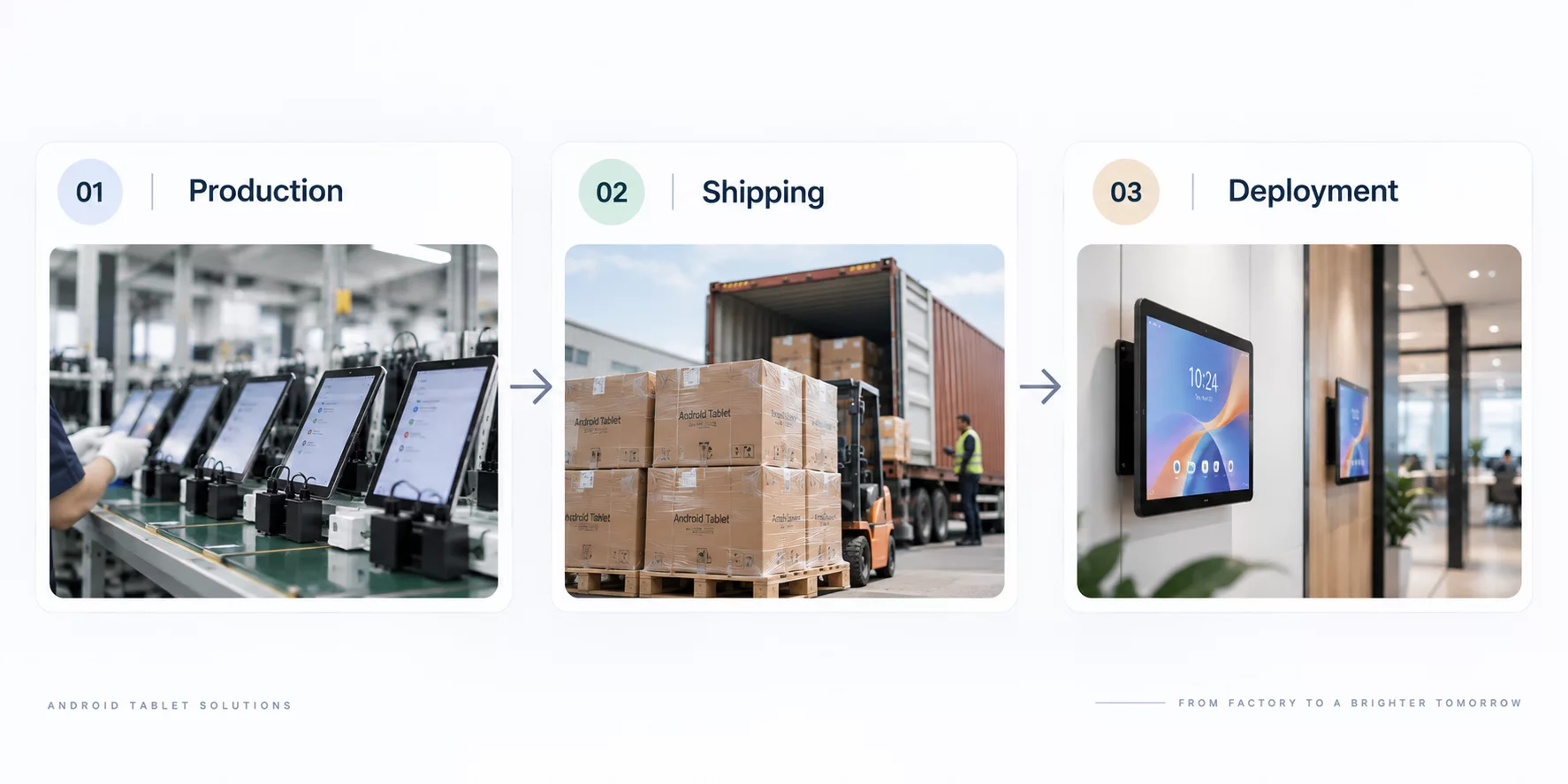
For a supplier evaluation, the real question at this point is:
“Does the supplier's production process match what I have already approved?”
If the answer is clear, the first PO becomes a confirmation of an already-understood project rather than another round of discovery.
For buyers looking beyond a single project toward channel sales, the purchasing path can also develop into an Android tablet distributor relationship, with cooperation conditions discussed separately from an individual OEM order.
The important point is that a first-time buyer does not need to make the entire decision at the first contact. Each stage should provide enough information to make the next decision with greater confidence.
If you are evaluating commercial Android tablets for an OEM project, welcome to contact us with your application, basic product requirements, and customization needs. We will be glad to send the relevant tablet OEM catalog, identify suitable product options, and discuss the applicable sample, commercial, and cooperation conditions for your project.
 From Distributor to Brand: A 5-Step Gaming Monitor OEM Path with CnHopestar